
1 hr
Shibuya Street Kart Tour – Drive Through Iconic Tokyo
- Entry ticket
- Mobile voucher
- Valid same day
- Free cancellation
Shibuya Go Kart — Street Course Drives Through Central Tokyo
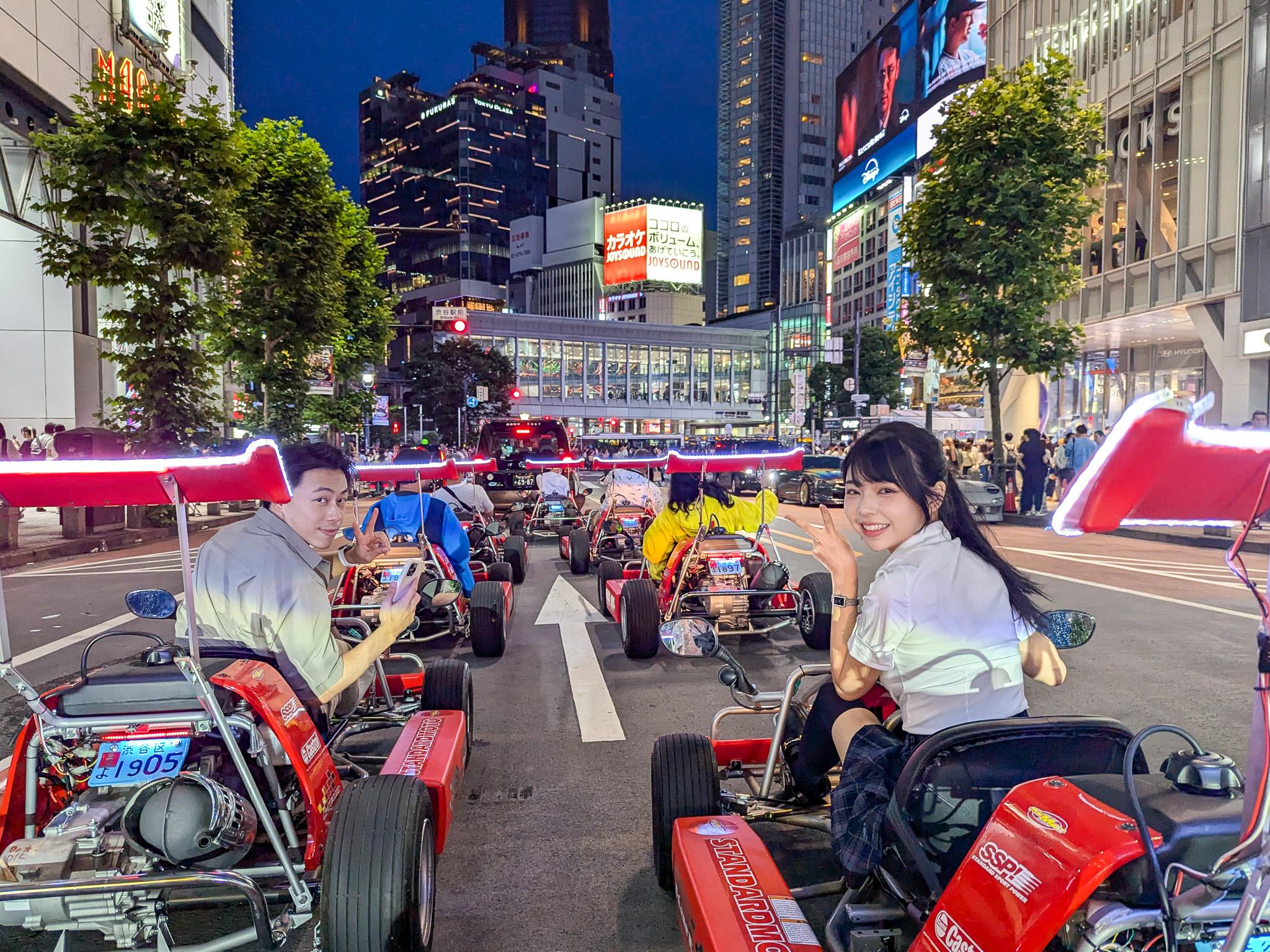
Neon-lit lanes ahead of you, Shibuya Crossing behind.
Compare fares, pick the fit — all bookings are mobile-voucher and eligible for free cancellation where shown.
1 hr
1 hr 45 min
1 hr
Worth it for licensed first-timers, skippable otherwise
At 8,000 JPY per person, a shibuya go kart ride buys a one-hour street course through Shibuya Crossing, and the fee bundles the costume, a lead guide, and route photos — so you're not nickel-and-dimed on top of the sticker price. The real value hinges on one thing: you must hold a valid International Driving Permit, and sorting that out beforehand is the friction that sinks unprepared visitors. If you clear that hurdle, this Shibuya kart tour delivers a genuinely novel angle on the city's landmarks, threading neon-lit avenues at street level rather than through a train window. Weighed against pricier bus excursions, the cost-per-thrill on these shibuya go kart tours holds up well for confident drivers and groups. For nervous drivers or anyone without the permit paperwork, the 8,000 JPY buys frustration instead. Book the shibuya go kart tickets only once your license documents are confirmed.
Bottom line: Sort the permit first, and the go-kart tour earns its 8,000 JPY — skip it if the paperwork isn't nailed down.
Book the shibuya go kart course for neon Scramble Crossing energy, or pick Akihabara for a calmer, anime-themed street kart tour — most riders choosing between Street Kart's two flagship Tokyo routes go with Shibuya for the adrenaline and Akihabara for the otaku scenery.
|
Top pick Shibuya |
Akihabara | |
|---|---|---|
| What you drive past | Shibuya Scramble Crossing, Center Gai, Dogenzaka neon | Tokyo Station, Ginza, anime megastores, arcades |
| Street energy and traffic | Dense pedestrian crowds, iconic crossing lights | Lighter traffic, tech-district storefront buzz |
| Costume/theme culture fit | Neon nightlife, fashion-forward Shibuya style | Anime, superhero and otaku costume rentals |
| Price | 8,000 JPY per person (1-hour course) | 6,500–8,265 JPY per person (1-hour course) |
| Duration | 1 hour street kart course | 1–2 hour course options |
| Best for | Nightlife scenes and Crossing photo ops | Anime fans and daytime sightseeing |
| See tickets & prices |
Verdict: Shibuya wins for high-voltage crossing energy after dark, while Akihabara suits riders wanting a longer, costume-heavy pop-culture cruise at a similar or slightly lower price.
Hand-picked experiences loved by thousands of travelers
1 hour
Free Cancellation
Race through Harajuku, Omotesando & the legendary Shibuya Crossing in a custom go-kart with photos.
75 – 105 minutes
Free Cancellation
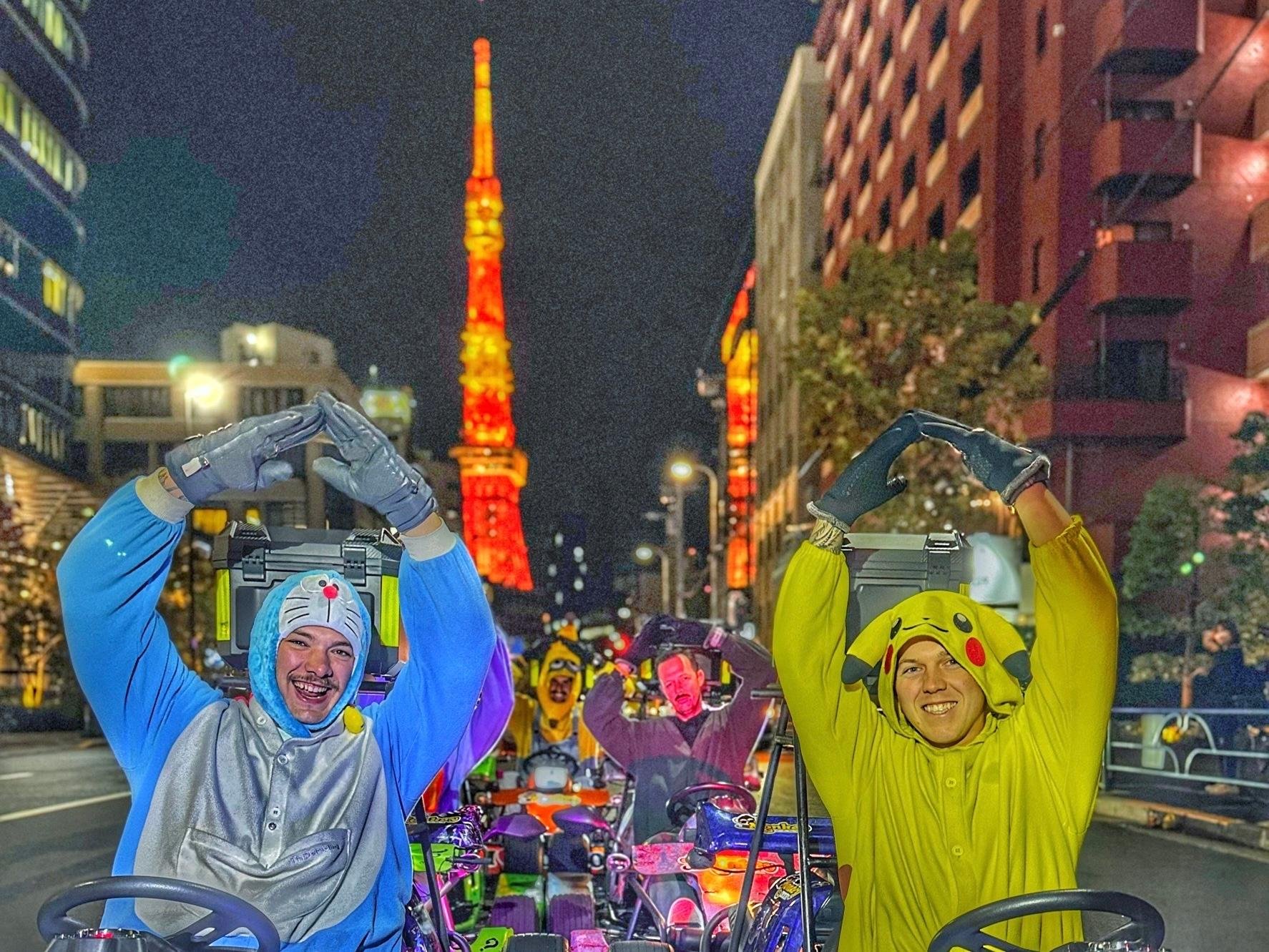
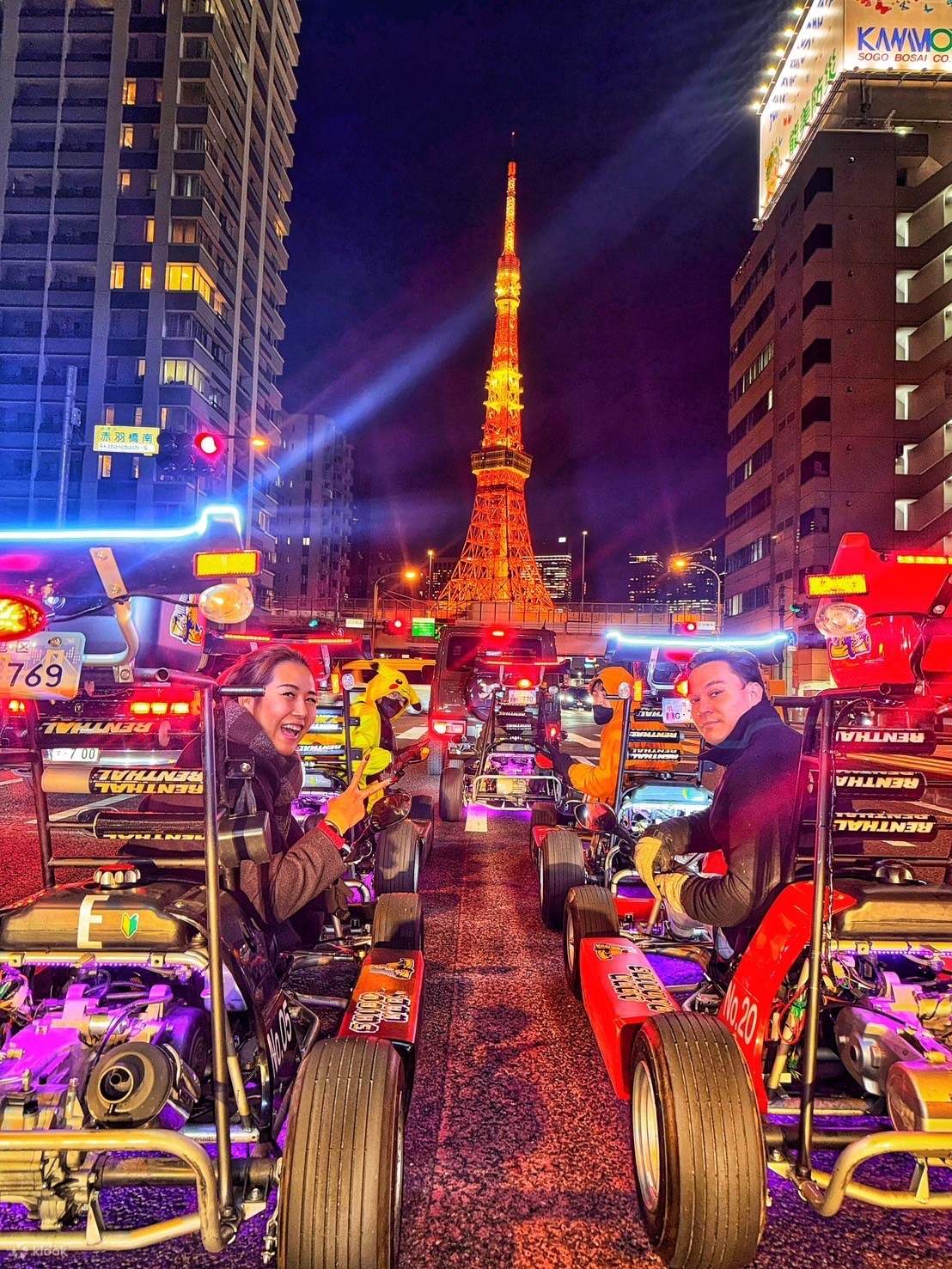
Race through Tokyo's iconic streets by go-kart, passing Shibuya Crossing & Tokyo Tower in style.
1 hour
Free Cancellation
Race through Tokyo's neon-lit iconic districts in a go-kart with a pro guide and photographer.
Arrive at the shop, present reservation and driver's license, receive wristband
Choose from washed costumes and store belongings in a locker
Guide explains kart controls and traffic rules before departure
Drive down Dogenzaka toward Shibuya Scramble Crossing
Cross near the famous scramble intersection amid city traffic
Continue past Omotesando storefronts and Harajuku streets before returning
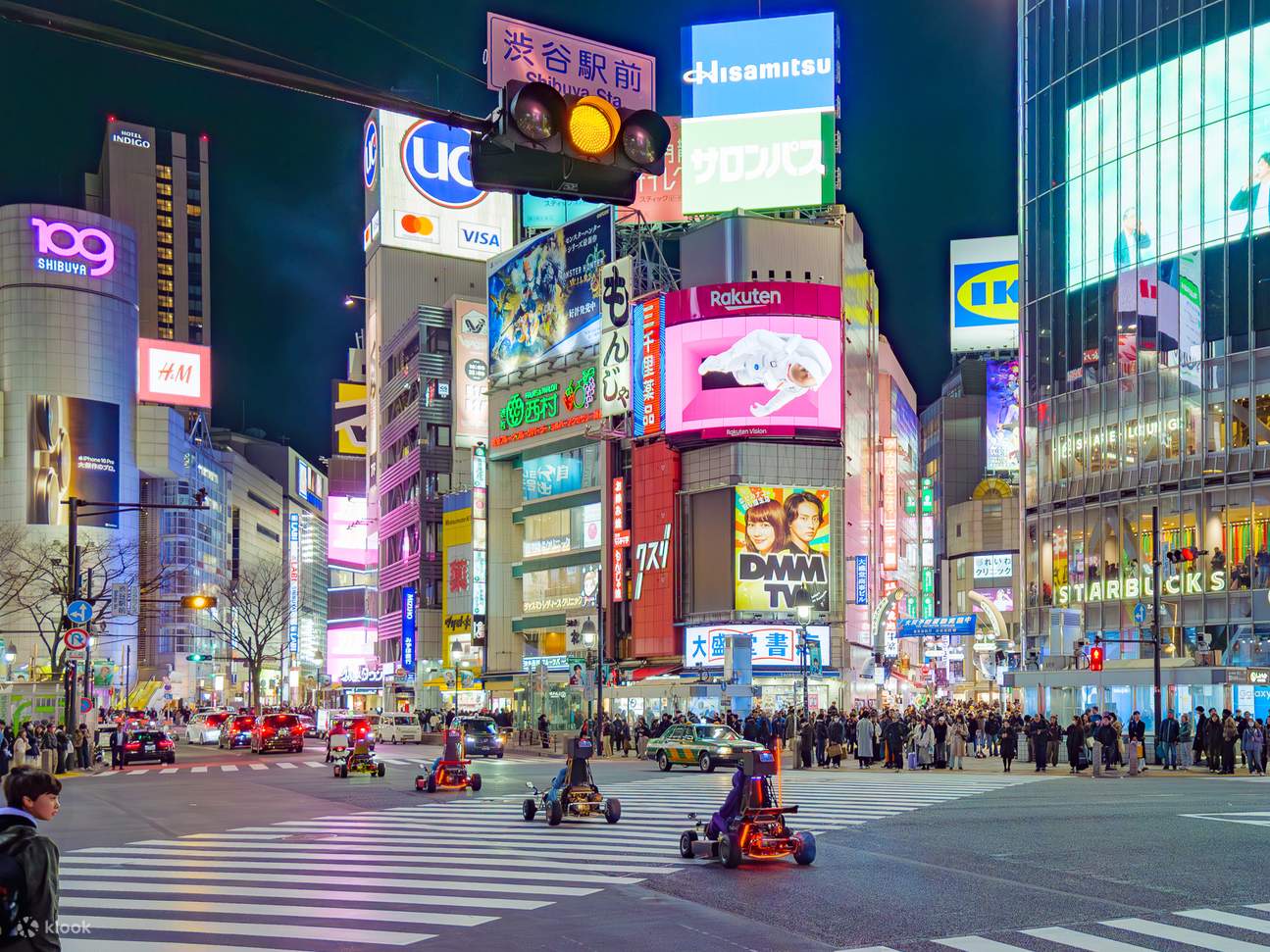
Karts drive directly past this intersection, where reports estimate up to 3,000 pedestrians cross at once during peak signal changes. It's the single most recognizable stretch of the route.
The route begins with a descent down this sloped shopping street lined with bars, karaoke venues, and neon signage. Dogenzaka has been a nightlife corridor in Shibuya since the postwar era.
A neon-lit pedestrian and vehicle corridor near Shibuya Station packed with arcades and fashion shops, giving drivers a close-up of the district's densest signage.
The course continues past this tree-lined avenue known for flagship luxury boutiques and modernist architecture by international designers.
Karts pass through this district famous for youth fashion culture and Takeshita Street's dense boutique clusters.
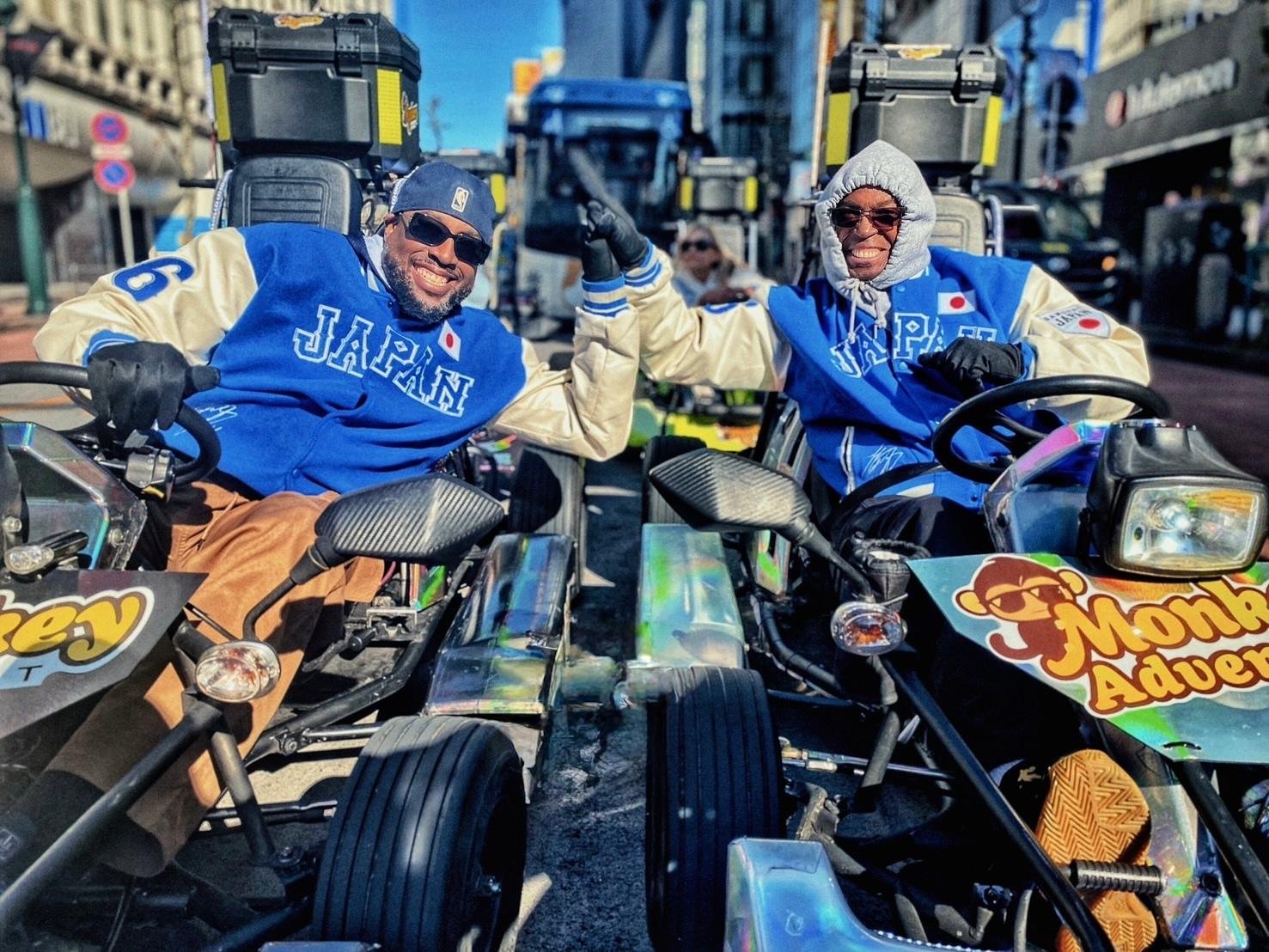
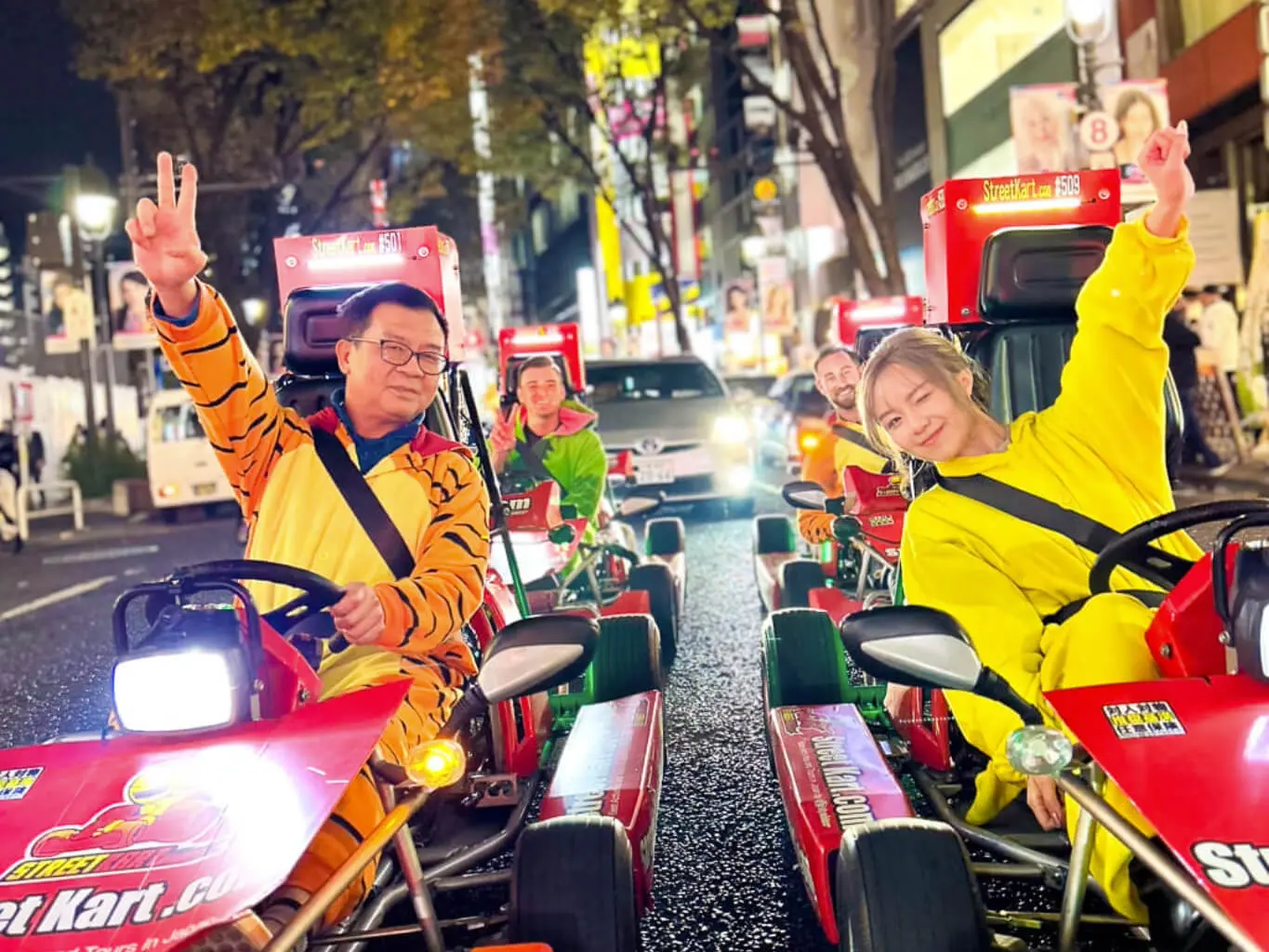
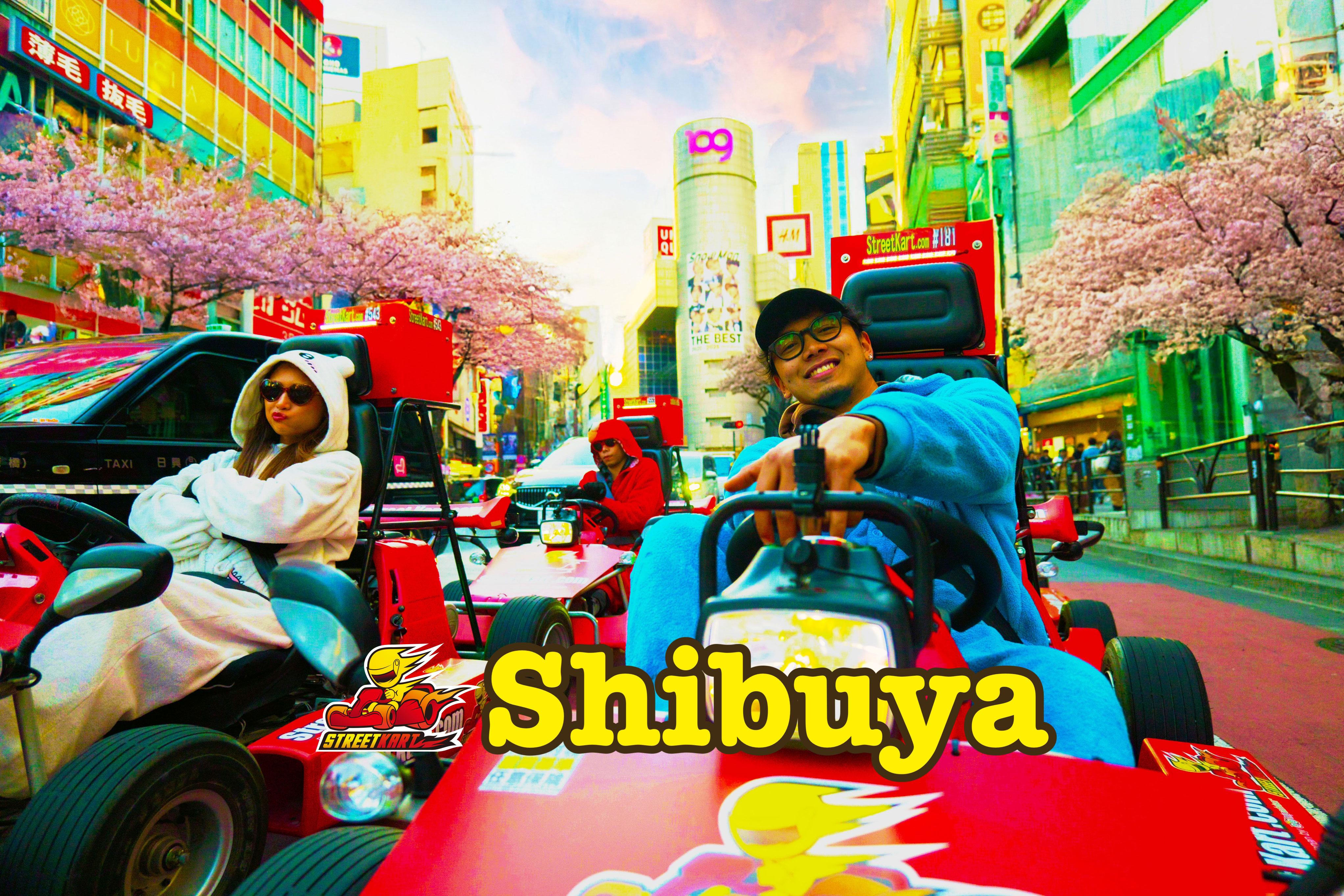
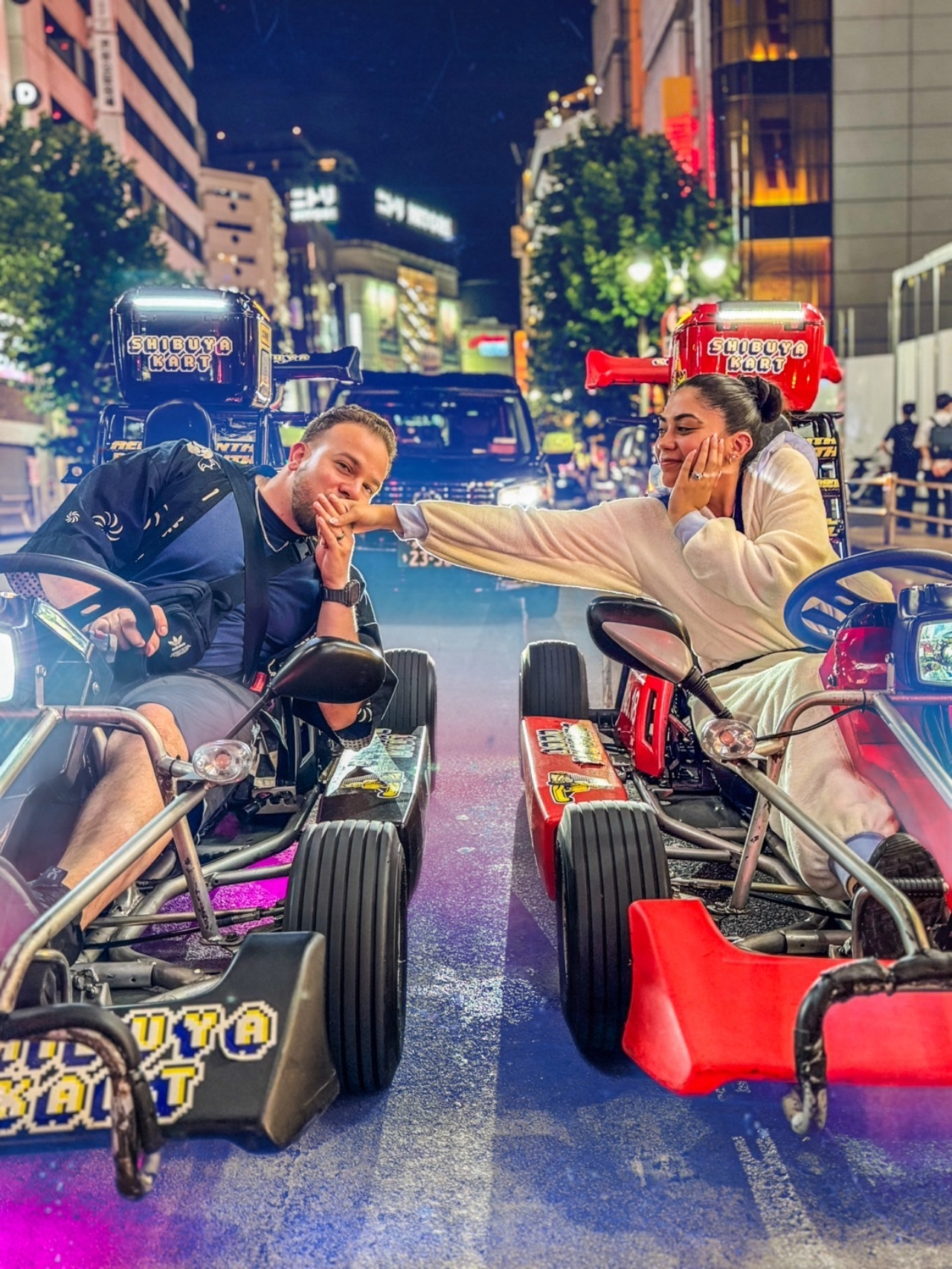
Before departure, drivers pick from a rack of washed superhero-style costumes stored at the shop, a signature feature distinguishing this course from standard rental karting.
You arrive at the Maruyama-cho garage and hand over your passport and international driving permit for the mandatory check. A guide fits you to a kart, walks you through the pedals and the single-file formation, and clips your seatbelt before the engine turns over. You pull out low to the ground, the tarmac inches beneath you, and the first slope of Dogenzaka drops away toward the lights. You follow the lead kart in convoy, throttle steady, as the route curves toward the Scramble. You wait at the signal with the same taxis you usually watch from a pavement, then roll across as the pedestrian tide parts. You feel the engine note bounce off glass towers on Center Gai, and you catch the Hachiko statue sliding past on your left. Mid-drive you climb a quieter back street, the traffic thinning, before the loop feeds you back toward the neon core for a second pass. Your hands learn the steering's weight; your eyes stop watching the kart and start reading the city. When the hour closes and you coast back to Maruyama-cho, you cut the engine and the noise of a shibuya go kart circuit gives way, abruptly, to ordinary street sound.
All the details about your upcoming adventure in one place
A shibuya go kart run puts you behind the wheel of a street-legal buggy, rolling past the Scramble Crossing and neon storefronts with a lead guide setting the pace. These shibuya go kart tours suit first-timers and returning drivers alike, pairing an easy automatic vehicle with costume rentals and a compact loop through central Tokyo. Guides handle the route so you can focus on the ride and the city rushing by.
Street go-karting in Tokyo owes its existence to a single legal decision that reshaped an entire tourism category. When operators first put low-slung recreational karts onto public roads around 2015, the vehicles fell into a regulatory gap: Japanese law then classified them as compact cars requiring only an ordinary licence, with no seatbelt or helmet mandate. The novelty of driving a shibuya go kart alongside taxis and buses spread quickly, and Maruyama-cho became one of several launch points feeding into the wider Shibuya road grid. The boom drew a famous lawsuit. Nintendo pursued the best-known operator over costumes and branding that evoked its racing franchise, and in 2018 and 2020 Japanese courts ruled against the unauthorised use of that intellectual property, awarding substantial damages. The verdict forced the industry to strip out copyrighted characters and rebrand around the generic act of street karting rather than any game. What survived was the format itself: an open-air kart, a licensed guide, and a mapped route through real city traffic. Regulation tightened in parallel. From 2020, seatbelts became compulsory on these karts following a series of collisions, and operators formalised the international-permit checks that now gate every booking. The shibuya go kart of 2026 is a more controlled machine than its early ancestor, yet it retains the core appeal that made it notorious: a driver's-eye view of Tokyo at asphalt level. Geography explains why Shibuya anchors the experience. The ward is a natural amphitheatre of sloping streets funnelling toward the Scramble, the pedestrian intersection crossed by tens of thousands at each signal change. A Tokyo street karting route threads past the Hachiko statue, the sloping approach of Dogenzaka, and the illuminated facades of Center Gai, giving the drive a density of landmarks few other districts can match. Shibuya street kart operators exploit that concentration, plotting loops that keep karts within sight of neon towers for most of the hour. The karts themselves are deliberately modest engineering. Small-displacement engines cap speeds well below highway pace, low ground clearance keeps the centre of gravity stable, and roll structures sit behind each seat. That simplicity is the point: the machine recedes so the city dominates. Where a conventional Tokyo landmarks tour observes the district through a coach window, this format places the visitor inside the traffic flow, reading the road as residents do. Two decades after recreational karts first appeared on Japanese asphalt, the practice has settled into a legitimate, licensed, and distinctly Shibuya institution.
The machine recedes so the city dominates.
Wear closed-toe shoes and clothing you don't mind getting slightly windblown, since the karts are open-air and move through Shibuya's street traffic. Loose scarves, long unsecured jackets, or wide-brimmed hats aren't recommended, as the shop provides costumes and helmets that fit over standard clothing. Layer up in cooler months, as the kart ride is fully exposed to the weather.
Bags, wallets, and spare clothing are stored in on-site lockers before the tour, since the karts have no secure storage compartments. Staff verify each driver's reservation and check a valid driver's license or International Driving Permit at the counter before issuing wristbands. Only small items that fit in a costume pocket or a phone mount can be carried during the drive.
A rentable 4K action camera can be mounted to the kart to record the ride through Shibuya Crossing and surrounding streets, or drivers may bring their own action camera and microSD card. Handheld phone photography while driving isn't permitted for safety reasons, since both hands are needed on the wheel through moving traffic.
Only licensed drivers can operate a kart, so this is not a stroller-friendly or young-child activity; each rider needs their own valid license to join the course. Costume rental is available for all drivers, and groups often ride together in convoy with a lead guide through the Shibuya streets.
Drivers must hold a license valid for use on Japanese public roads, so this experience is not accessible to non-drivers or those without an eligible license, IDP, or SOFA license. The kart seating is fixed and low to the ground, which may not suit guests with limited mobility; contact the shop in advance at +81-80-9999-2525 to discuss specific needs.
Food and open drinks aren't permitted inside the kart during the course, since hands must stay free for driving through active traffic. Sealed water bottles may be carried in a costume pocket, but any consumption should happen before departure or during scheduled stops.
Quieter weekday mornings
Evening slots book out fastest
Busiest day, reserve ahead
Hours
Daily 10:00 – 22:00, 1-hour Shibuya street kart course
Public transport · 5-15 min walk from station · Standard train fare, no extra ticket needed
Take the Keio Inokashira Line to Shinsen Station, then walk about 5 minutes to the shop; alternatively walk 15 minutes from JR Shibuya Station.
Taxi · 10-20 min depending on traffic · Metered taxi fare
Taxis from central Shibuya or Shinjuku can reach Maruyama-cho directly, useful for evening arrivals during the 18:00–20:00 window.
Walk · 15 min · Free
From JR Shibuya Station's Hachiko Exit, it's a roughly 15-minute walk uphill into the Maruyama-cho district.
Bookings for the shibuya go kart course can generally be cancelled or rescheduled free of charge up to 24 hours before the reserved time slot; cancellations made after this window, or no-shows, typically forfeit the 8,000 JPY entrance fee. Contact the shop directly by phone at +81-80-9999-2525 to confirm your specific reservation's terms.
Recommended time
2-3 hours
Budget roughly 2 hours end to end for this shibuya go kart run: a 30-minute early check-in for waivers and license checks, the full 60-minute course, then 20-30 minutes for costume return and photos before you're back on the street. Add extra buffer if you're booking one of the shibuya go kart tours during peak evening hours, since the 18:00-20:00 window is the first to sell out and check-in lines stretch longer. Subtract time only if you arrive right at opening with a pre-confirmed slot and skip the costume browsing. Queues build fastest at the counter, not on the course itself, so early arrival matters more than a fast drive.
Crowd levels through the day
Weather · crowds · average price — dots go green to amber to red as each metric rises.
March to May brings mild temperatures around 15–20°C, comfortable for an open-air kart ride, with cherry blossom season drawing extra foot traffic near Shibuya in late March.
June to August is hot and humid with temperatures often above 30°C; evening slots after 18:00 avoid the harshest daytime heat.
September to November offers cooler, drier conditions around 15–22°C, generally the most comfortable season for a longer drive through the streets.
December to February is cold, sometimes near freezing at night, so daytime slots and warm layers are advisable for the open-air course.
A valid Japanese license, IDP, or SOFA license is mandatory; without one, staff cannot let you drive, so confirm eligibility before booking.
The 18:00–20:00 window is popular for neon lighting and fills up on weekends, so reserve a few days ahead in summer.
Since bags go into lockers, carry only essentials like ID, phone, and payment on your person.
Tours generally run rain or shine, so bring a light rain layer if forecasts call for showers.
Shinsen Station is a 5-minute walk while JR Shibuya Station is about 15 minutes, so plan your route accordingly.
Closed-toe shoes make it easier to operate the pedals safely on the automatic karts.
15-3 Maruyama-cho, Shibuya-ku, Tokyo 150-0044, Japan
Arrive 30 minutes before your reserved time slot
Get directionsThe route's signature shot: your kart threads the world's busiest intersection as pedestrians cross in every direction under giant screens. Stay seated and let the guide time the pass, since stopping mid-scramble is not permitted; a shibuya go kart run typically crosses it more than once per lap.
The climb up Dogenzaka is where the neon signage stacks tightest overhead, giving a saturated backdrop as the kart line weaves between izakaya facades and vending machines. Shoot from the passenger seat looking up and forward to catch the sign clutter in frame.
On most shibuya go kart tours the costumed guide pulls the group to a curb near the crossing or Center Gai to snap posed shots on a phone or shop camera, later shared with riders. This is the easiest hands-free portrait moment on the course.
After the crossing the course opens onto Omotesando's wider, tree-lined avenue, giving a calmer frame of glass storefronts and string lighting that contrasts with Dogenzaka's density. Good for a wide establishing shot of the kart line moving in formation.
The final stretch threads Harajuku's narrower lanes, where shopfront signage and pop-culture murals give a busier, colorful backdrop than the Shibuya side of the loop. Best captured looking sideways from the kart rather than straight ahead.
There is no dining counter at the shibuya go kart start point itself, so most riders eat on the surrounding streets in Dogenzaka, Center-gai, or Shinsen before or after their run.
All-you-can-eat-and-drink yakitori course starting around 3,900 yen; loud and quick, good for a pre-ride bite before joining shibuya go kart tours since seating turns over fast even on weekend evenings
Fresh sashimi and tempura with a daily specials sheet, a short walk from the karting start point; better suited to a relaxed post-ride dinner than a rushed pre-drive stop
Noodles alongside small izakaya plates just steps from Shinsen Station; a calmer choice for those doing an early skip-the-line shibuya go kart tour and wanting a sit-down lunch after
Known for tender fried half-chicken and a full drinks list, about five minutes from Dogenzaka; works well after dark once the shibuya go kart tickets crowd wraps up its run
Bright, spacious grill spot with beef and chicken skewers plus salads; a practical mid-priced stop for groups splitting before or after their course.
Real experiences from real travelers
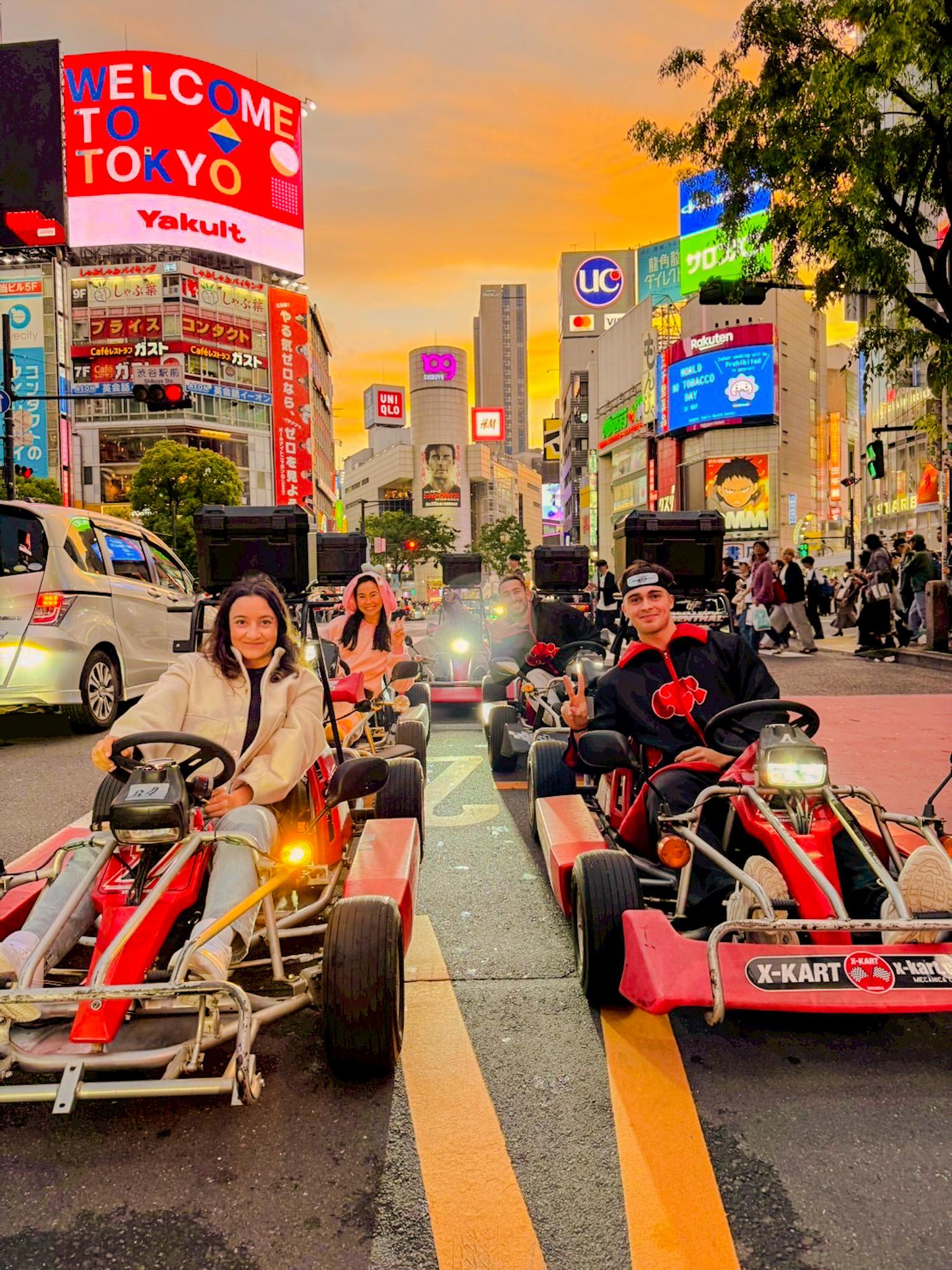
We booked the shibuya go kart tour for just after sunset and the timing was perfect, with the LED billboards flickering on as we pulled out. Sitting that low to the road makes ordinary traffic feel enormous, and the guide kept the whole convoy tight through the busy junctions. Bring a light jacket because the wind picks up once you get moving.
Even living nearby I had never done the street karting, and gliding past the scramble crossing at eye level with pedestrians was a different way to see my own city. The costumes drew a lot of friendly waves from tourists on the sidewalk. Roads were dry and the early evening light made everything glow orange.
The shibuya go kart route took us past more landmarks than I expected, including a long stretch with the towers lit up on both sides. My only note is that the seats sit very low so shorter drivers should ask for a cushion. Staff were patient during the practice loop before we headed onto public roads.
Rolling out around six in the evening meant we caught the sky turning pink over the intersection while the neon was already burning. The guide pointed out spots along the way and kept a steady pace so nobody fell behind. One of the better shibuya go kart tours I compared before booking.
You feel every gust and every engine rev, which is exactly what makes this fun. Our group of four stayed together the entire loop and the streets were quieter on a weekday morning. The Shibuya go-kart tour handled the language gap well with clear hand signals.
Suiting up before the drive set the mood and the other drivers on the road honked and laughed with us. Cool air, dry pavement, and a low sun made the whole thing feel cinematic. I would tell anyone comparing shibuya go kart tickets to just go for the evening slot.
The Shibuya street go-kart experience was smooth once we started, though the paperwork at check-in took longer than expected. Seeing the crossing packed with people while we idled at the light was a highlight. Grab your shibuya go kart tickets early because evening spots fill fast.
Instead of a coach we saw the Shibuya landmarks from an open kart and it felt far more alive. The engines are loud so you notice the buzz of the district in a new way. Warm September evening, clear skies, and a guide who clearly knew every turn.
Did a Shibuya sightseeing kart loop just after the rain cleared and the reflections off the wet road doubled all the neon. The convoy paced itself well and the practice area beforehand settled my nerves. Steady hands on the wheel and you are fine.
The karts sit low and the noise is real, so this is more thrill than quiet sightseeing. Passing under the big screens near the junction at dusk was the moment everyone reached for their phones. Dress warmer than you think even in spring.
Everything you need to know for your journey
Shibuya go kart operates daily from 10:00 to 22:00.
Yes, drivers need a valid Japanese driver's license, an International Driving Permit, an SOFA license for US Forces Japan, or an eligible foreign license with official translation; no license means no drive.
The 1-hour Shibuya street kart course costs 8,000 JPY per person.
Yes, lockers at the shop store bags, phones, and IDs while you drive, since the karts have no secure storage.
A rentable 4K action camera or your own action camera can capture the ride, but handheld phone photography while driving isn't allowed for safety.
Arriving between 18:00 and 20:00 offers twilight neon lighting and lighter daytime traffic through Shibuya Crossing.
Closed-toe shoes and clothing without loose scarves or wide hats are recommended, since costumes and helmets are provided by the shop.
Open food and drinks aren't allowed during the drive, though a sealed water bottle can be carried in a costume pocket.
The shop is a 5-minute walk from Shinsen Station on the Keio Inokashira Line, or about 15 minutes from JR Shibuya Station.
Only licensed drivers can operate a kart, so it isn't suited to young children, though teens or adults with an eligible license can join.
Cancellations made at least 24 hours before the reserved slot are generally free; later cancellations or no-shows typically forfeit the fee.
Shibuya Scramble Crossing, the Hachiko Statue, and Shibuya Sky observation deck are all within a 15-minute walk of the shop and sit along or near the kart route.
One of the world's busiest pedestrian crossings, with hundreds of people crossing at once when signals change. It sits directly on the go-kart route through central Shibuya.
A bronze statue commemorating the loyal Akita dog Hachiko, a popular meeting spot outside Shibuya Station. It draws steady crowds throughout the day and evening.
An open-air rooftop observation deck atop Shibuya Scramble Square offering views over the crossing and Tokyo skyline. Sunset and evening slots are popular for the illuminated cityscape.
A Shinto shrine set within a forested park near Harajuku, dedicated to Emperor Meiji and Empress Shoken. The wooded approach contrasts with Shibuya's dense streets.
A pedestrian shopping street packed with neon signs, arcades, and fashion boutiques near Shibuya Station. It's especially lively after dark.
Shibuya offers dense lodging options from capsule hotels to international chains, all within a short walk or taxi ride of Maruyama-cho.
A high-rise hotel near Shibuya Station with city-view rooms, a short walk from the go-kart shop.
A design-forward boutique hotel in central Shibuya popular with younger travelers.
Small guesthouses and budget lodgings cluster near Shinsen Station, close to the shop entrance.
Join thousands of happy travelers who have discovered this incredible experience
Book Your Experience Now