
3 hr
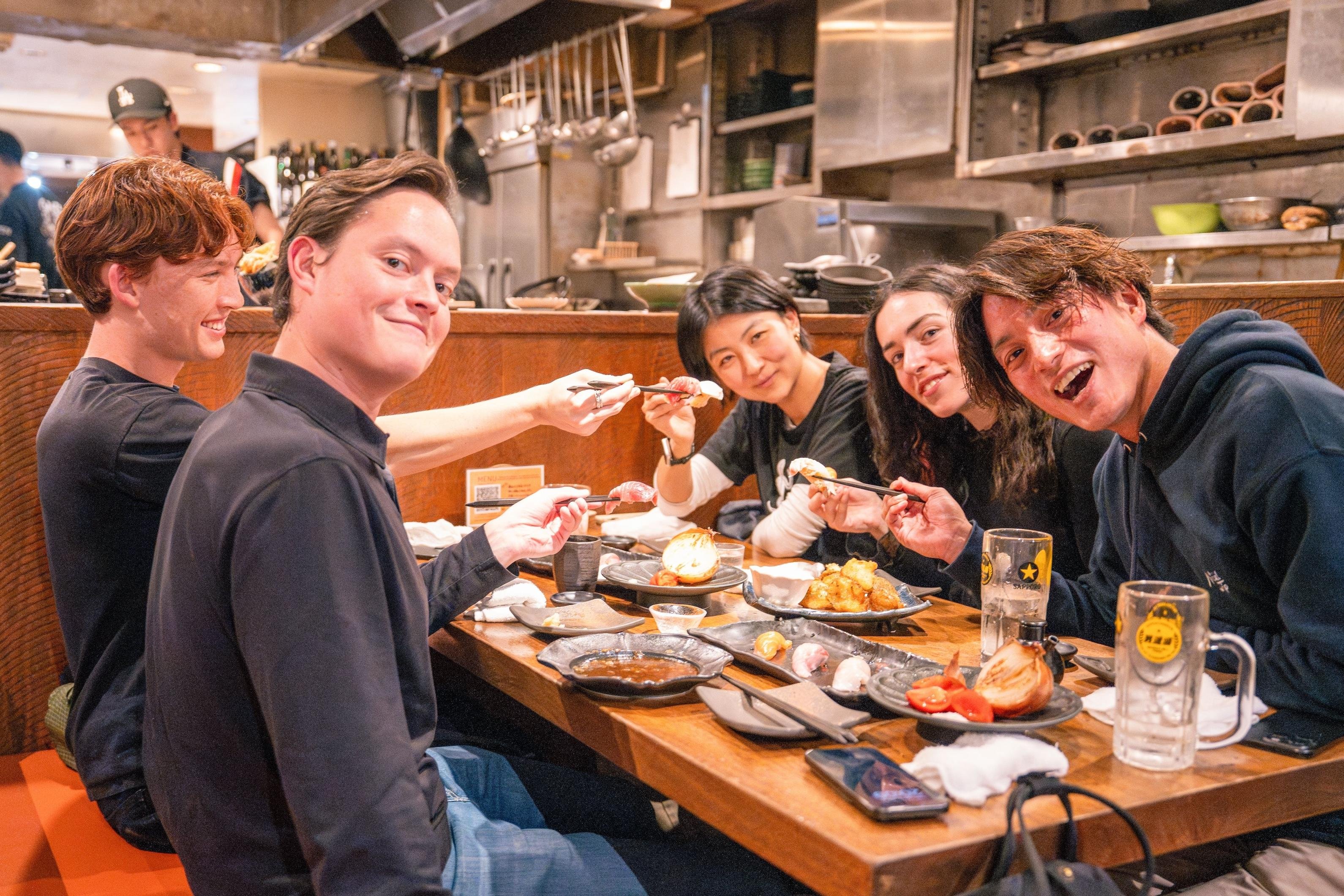
Shibuya Hidden Bar & Izakaya Night Tour
- Entry ticket
- Mobile voucher
- Valid same day
- Free cancellation
What To Do In Shibuya At Night — Rooftop Skyline & Reserved Evening Entry
Daylight fades over the scramble, neon rises to meet it.
Compare fares, pick the fit — all bookings are mobile-voucher and eligible for free cancellation where shown.
3 hr
3 hr 30 min
2 hr
Worth it for first-time visitors and photographers
When you weigh what to do in shibuya at night, the 3,000 JPY walk-up rate buys real value: an open-air rooftop perch at Shibuya Scramble Square, no forced exit time, and a night skyline that unfolds as daylight fades. Arrive between 18:00 and 19:30 and you catch both dusk and full illumination on one 3,000 JPY ticket, so the per-hour cost drops the longer you linger. Compared with paid observation deck experiences elsewhere in Tokyo, this open rooftop delivers a rare wind-in-your-hair vantage over the famous crossing below. For first-time Tokyo visitors and photographers chasing evening illumination over the Shibuya landmark, the payoff justifies the fee. Budget travelers and anyone visiting on a rainy or hazy evening will feel the pinch, since the open deck offers little shelter and clouds erase the skyline. A Shibuya observation deck tour like this rewards clear nights most.
Bottom line: On a clear night, what to do in shibuya at night starts here — clear skies make the 3,000 JPY worth every yen.
For what to do in Shibuya at night, Shibuya Sky's open-air rooftop over the Scramble Crossing beats Tokyo Skytree's greater height if neon-lit street views matter more than altitude and Fuji sightlines.
|
Top pick Shibuya Sky |
Tokyo Skytree | |
|---|---|---|
| Height and view distance | 229 m rooftop, close-in city view | |
| 350 m/450 m decks, reaches Mt. Fuji | Open-air vs indoor experience | Rooftop deck, open to the sky |
| Enclosed glass observatory decks | Weather resilience | Wind or rain can close rooftop |
| Indoor decks unaffected by weather | Price | 3,000 JPY walk-up before 15:00 |
| From roughly 1,800–3,100 JPY combo | Crowd feel | Timed entry, sunset slots sell out |
| Walk-up accepted, larger deck capacity | Best for night views | Scramble Crossing neon directly below |
| Wide skyline sweep, distant city lights | Photography conditions | Unobstructed open-air, no glass glare |
| See tickets & prices |
Verdict: Choose Shibuya Sky for an intimate, open-air view straight down onto Shibuya's neon crossing, and Skytree when height, indoor comfort, and a shot at Mt. Fuji matter more than proximity to the street below.
Hand-picked experiences loved by thousands of travelers
4 hours
Free Cancellation
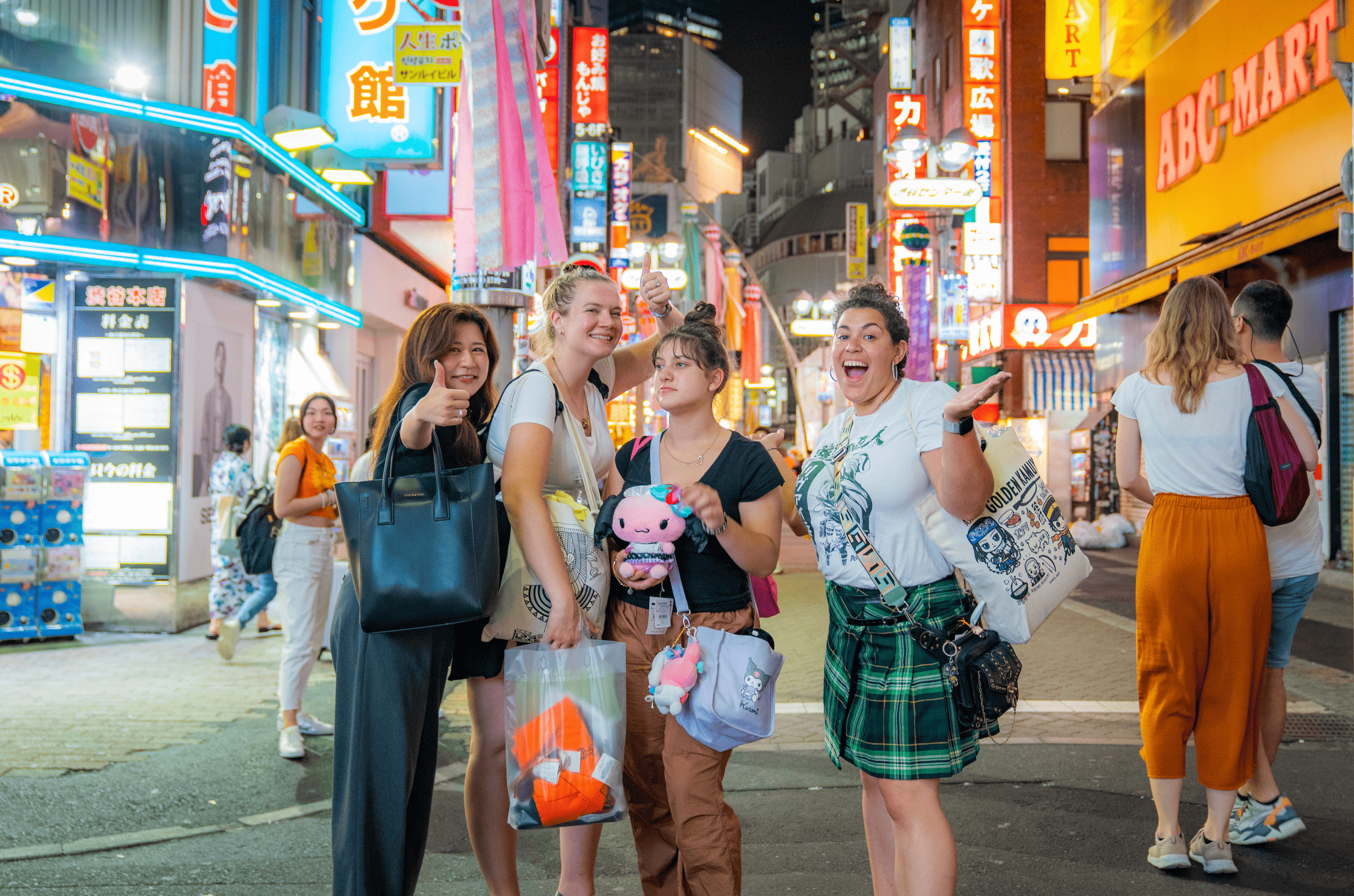
Dive into Tokyo after dark — neon alleys, iconic crossings, hidden bars, and local eats await.
2 hours
Free Cancellation
Discover Tokyo's electric Shibuya district by night — rooftop views, neon chaos, and local vibes.
1 hour
Free Cancellation
Wander Shibuya's glowing backstreets with a pro photographer capturing your real Tokyo moments.
Enter through the 14th-floor lobby of Shibuya Scramble Square and present your ticket at the counter.
Take the elevator through the immersive Sky Gate display up toward the 45th and 46th floors.
Walk the indoor 46th-floor gallery with floor-to-ceiling windows and ambient art displays.
Reach the open-air 47th-floor rooftop for 360-degree views, including the Scramble Crossing below.
Stay through sunset as the skyline lights up, one of the better ways to round out what to do in Shibuya at night.
Grab a drink or snack at the 46th-floor lounge before heading back down.
An immersive elevator lobby transitioning from the 14th floor with projected visuals, music, and lighting that builds anticipation before reaching the observation floors; the ride takes visitors up dozens of stories in under a minute.
An indoor 46th-floor viewing floor with floor-to-ceiling windows wrapping nearly three-quarters of the building, paired with ambient screens showing art and design content; it serves as the fallback viewing area when the rooftop closes for weather.
The open-air rooftop deck 229 meters above street level, offering 360-degree views of the Shibuya Scramble Crossing and, on clear days, Mt. Fuji in the distance.
A cluster of net-style hammock seating on the rooftop where visitors recline to view the sky and skyline, requiring some climbing to use.
A 46th-floor lounge serving drinks and light bites with panoramic windows, functioning as a rest stop between gallery and rooftop visits.
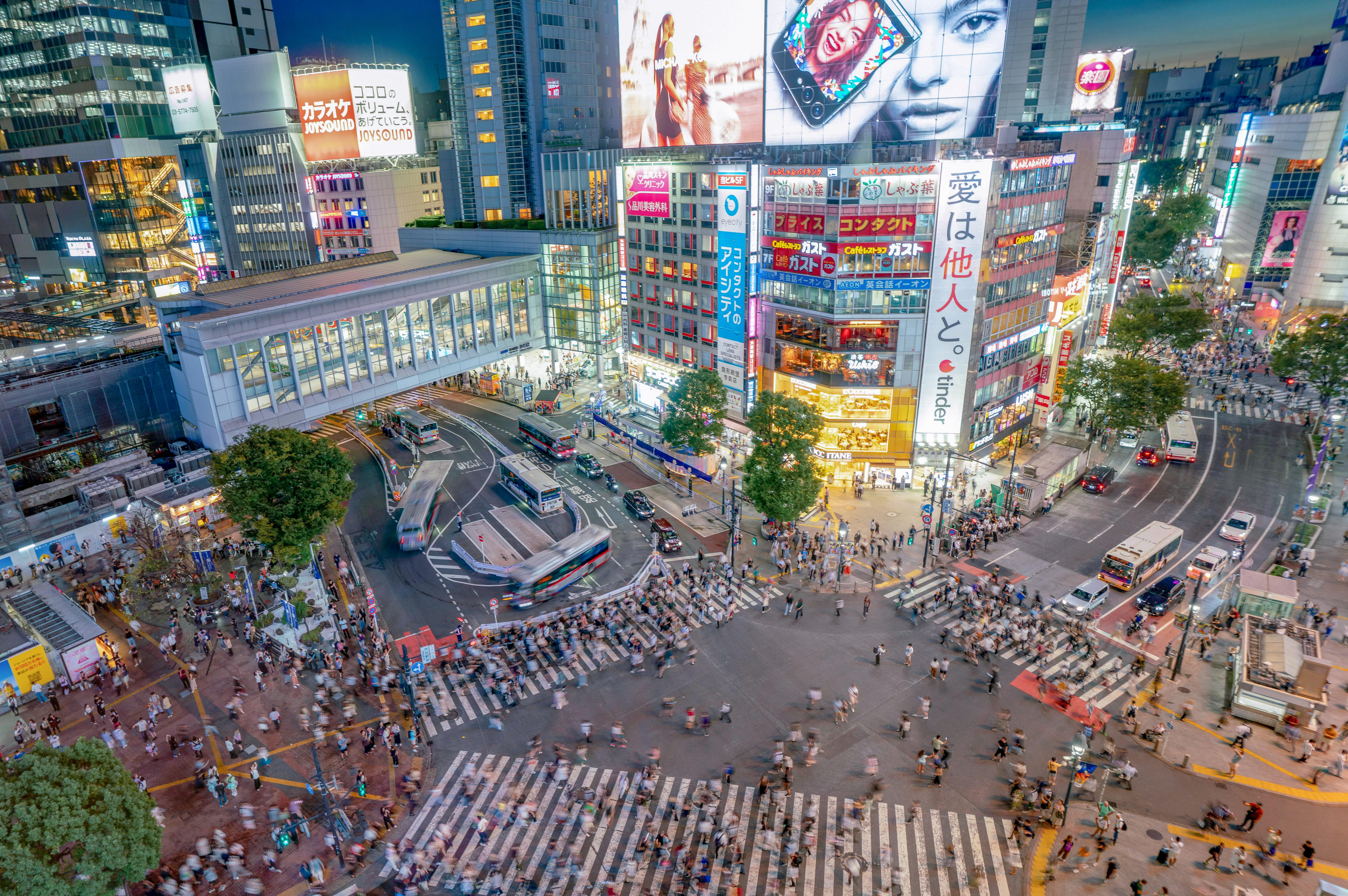
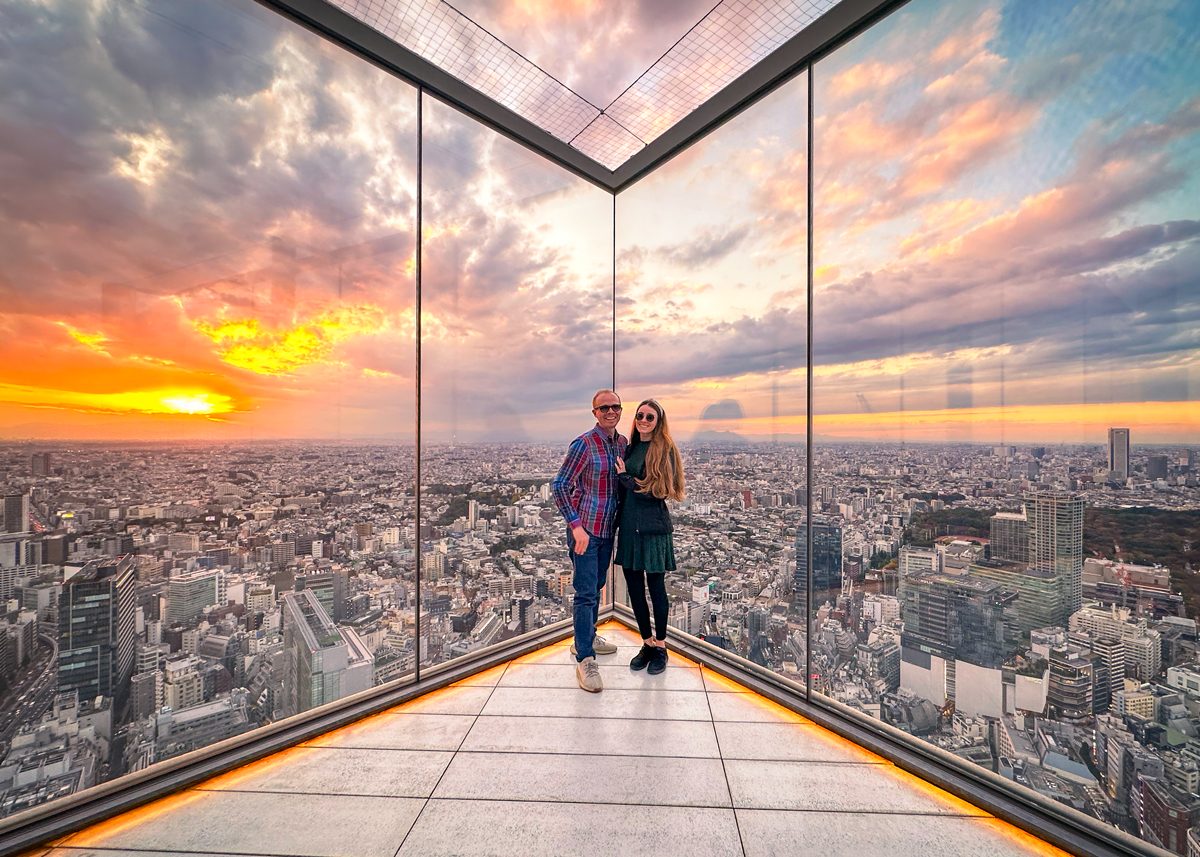
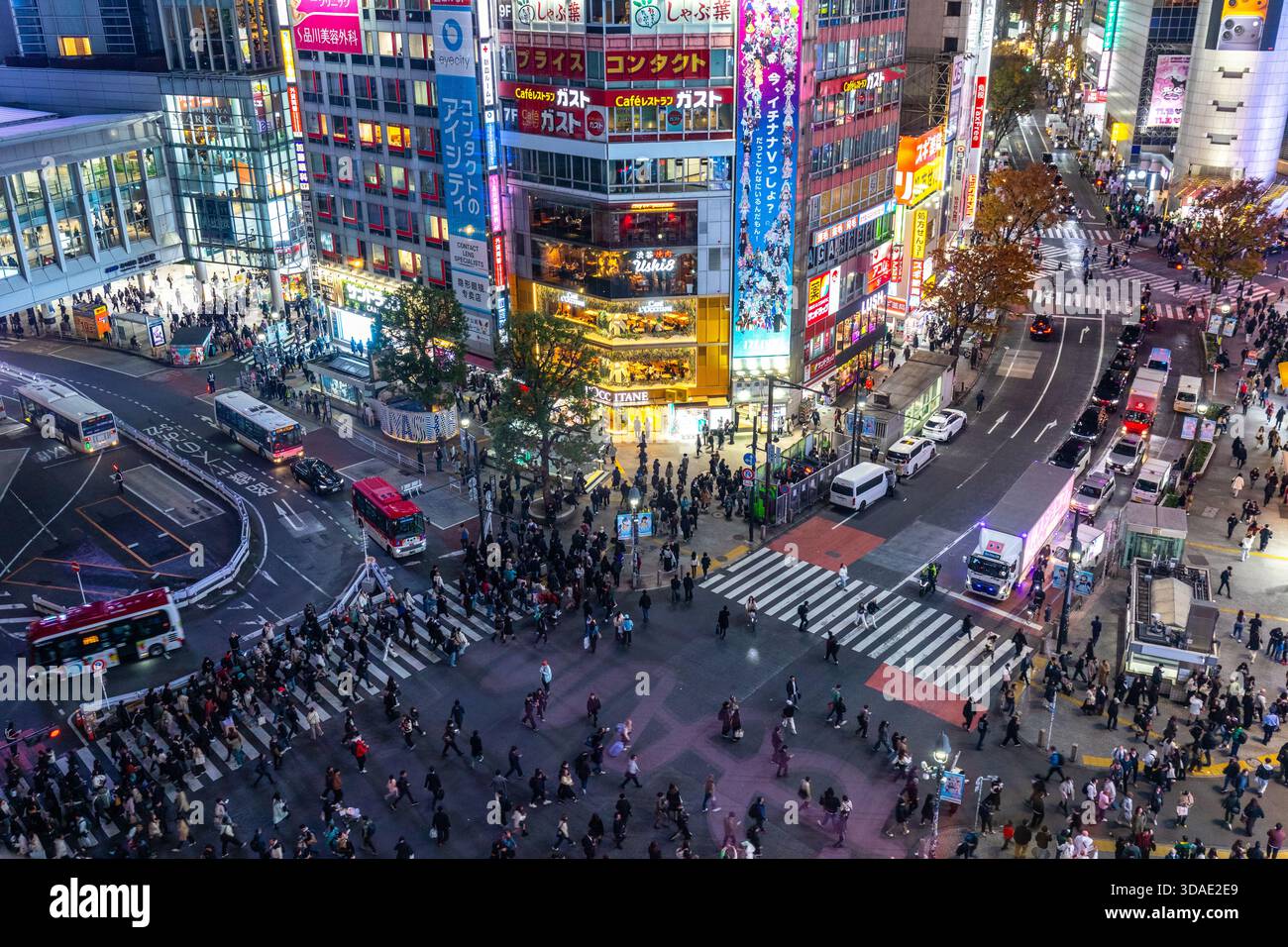
The west-facing corner of the rooftop overlooking Shibuya Scramble Crossing directly below, where the pedestrian flow resembles a moving grid pattern, especially busy between 18:00 and 20:00.
You arrive between 18:00 and 19:30, timing the last daylight against the rising neon, and step off the escalators inside Shibuya Scramble Square at 2-24-12 Shibuya. You pass through the interior galleries first, where mirrored corridors and light installations stretch the walk upward and slow your pace before the release. Then the elevator lifts you toward the open deck. You feel the temperature shift as the enclosed space gives way to open sky at 229 metres. You walk the perimeter clockwise, and the district unfolds below — the scramble pulsing green then halting, trains threading the valley, the Skytree marking the far horizon. You lean against the edge barrier and watch a single crossing cycle empty and fill. You drift toward the hammock nets strung across one corner and lie back, the skyline inverted above you. The wind carries fragments of the crowd noise far below. As full dark settles, the advertising screens brighten and the whole valley reads as circuitry. A well-planned what to do in shibuya at night tour ends here, unhurried, with the city at its most electric. You take the descent slowly, the elevator returning you to ground level where the crossing itself waits — the same intersection you watched from above, now surrounding you at street scale.
All the details about your upcoming adventure in one place
Figuring out what to do in shibuya at night means moving between the Scramble Crossing, neon-lit backstreets, and izakaya alleys of Nonbei Yokocho, with the Shibuya Sky observation deck offering wide views over the district after dark. Guided what to do in shibuya at night tours pair the energy of Center-gai with quieter local haunts, blending Tokyo nightlife with landmark stops. Whether you prefer 渋谷の夜 wandering or a structured Shibuya evening walk, the area rewards curiosity after sunset.
The rooftop that now defines what to do in shibuya at night sits 229 metres above one of the busiest pedestrian crossings on earth, where an estimated 2,500 people cross at a single green light. That crossing — the Shibuya Scramble — gave its name to the tower built above it, Shibuya Scramble Square, which opened its first phase in November 2019 as the tallest structure in the district. Shibuya itself was farmland and a modest post-station until the railway reshaped it. When the Yamanote Line stitched the district into central Tokyo in the early twentieth century, the low valley — 'Shibuya' translates loosely as 'bitter valley' — filled with department stores, cinemas, and the youth culture that would later export Harajuku fashion and street style worldwide. The Hachiko statue, installed in 1934 and rebuilt after the war, still fixes the crossing's western edge, a small bronze dog that has become the city's most-used meeting point. The descriptive Shibuya Scramble Square tour that visitors take today climbs through a building designed by a consortium including Nikken Sekkei and Kengo Kuma, whose glass-and-steel massing was engineered to fold the chaos of the intersection into a vertical sequence. The open-air deck, unenclosed by glass on its uppermost level, lets wind and city sound reach the viewer directly — a deliberate rejection of the sealed observation deck. From here the skyline reads as layered geography: the Tokyo Tower and Tokyo Skytree anchor the middle distance, Mount Fuji appears on clear evenings to the west, and the neon grid of the entertainment quarter burns below. What makes this one of the essential Shibuya landmarks is less the height than the vantage it grants over a district in permanent motion. Where older Tokyo viewpoints look outward over calm bays and palace grounds, this one looks down into a machine of crossing bodies, advertising screens, and rail lines converging from every direction. The evening illumination transforms the scene the moment the sun drops behind the towers of Shinjuku. The building's design encourages a slow spiral of ascent rather than a single elevator verdict. Interior galleries frame the approach; the rooftop delivers the release. For anyone weighing what to do in shibuya at night, the structure functions as both compass and stage — a fixed high point from which the surrounding sprawl of Dogenzaka, Center Gai, and the Miyashita district becomes legible. It is a young landmark, barely half a decade old, already fixed in the district's identity.
The open-air deck rejects the sealed viewpoint — wind and city sound reach the viewer directly, 229 metres above the crossing.
No formal dress code applies when deciding what to do in Shibuya at night, but the open-air Sky Stage on the rooftop is exposed to wind, so a light jacket is worth carrying even in summer. Closed, comfortable shoes are recommended since the rooftop floor is uneven decking in places. Hats and loose accessories may need to be secured or stowed, as the rooftop can be breezy after dark.
All loose personal items, including bags, hats, and phone cases, must be placed in a coin-operated locker (100 JPY, refunded) before stepping onto the open-air rooftop; only cameras and phones can be carried out. Security staff check bags at the 14th-floor entrance lobby before visitors proceed to the elevators. Large suitcases and oversized luggage are not permitted anywhere in the facility and should be left at a station locker beforehand.
Personal photography and phones are permitted throughout, including on the open-air Sky Stage, but tripods, selfie sticks, and professional camera rigs with detachable lenses require prior approval from management. Drones and any remote-controlled recording devices are strictly prohibited on the rooftop. Because loose items must go in lockers, only handheld cameras and phones can be brought to the viewing corners.
Children aged 5 and under enter free, with discounted tickets for older children and students, making this an approachable stop when planning what to do in Shibuya at night with kids in tow. Strollers are welcome throughout, and staff can assist with stroller storage before the rooftop, where a stroller exchange may be offered. The Cloud Hammocks seating area on the rooftop is popular with children but requires some climbing, so younger kids may need help from an adult.
The facility is fully wheelchair accessible with elevators connecting the 14th, 45th, 46th, and rooftop floors, plus priority lifts between the 46th and 47th floors, and staff on hand to guide wheelchair and stroller users. The central helipad platform on the Sky Stage has five steps and is not wheelchair accessible, though the surrounding rooftop area is flat with wide walkways. Gender-neutral and wheelchair-accessible restrooms are available on the observation floors.
Outside food and drink cannot be consumed on the rooftop or in the indoor observation galleries, though a lounge on the 46th floor sells drinks and light snacks for on-site consumption. Sealed water bottles are generally permitted through security but must fit in the personal locker if not being carried. No dedicated dining seating exists on the Sky Stage itself, so meals are better planned in the restaurant floors below rather than at the top.
Last entry 21:20
Quietest weekday for what to do in Shibuya at night
Evening slots sell out fastest
Heaviest weekend crowds after 18:00
Hours today
10:00 – 22:30 (last admission 21:20)
Address
Shibuya Scramble Square, 2-24-12 Shibuya, Shibuya-ku, Tokyo 150-6145, Japan
Access
Elevators at every level, priority lifts to the rooftop
Best window
18:00–19:30 for daylight fading into the night skyline
Entry
3,000 JPY adult walk-up rate before 15:00, per person
Public transport · 1–5 minutes from Shibuya Station · Standard train fare only
Take the JR Yamanote Line, Tokyu, Keio, or Tokyo Metro lines to Shibuya Station; the Shibuya Sky entrance is a 1-minute walk from the station's south exit, or reachable directly from exit B2 via elevator to the 14th-floor lobby.
Walk · 3–5 minutes · Free
From central Shibuya streets around the Scramble Crossing, the entrance is a short walk directly into the connected tower.
Taxi · 10–20 minutes from central Tokyo · Metered fare, moderate cost
Taxis can drop off at street level near Shibuya Scramble Square's main entrance, though traffic around the crossing can slow arrival during peak evening hours.
Walk-up tickets purchased at the door are non-refundable, but rescheduling to a different time slot is possible once per ticket, subject to availability. The 3,000 JPY adult walk-up rate applies before 15:00 and is not refunded for no-shows or late arrivals.
Recommended time
60-90 minutes
Most people spend 60 to 90 minutes here, enough to cover the outdoor deck, Sky Gallery, and a slow lap for photos, with no hard exit limit once you're inside. Planning what to do in Shibuya at night usually starts with the 18:00-19:30 window, since it bridges daylight into the illuminated skyline without needing a separate day trip and a night trip. Add 20-30 minutes if you're queuing at a sunset booking, since that slot draws the thickest crowds of the day; subtract time if you arrive earlier and just want a quick skyline check before dinner. Many skip-the-line Shibuya night tours are built around this same bridge window for exactly that reason.
Crowd levels through the day
Weather · crowds · average price — dots go green to amber to red as each metric rises.
March to May brings mild evenings around 15–20°C, good for the open-air rooftop, with cherry blossom season drawing extra visitors in late March and early April.
June to August is hot and humid with sunset around 19:00, so evening slots for what to do in Shibuya at night sell out fastest; the rooftop can close briefly during sudden summer storms.
September to November offers cooler, clearer air with sunset shifting earlier toward 17:00, giving good visibility for both cityscape and Mt. Fuji sightings on clear days.
December to February has the earliest sunsets, around 16:30, plus seasonal light installations on the 46th floor through the holiday season, though rooftop wind chill is more noticeable.
Advance tickets are typically cheaper than the door rate and help avoid a sold-out counter, especially for evening slots.
The open-air Sky Stage can close temporarily in rain or strong wind, so check the forecast before committing to a sunset slot.
The rooftop is exposed to wind at 229 meters up, so a jacket makes the open-air deck more comfortable even in summer.
Subway riders can reach the 14th-floor lobby directly via elevator from exit B2, avoiding stairs entirely.
Loose items must go into a coin locker before the rooftop, so budget a few extra minutes at the transition point.
The neon-lit Center-gai shopping street is a five-minute walk away and pairs naturally with a rooftop visit.
The four corner viewpoints on the rooftop draw the longest queues, so circulate to less crowded sides first.
Shibuya Scramble Square, 14F, 2-24-12 Shibuya, Shibuya-ku, Tokyo
Ticket counter and bag-check point before the elevators up
Get directionsShibuya Station, Shibuya-ku, Tokyo
1-minute walk to Shibuya Scramble Square from this exit
Get directionsA glass-free corner cut into the rooftop parapet where you stand at the very lip of Sky Stage with Shibuya Scramble Crossing laid out directly below; framing here for what to do in Shibuya at night usually means shooting straight down into the crossing's light trails with no railing or glass in the shot.
Net-style hammocks strung along the western facade let you recline flat and shoot straight up or sideways across the skyline toward the sunset-facing side of Tokyo. Stand or crouch beside the nets rather than lying down if you want a clean horizon in frame.
The open-air walkway on the building's eastern edge lines up Tokyo Tower's illuminated silhouette across the skyline, best shot with a long lens braced against the perimeter railing rather than the glass panels further along. It gets quieter here than the crossing-facing side.
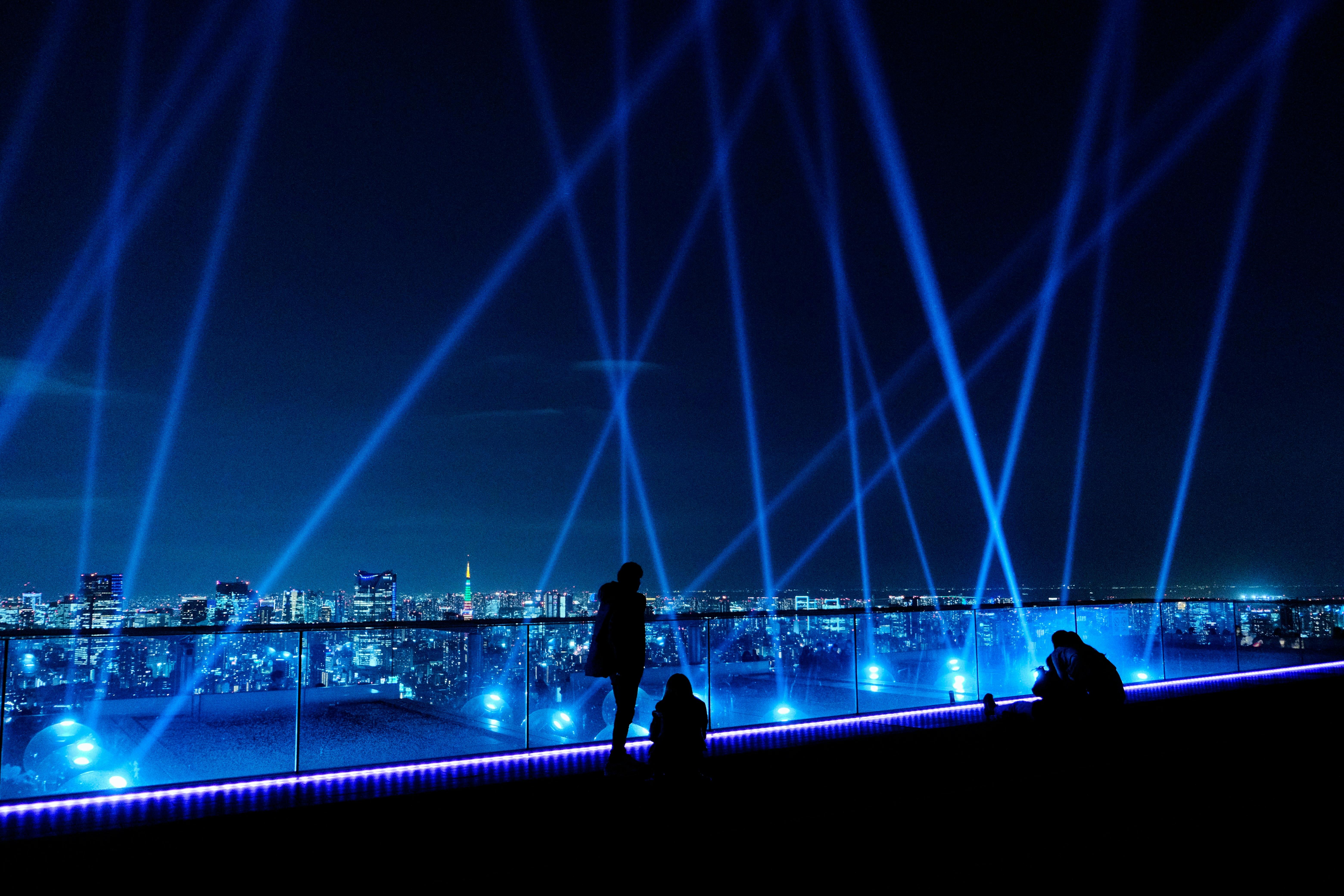
Eighteen light beams fire skyward from the rooftop every thirty minutes after 19:00, and the burst is shot best from the open center of Sky Stage where the beams and the city glow overlap in one frame. Arrive a few minutes early to claim a clear sightline before the crowd bunches up.
Dining here spans three levels: light snacks right at the observation deck, a reserved rooftop bar for drinks with a view, and a full sit-down meal one floor below — so what to do in Shibuya at night can easily include dinner without leaving the building. Bring an appetite for small plates up top and save the heavier meal for the restaurant floors.
Hot dogs, fries and the SKY Ramune Cone dessert pair with cocktails and craft beer at this music bar beside the indoor deck's exit. It gets busy right at sunset, so it suits a quick snack stop rather than a sit-down dinner.
Sofa seats come with a 50-minute time slot, two drinks or champagne, and a snack like truffle potato chips, plus original craft beer from Y.Y.G. Brewery. Standing tables are walk-up only; sofas need advance booking and suit a proper rooftop night-out.
Individual hot pots of Kuroge Wagyu beef and seasonal vegetables from Akita, served in a Kashiwa Sato-designed room overlooking Shibuya Crossing. Good for a full meal before or after the sky deck; queues build on weekend evenings.
Real experiences from real travelers
Figuring out what to do in shibuya at night was easier than expected once we started at the Scramble Crossing around 9pm and just let the neon pull us around. We climbed up to Shibuya Sky for the observation deck views, then wandered into Center Gai as a light drizzle made all the signage reflect off the pavement. The scale of the crowds crossing at once is something you feel in your chest.
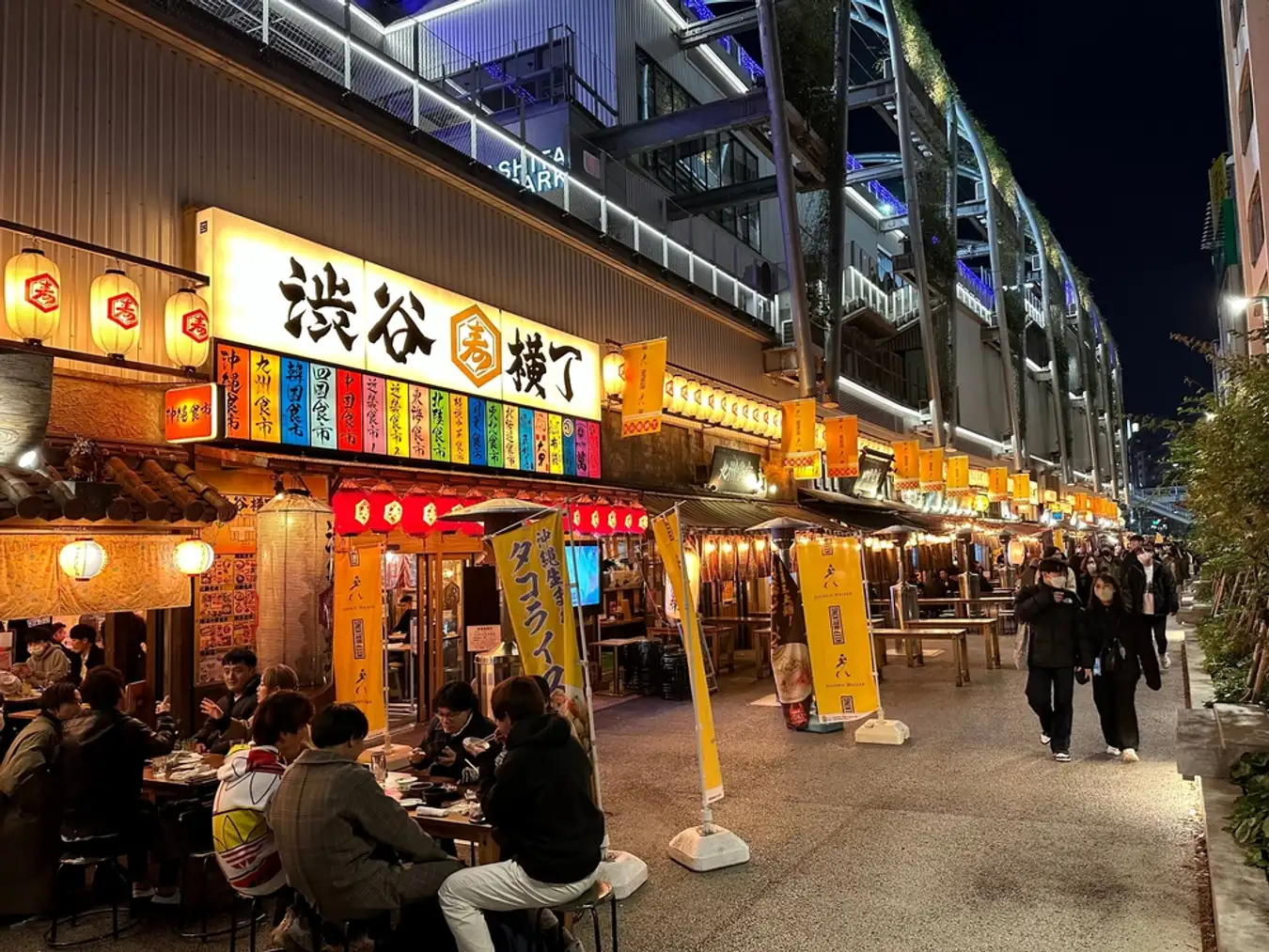
渋谷の夜は何度来ても飽きません。The Nonbei Yokocho alleys near the tracks stay warm and smoky well past midnight, and the lantern light makes even a quick beer feel special. Locals and travelers squeeze into six-seat bars together.
We booked one of the small-group what to do in shibuya at night tours and our guide walked us from Hachiko through the backstreet izakayas. The observation deck at Shibuya Sky was the highlight, though it was windy up on the rooftop and I wish we'd brought a jacket for July evenings. Good intro if you don't speak Japanese.
Standing at the Shibuya scramble crossing after 11pm, with the LED billboards flashing and the trains rumbling below, is the kind of Tokyo landmarks moment you come for. We grabbed skewers in a tiny stall off Center Gai and watched the sea of people reset every light cycle. Humid summer air made the neon feel even more electric.
Our shibuya night tour took us into spots we'd never have found alone, including a standing bar in Nonbei Yokocho where the owner poured sake by hand. Planning what to do in shibuya at night on your own is doable, but the local stories added a lot. Cold March evening, but the alleys trapped the warmth.
The Shibuya Sky observation deck just after sunset gave us the whole glowing city, Tokyo Tower blinking in the distance. Afterward we drifted down into the neon streets and slurped ramen at a counter past midnight. Reserve the deck ahead in winter when the air is clearest.
Even in late January the Shibuya crossing was jammed with people after dark, umbrellas out under the giant screens. We used one of the what to do in shibuya at night tickets deal for the sky deck and skipped a long queue. Bring cash for the tiny bars, many don't take cards.
Everyone talks about the scramble, but Nonbei Yokocho and the little lantern-lit lanes behind it stole the evening for us. Deciding what to do in shibuya at night comes down to how deep into the side streets you're willing to go. Warm early-summer night, cold beer, grilled skewers — perfect.
December nights in Shibuya are crisp and the illumination pops against the dark sky. We did a self-guided loop from Hachiko up to the observation deck, then down through Center Gai. The city really is a different animal once the neon takes over.
The neon and noise of Shibuya after dark are a lot in the best way, though after three hours we were ready for quiet. A short shibuya night tour got us oriented before we explored on our own. Watching the crossing from the second-floor cafe window was our favorite calm moment.
Everything you need to know for your journey
Shibuya Sky is open daily from 10:00 to 22:30, with last admission at 21:20, making early evening the practical window for what to do in Shibuya at night.
Yes, the facility has elevators at every level and priority lifts to the rooftop, though the elevated helipad area on the Sky Stage has five steps and is not wheelchair accessible.
Drones, tripods without approval, selfie sticks without approval, large suitcases, glass bottles, and outside alcohol are among the items not allowed inside Shibuya Sky.
Personal photography with phones and handheld cameras is welcome on the rooftop, though tripods and professional rigs need prior approval and drones are not permitted.
Arriving between 18:00 and 19:30 catches daylight fading into the night skyline before last admission, while weekday visits tend to be quieter than weekends.
There is no strict dress code, but a light jacket is recommended for the open-air rooftop, which can be windy even in warm months.
Outside food and drink cannot be consumed on the rooftop or gallery floors, though the 46th-floor lounge sells drinks and snacks on site.
Shibuya Sky sits directly above Shibuya Station, a 1-minute walk from the south exit, with direct elevator access from subway exit B2 to the 14th-floor lobby.
Yes, children aged 5 and under enter free and strollers are permitted throughout, making Shibuya Sky a workable family stop in the evening.
Walk-up tickets are generally non-refundable, but rescheduling to a different time slot is possible once per ticket, subject to availability.
Shibuya Crossing, the Hachiko statue, and Shibuya Center-gai are all within a few minutes' walk for extending an evening out.
The adult walk-up rate is 3,000 JPY per person before 15:00 at the door, with discounted advance and child rates also available.
The world's busiest pedestrian intersection, visible from the rooftop above and directly below the tower at street level.
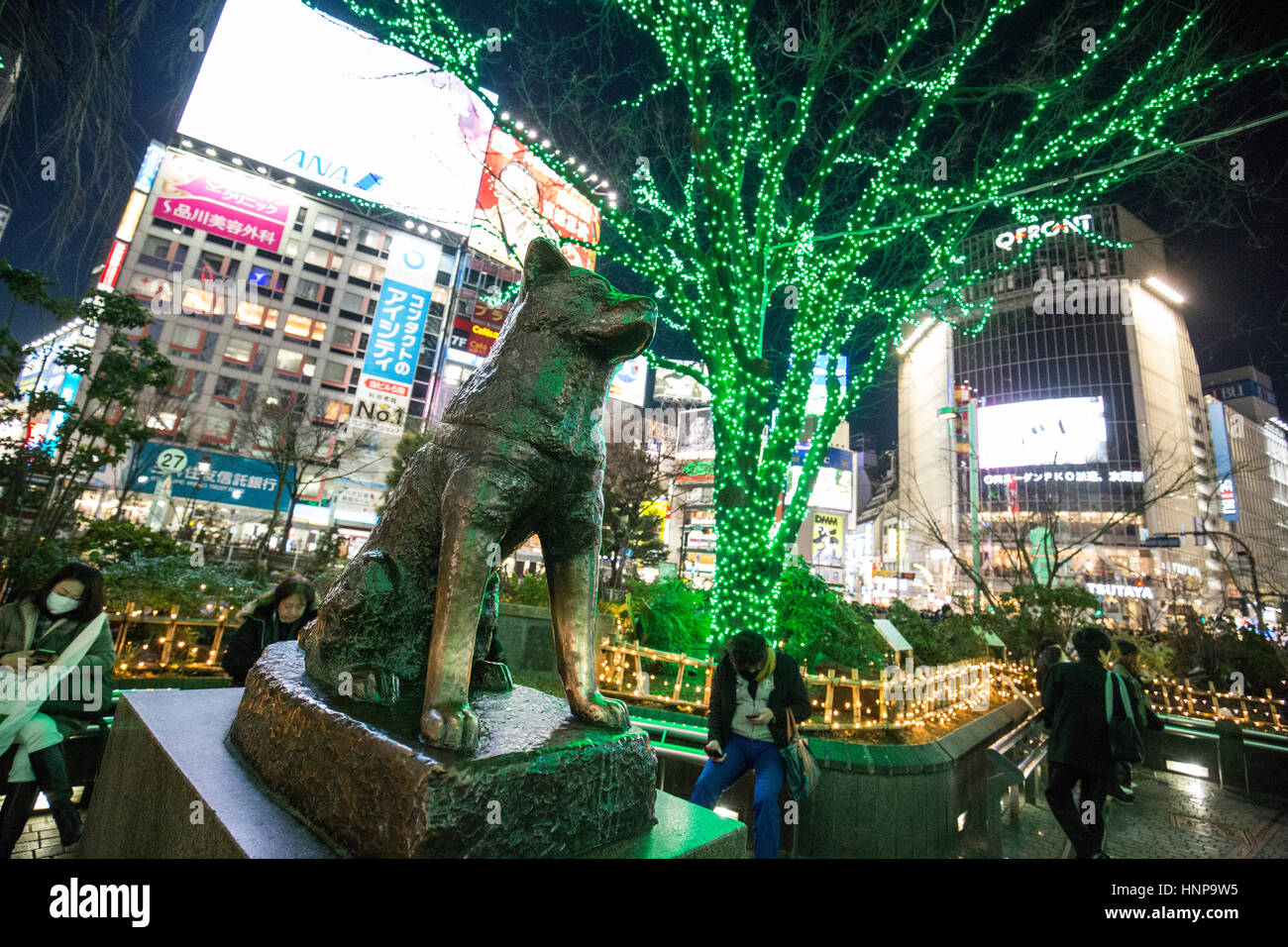
A small bronze statue commemorating the loyal Akita dog Hachiko, a well-known meeting spot near Shibuya Station.
A forested Shinto shrine dedicated to Emperor Meiji, reachable by train or a longer walk through Harajuku.
A large public park adjoining Meiji Shrine, popular for evening strolls and street performances.
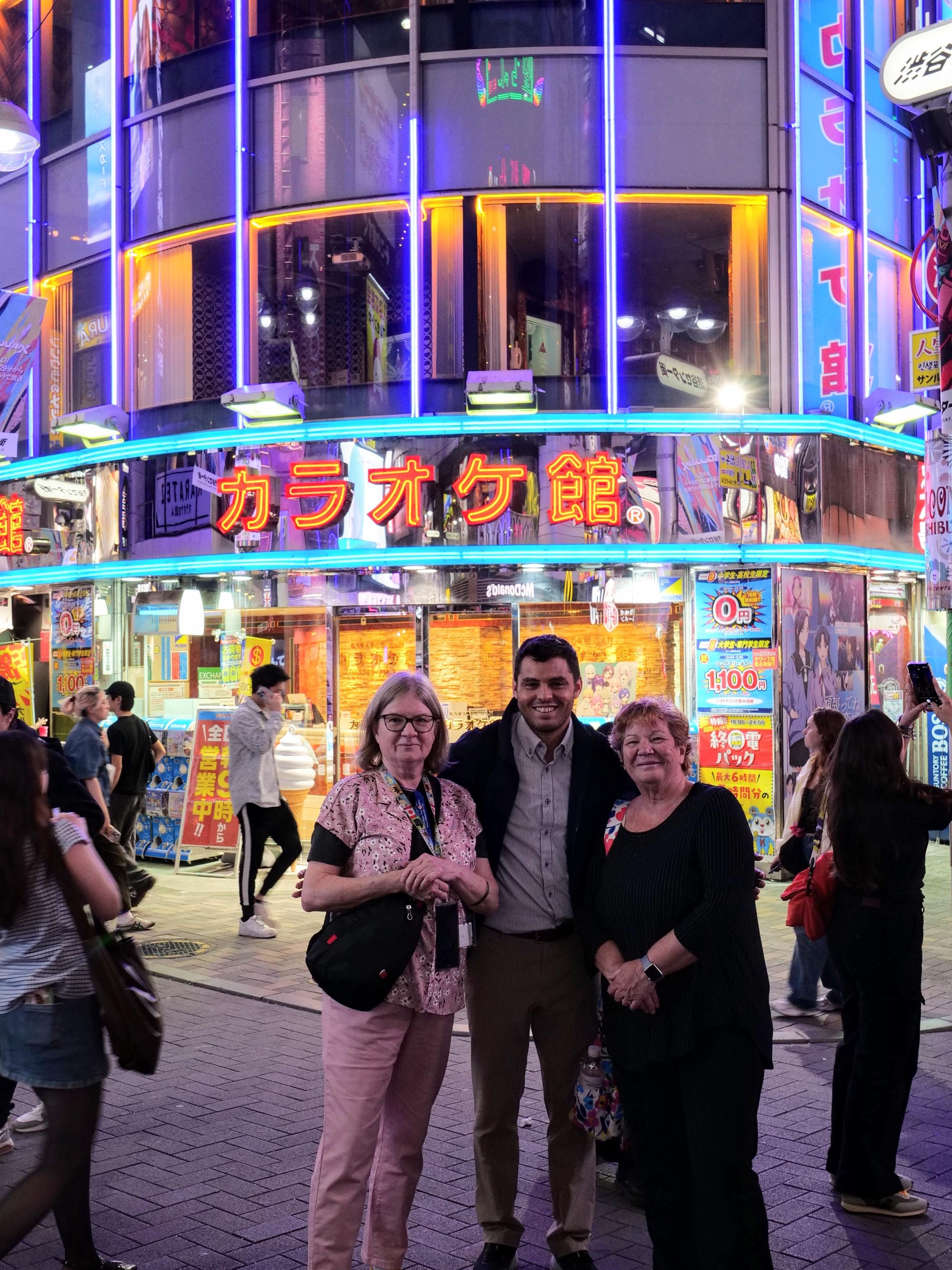
A pedestrian shopping street packed with neon signage, shops, and nightlife just off the crossing.
Hotels directly around Shibuya Station put the tower within easy walking distance for an evening visit.
An upscale hotel a short walk from Shibuya Station with skyline views of its own.
A modern hotel connected to the Shibuya Stream complex near the Shibuya River walkway.
A compact budget-friendly stay within walking distance of the crossing and Scramble Square.
Join thousands of happy travelers who have discovered this incredible experience
Book Your Experience Now