1 hr 30 min
Shibuya Highlights & Hidden Gems Walking Tour
- Expert local guide
- Small group
- Skip-the-line access
- Free cancellation
Shibuya Sky — Rooftop Observation Deck & Timed Entry
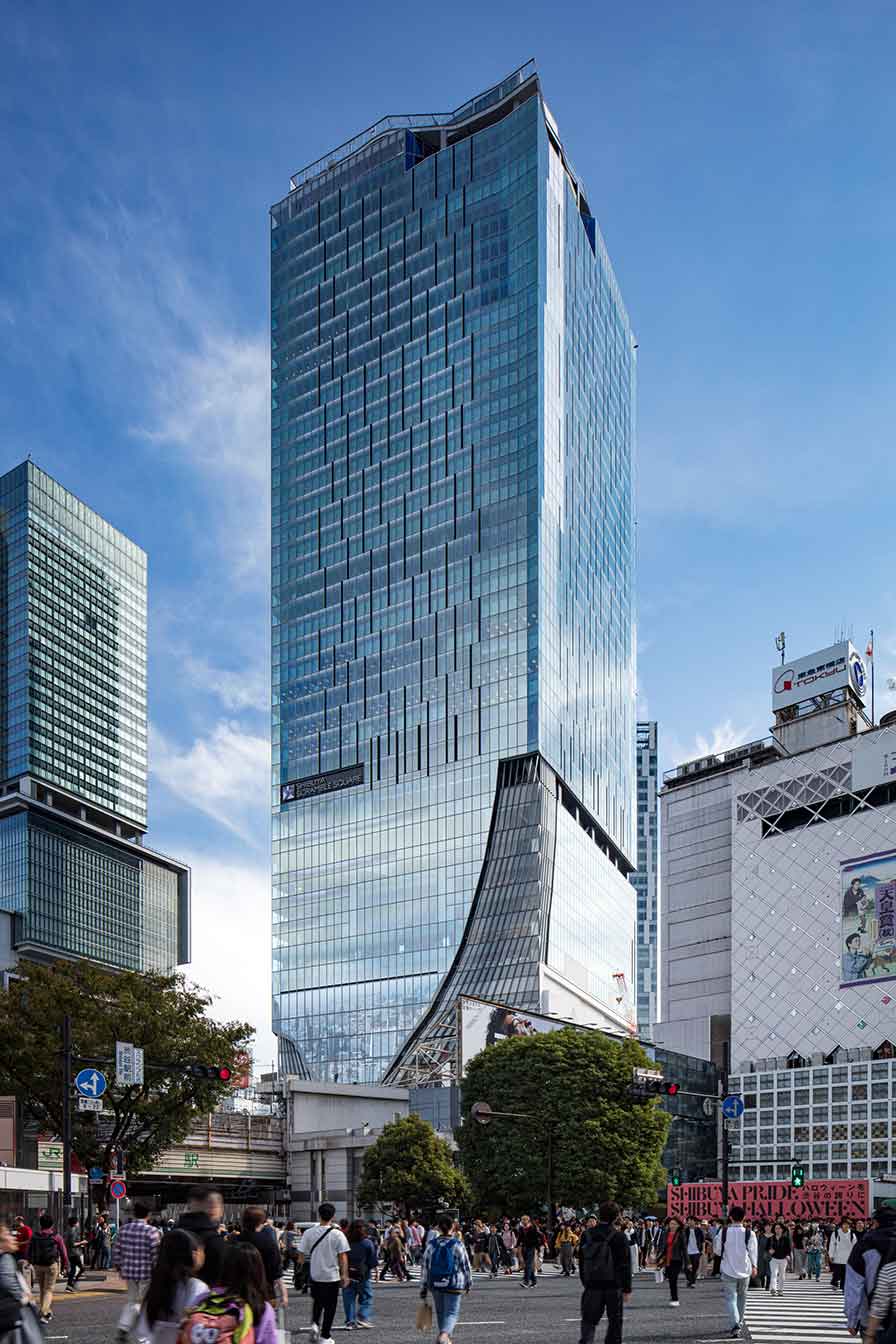
Above the crossing it rises, glass and open sky.
Compare fares, pick the fit — all bookings are mobile-voucher and eligible for free cancellation where shown.
1 hr 30 min
2 hr
2 hr
Worth it for view-seekers and sunset chasers
At 3,000 JPY for the same-day adult door price before 15:00, shibuya sky tickets sit mid-range for a Tokyo rooftop, and the open-air Sky Stage is what justifies the fee. You pay for an unglassed 360-degree observation deck 230 metres up, a direct downward vantage over Shibuya Crossing, and horizon-line sunset light that photos through a window can't match. For a first-timer wanting one signature Tokyo landmark moment, that math works: the price roughly equals two cocktails, and the payoff is a genuine rooftop rather than a sealed floor. This Shibuya observation deck tour pays off best for photographers, couples, and anyone timing golden hour. It's weaker value if you only want a quick indoor glance or dislike heights and wind. Among Tokyo landmarks, the roof access is the differentiator that a shibuya sky tickets tour actually delivers.
Bottom line: For open-air sunset views over the crossing, the shibuya sky tickets tickets earn their 3,000 JPY.
They serve different views: most visitors booking shibuya sky tickets want an open-air rooftop over the Scramble Crossing, while Skytree wins on raw height and Mt. Fuji sightlines from an enclosed deck.
|
Top pick Shibuya Sky |
Tokyo Skytree | |
|---|---|---|
| Height reached | 229 m rooftop deck | 350 m Tembo Deck, 450 m Galleria |
| Indoor vs open-air | Open-air rooftop (indoor deck below) | Fully indoor, glass-enclosed |
| Best time of day | Sunset into blue hour | Weekday mornings or early evening |
| Mt. Fuji visibility | Possible on very clear evenings | Better odds from 350–450 m height |
| Crowd feel | Compact rooftop, sunset slots sell out | Larger decks, spreads crowds more |
| Price positioning | 3,000 JPY same-day adult ticket | From ~1,800 JPY (350 m), ~3,100 JPY combo |
| Nearby amenities | Shibuya Scramble Square shops, cafe | Aquarium, mall, Skytree Town shops |
| See tickets & prices |
Verdict: Choose Shibuya Sky for the open-air crossing view and sunset atmosphere, and Skytree for greater height and a shot at Mt. Fuji from indoor comfort — many visitors pair a Shibuya Sky tickets tour with a separate Skytree tour on the same Tokyo trip.
Hand-picked experiences loved by thousands of travelers
2 hours
Free Cancellation
Two electric hours exploring Tokyo's wildest district — from rooftop skylines to lantern-lit alleyways.
2 hours
Explore Tokyo's electric Shibuya district by night, from iconic crossings to sweeping rooftop panoramas.
5 hours
Free Cancellation
Unlock Tokyo's electric nightlife with a local guide — hidden bars, karaoke, and neon-lit alleys await.
Scan your ticket QR code at the Shibuya Sky entrance gate and pass through the security check.
The transition corridor rising from the 14th to the 45th floor uses escalators and elevators lined with reflective panels and ambient lighting, functioning as the visual build-up before the rooftop reveal. Its design is meant to build anticipation across roughly 30 floors of vertical movement in under five minutes.
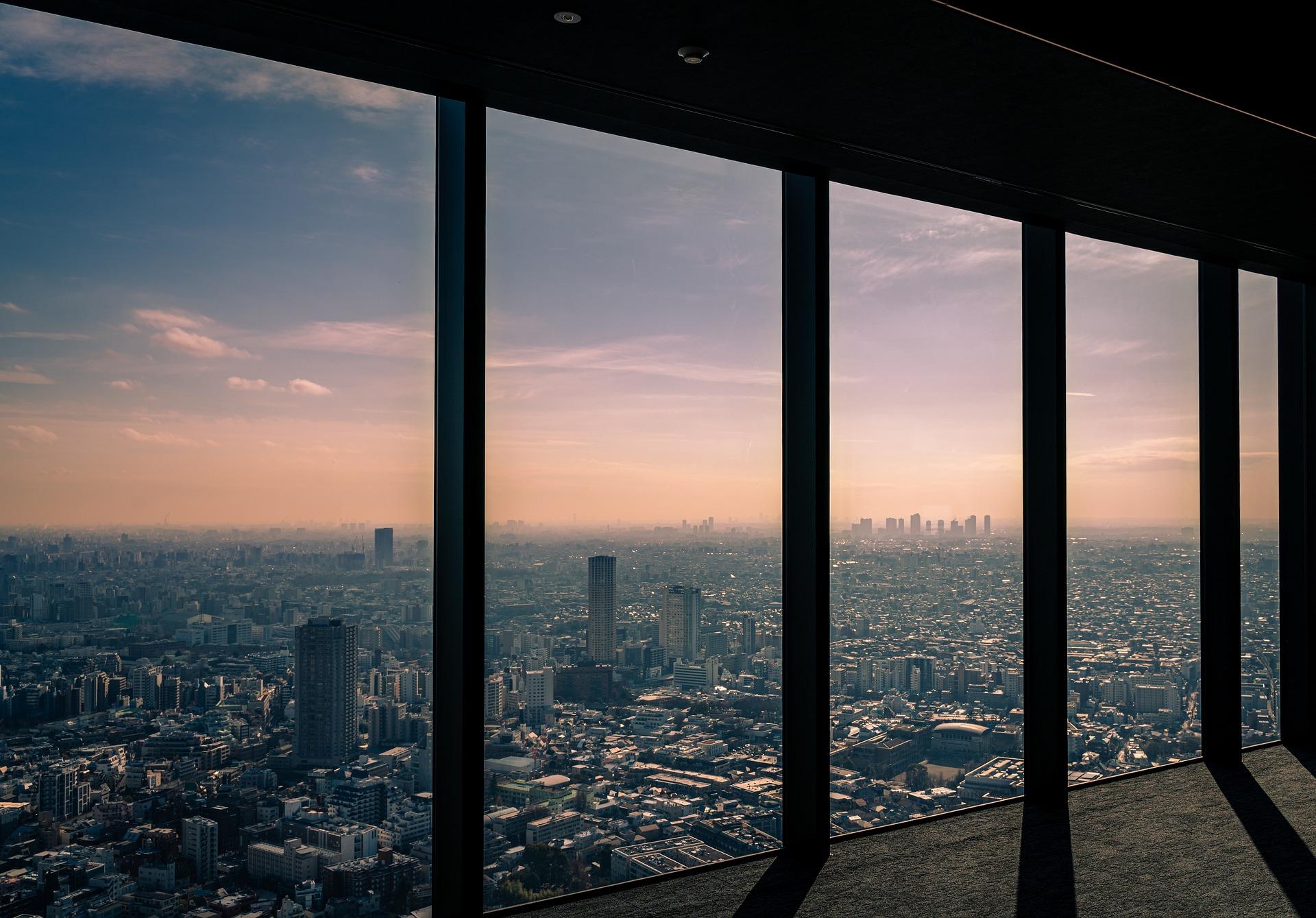
This indoor observation corridor spans the 46th floor with floor-to-ceiling glass and rotating digital art installations produced with a technology partner. It offers protected panoramic views on days when wind or rain closes the open-air deck above.
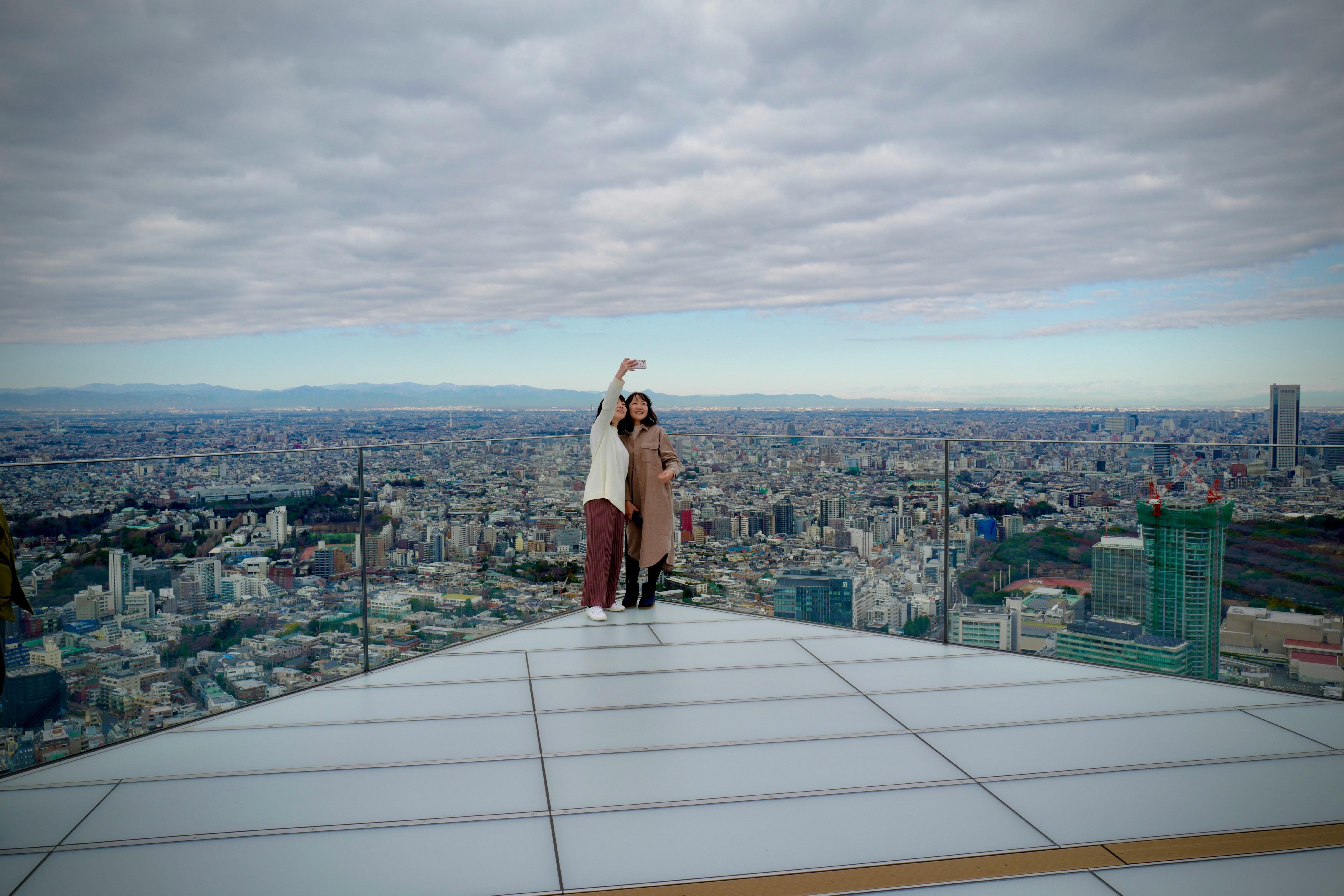
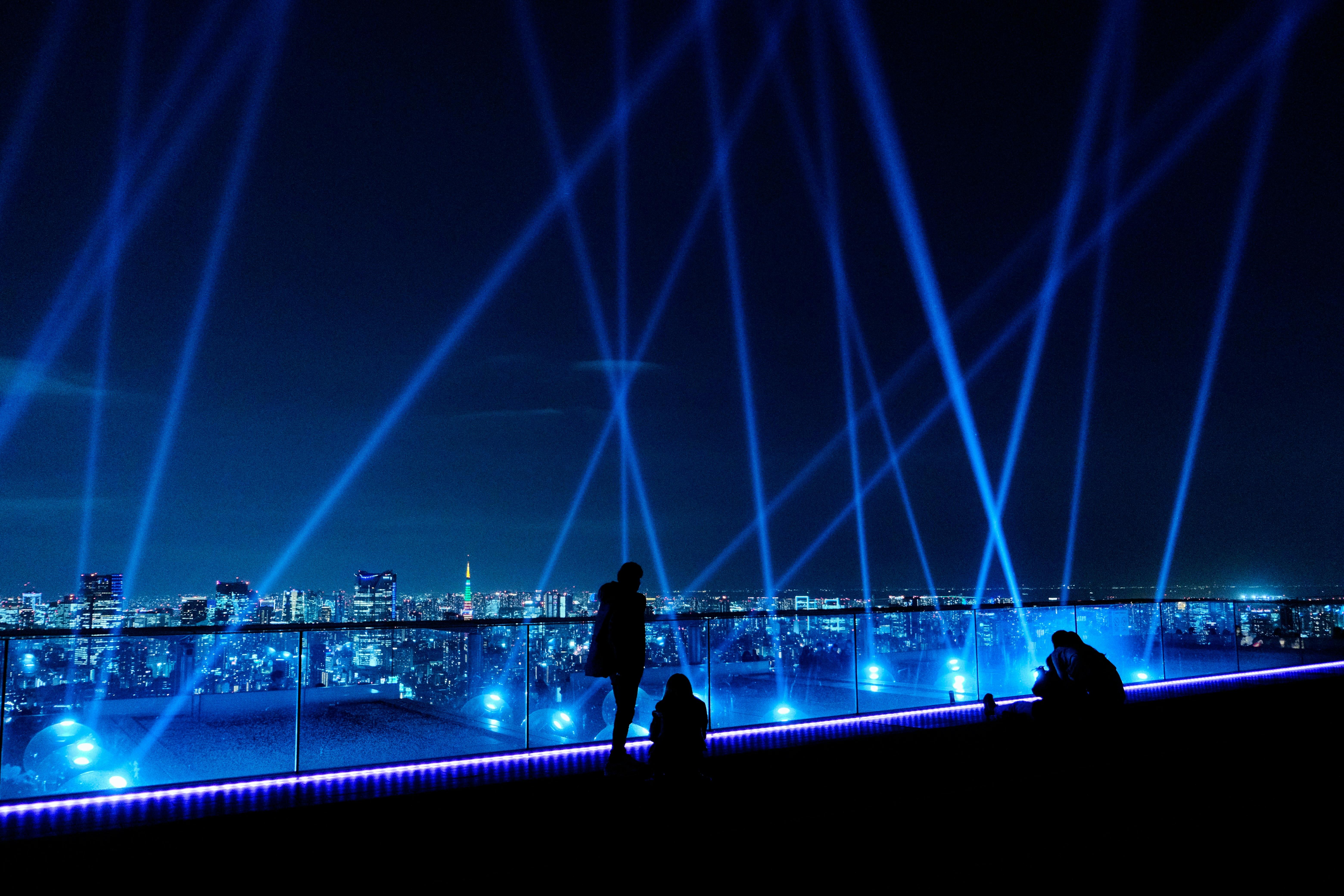
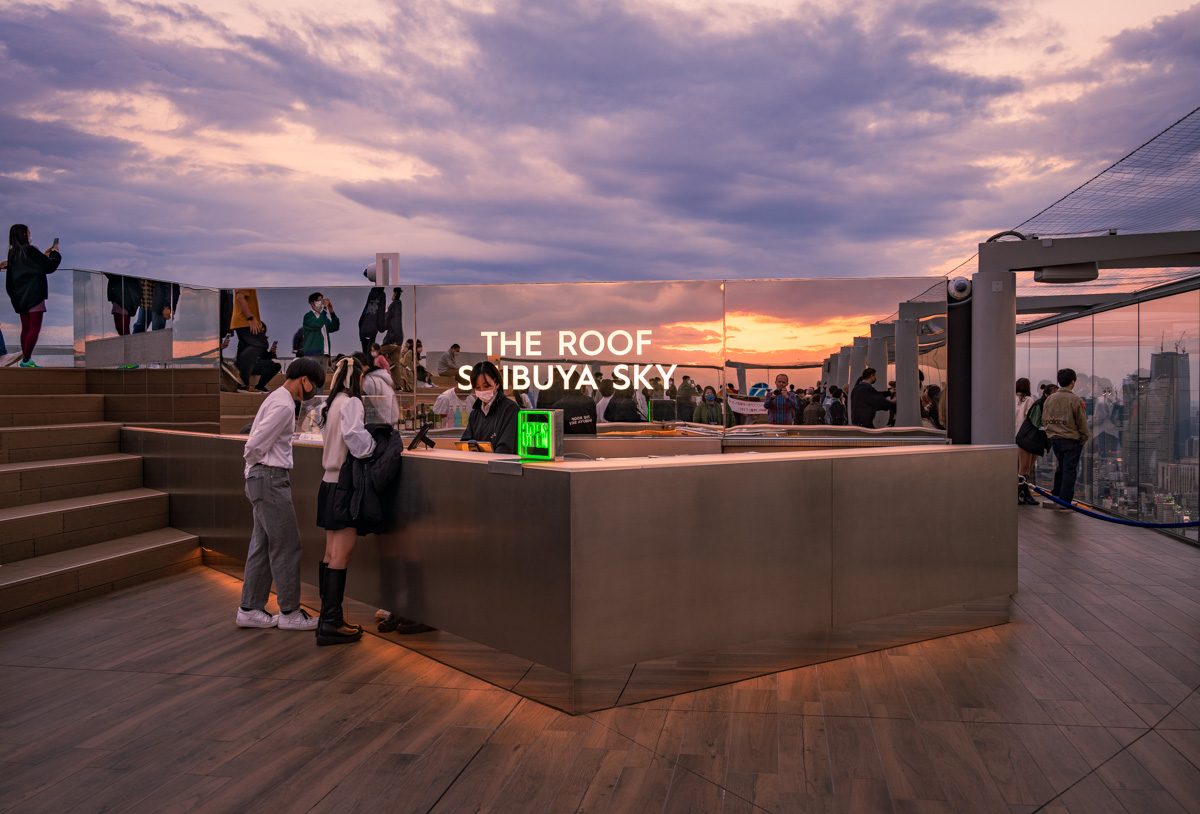
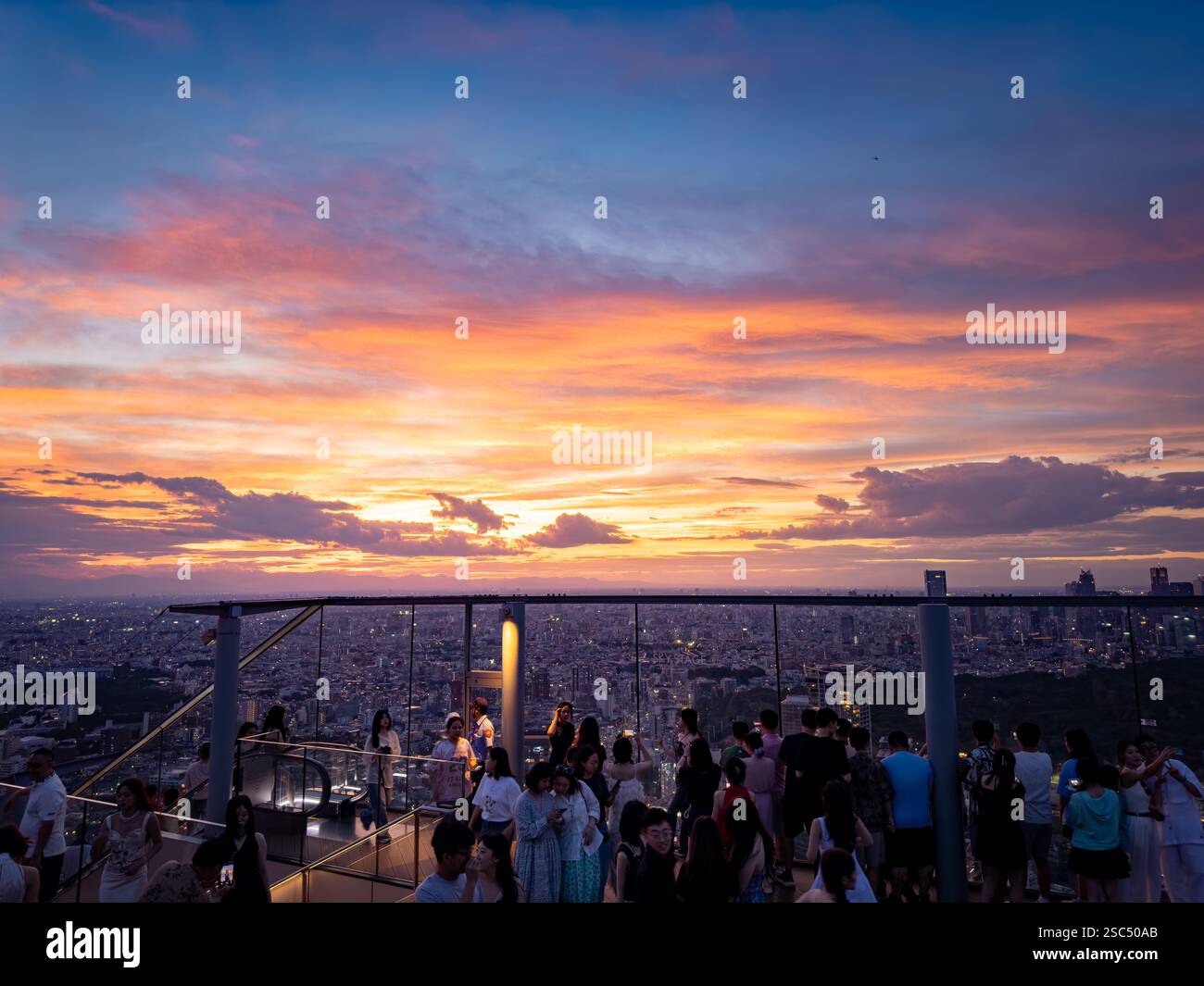
The open-air rooftop deck occupies the very top of the building roughly 229 meters above ground, with unobstructed 360-degree views and no overhead netting along its outer edge. It is the only rooftop of its kind directly above Tokyo's Shibuya Scramble Crossing.
A rooftop corner lounge area furnished with hammock-style seating and low benches gives visitors a place to linger and look down toward the scramble crossing below. It has become one of the deck's most photographed seating corners.
A suspended hammock-style installation near the rooftop perimeter lets visitors recline while looking up at open sky, a departure from the standard railing-viewpoint format found at most observation decks. It has become a signature stop for the deck's more casual photo opportunities.
A 46th-floor bar and lounge area serves drinks and light bites as the only spot within the attraction where food and beverages may be consumed, set beside the glass-walled Sky Gallery corridor. It offers a seated indoor complement to the standing-only rooftop experience above.
You enter through the 14th floor of Shibuya Scramble Square, scan your mobile voucher, and step into Sky Gate, where a corridor of shifting light and sound pulls you upward. The elevator climbs fast, ears popping, and releases you onto the 46th floor. From there an escalator lifts you the final stretch into open air. You emerge onto Sky Stage and the wind finds you at once. The rooftop stretches wide and unglassed, and you walk its perimeter slowly, tracing the horizon past Tokyo Tower toward the faint outline of Mount Fuji if the afternoon stays clear. You pause at the corner, where the Scramble Crossing pulses far below, small and rhythmic. You lie back in a Cloud Hammock and let the sky fill your view. Later you drift to the rooftop bar, order a drink, and settle into a low seat as the light begins to turn. Redeeming your shibuya sky tickets is only the start; the rooftop asks you to stay. When the city lights bloom, you move to Sky Edge and lean toward the glass. You linger until the metropolis has fully changed key, then descend, slower than you came.
All the details about your upcoming adventure in one place
Perched atop the 229-metre Shibuya Scramble Square, shibuya sky tickets grant entry to an open-air observation deck with panoramic views stretching toward Mount Fuji on clear days. The Sky Stage rooftop and glass-walled Sky Gallery let visitors take in one of Tokyo's landmarks from above the famous scramble crossing. Booking shibuya sky tickets tours in advance secures your timed slot and smooths entry through the 14th-floor gateway.
The rooftop of Shibuya Scramble Square sits 229 metres above one of the busiest pedestrian crossings on earth, and its highest platform has no roof at all. Opened in November 2019, Shibuya Sky occupies the upper reaches of a 47-storey tower designed by a consortium led by Nikken Sekkei, Kengo Kuma, and SANAA. It was conceived not as a sealed glass box but as an open-air field of sky, where wind and weather reach the visitor directly. The experience unfolds across three vertical zones. Sky Gate, the ascent, carries visitors upward through a darkened corridor of light and sound. Sky Stage, the open-air summit on the 47th floor, spreads across roughly 2,500 square metres of exposed rooftop. Below it, Sky Edge and the enclosed Sky Gallery wrap the tower in floor-to-ceiling glass. The design places the horizon, not the building, at the centre of attention, a deliberate reversal of the conventional observation deck. What gives Shibuya Sky its particular weight is the district beneath it. Shibuya has been Tokyo's crucible of youth culture, fashion, and music since the postwar decades, and the Scramble Crossing below funnels an estimated several hundred thousand people through its painted lanes each day. From the rooftop, that churn resolves into pattern: trains threading toward Shinjuku, the pale cone of Mount Fuji on clear afternoons, Tokyo Tower and the distant Skytree marking the skyline's older and newer spires. Good shibuya sky tickets tickets buy a vantage on the whole metropolis, not merely a single monument. The tower itself is part of a decade-long redevelopment that reshaped Shibuya Station, layering rail lines, retail, and offices into a single vertical settlement. Shibuya Scramble Square is its tallest component, and the observation deck crowns it. Cloud Hammocks stretch across the corner of the roof, inviting visitors to lie back beneath the sky; a rooftop bar and rows of low seating turn the summit into a place to linger rather than photograph and leave. The architecture rewards patience. Seen from certain angles, Shibuya Sky reads as the logical endpoint of the district's ambition, a public rooftop offered to a city that has always looked upward and forward. Many travellers now treat shibuya sky tickets as their first encounter with Tokyo's scale, arriving before they have walked the streets below. The rooftop, exposed and unglassed, gives the metropolis back to the visitor whole, its edges dissolving into haze where the observation deck meets open air over Shibuya.

The design places the horizon, not the building, at the centre of attention.
There is no formal dress code for Shibuya Sky, but loose hats, scarves worn loosely, and other items that could blow off in strong rooftop wind must be stored in a 46th-floor locker before stepping onto the open-air Sky Stage. Closed-toe shoes are sensible given the mesh flooring sections near the perimeter railing.
Security screening takes place near the 14th-floor entrance gate before the elevator ride to Sky Gate, and travel-sized luggage is not permitted past this point. Visitors carrying suitcases or large backpacks must use lockers at Shibuya Station or the 46th-floor storage area before proceeding to the rooftop.
Handheld phones and cameras with a wrist strap or that fit in a pocket are allowed on the Sky Stage, but tripods, monopods, selfie sticks, and drones are prohibited on the open-air deck. Staff at Sky Edge occasionally offer a paid scenic photo service near the glass-floor section on the 46th floor.
Children's tickets are sold only at the 14th-floor counter on the day of admission, and children under 5 enter free with a paying adult. There is no minimum age for the open-air deck, but strollers may need to be folded near the perimeter railing sections, and caregivers should watch young children closely around the glass-floor viewing area.
Shibuya Sky is fully wheelchair accessible, with elevators serving every level of the route and a dedicated priority lift connecting the 46th and 47th floors between the indoor Sky Gallery and the open-air Sky Stage. Accessible restrooms are available on the 46th floor near the gift shop.
Food and drink cannot be carried onto the open-air Sky Stage or the indoor Sky Gallery corridor; any purchased snacks or beverages must be consumed before passing the 14th-floor security check. The Paradise Lounge on the 46th floor is the designated spot where drinks, including alcoholic options, may be purchased and consumed on-site.
Quiet mornings, few tour groups
Typically lightest weekday
Evening slots fill faster
Sunset slots sell out earliest
Busiest daytime hours
Hours today
10:00–22:30, last admission 21:20
Address
2-24-12 Shibuya, Shibuya-ku, Tokyo, Japan
Wheelchair access
Elevators at every level, priority lift 46th–47th floors
Best arrival window
10:00–11:00 for clearer air and smaller crowds
Bag storage
Coin lockers on the 46th floor for small items, large luggage held at Shibuya Station lockers
Public transport · 5-10 min walk from station exits · Standard Tokyo train fare, roughly 150-300 JPY depending on origin
Shibuya Sky is directly connected to Shibuya Station via an internal walkway from the ticket gate on the 14th floor of Shibuya Scramble Square, reachable from the JR Yamanote Line, Ginza Line, Hanzomon Line, Fukutoshin Line, Tokyu Toyoko Line, Tokyu Den-en-toshi Line, and Keio Inokashira Line platforms.
Walk · 5 min from the crossing · Free
From the Shibuya Scramble crossing side of the station, follow signage through the station concourse toward Shibuya Scramble Square and the 14th-floor elevator lobby.
Taxi · 10-20 min depending on Tokyo traffic · Approx. 1,000-2,500 JPY within central Shibuya
Taxis can drop passengers at the Shibuya Scramble Square building entrance, though Shibuya's dense one-way streets around the station often make walking from the nearest train exit just as fast.
Car · Varies with traffic · Parking fees vary by nearby facility
Shibuya Scramble Square has no dedicated visitor parking or bicycle parking of its own, so drivers rely on partnered nearby parking facilities near the station.
Timed-entry tickets are generally non-refundable and non-changeable once confirmed for a specific date and slot. If the open-air deck closes due to severe weather after entry, the same-day adult admission of 3,000 JPY may be handled as a weather-related exception rather than a standard refund, per operator policy at the time of visit.
Recommended time
60-90 minutes
Most visitors need 60-90 minutes to cover the indoor Sky Gallery and the open-air rooftop deck, enough time to walk the full perimeter and shoot photos without rushing. Add 30-45 minutes if you're aiming for the glass-floor spots or want to linger through sunset into the night skyline. Booking shibuya sky tickets for the 10:00-11:00 opening slot cuts queue time significantly, since the lift and rooftop are noticeably clearer before the afternoon fills in. Skip-the-line entry helps, but the wait for the observation deck escalator itself still grows heaviest as sunset approaches, so budget extra buffer if you arrive close to golden hour.
Crowd levels through the day
Weather · crowds · average price — dots go green to amber to red as each metric rises.
Mild temperatures around 15–20°C bring comfortable rooftop conditions, though cherry blossom season in late March through early April draws heavier weekend crowds. Weekday mornings stay noticeably quieter than sunset slots this season.
Hot, humid days with temperatures often above 30°C make early entry more comfortable, while July and August school holidays push midday and sunset attendance higher. Occasional typhoon activity in late summer can close the open-air deck without notice.
Clear skies and cooler air from October onward make this a favored season for long-distance visibility toward Mount Fuji. Crowds build around the Japanese autumn foliage period in November, especially on weekends.
Cold, dry air often produces the clearest skyline views of the year, particularly on winter mornings. The venue closes entirely on January 1, and the days around Christmas and New Year's Eve see some of the year's highest demand for evening slots.
Shibuya Sky tickets typically go on sale about four weeks before the admission date at midnight Japan time, and popular sunset slots can sell out within days of release.
2-24-12 Shibuya, Shibuya-ku, Tokyo, Japan
Main ticket gate and security checkpoint, directly connected to Shibuya Station
Get directionsThe glass corner at the rooftop's southwest tip is the signature shot: an unobstructed drop straight down onto Shibuya Scramble Crossing with the skyline behind you. Staff enforce a one-pair-at-a-time system here, so expect a short wait to step right up to the glass. Many people booking shibuya sky tickets plan their whole visit around getting a clean turn at this corner.
Net hammocks along the Sky Stage let you lie back and frame the open sky or drifting clouds instead of the streets below. It's the laid-back counterpart to the Edge, good for a slower, wide-angle shot with less jostling for position. Popular for both daytime cloud shots and stargazing frames at night.
A circular dial set into the rooftop deck that points toward landmarks like Tokyo Skytree, the Imperial Palace, and Mt. Fuji, making it a natural spot for a landmark-finder or orientation shot with the compass face in the foreground. Works well paired with a skyline shot in the same direction it points.
The glass escalator connecting the 45th and 46th floors, often called the Transition Pod, gives a vertical, symmetrical shot through clear panels as you rise toward the rooftop. It's a favored stop for a skip-the-line shibuya sky tickets tour photo before ever reaching the open-air deck.
Purchasing shibuya sky tickets covers the observation deck itself, not meals, but Shibuya Scramble Square stacks food options on the way up so a full day here rarely needs a walk outside for skip-the-line Shibuya Sky access and dinner both. The tower's lower floors hold a proper food hall, while the deck's own bar opens seasonally for drinks with a view.
Seasonal (spring–December) sofa or standing-counter bar right on the open-air deck, pouring original craft beer with Y.Y.G. Brewery and skyline cocktails. Reserved sofas run 50-minute slots and sell out fast; walk-up standing counter is the easier option midweek.
Tom Dixon-designed lounge on the 46th floor's indoor gallery, pouring drinks and snacks with daytime-to-night skyline views. A calmer alternative to The Roof when it's booked out, no reservation scramble required.
Window counter seats facing the Scramble Crossing, best known for matcha parfaits and multi-infusion sencha service. Lunch queues run around 20 minutes; good for a pre-visit tea or dessert before heading up.
Individual hotpots with A5 wagyu including Omi and Matsusaka beef, on the restaurant floor directly beneath the observatory. Suits a sit-down dinner after coming down from the deck rather than a quick stop.
Cluster of restaurants spanning sushi, teppanyaki, Spanish tapas and more, open till 23:00 most nights. The practical pick for groups who can't agree on one cuisine before or after a shibuya sky tickets tour.
Real experiences from real travelers
We timed our shibuya sky tickets for about an hour before sunset and it paid off. The light shifted from gold to deep blue while we stood at the open-air edge, and you could just make out Mount Fuji on the horizon. The wind up on the Sky Stage was stronger than expected, so bring a layer.
Booking the shibuya sky tokyo tour ahead meant we walked straight to the elevator without much waiting. Standing 230 meters above the Scramble Crossing at twilight, watching the traffic ripple below, was calm in a way I did not expect from Shibuya. The netted lounge area was a nice spot to just sit.
渋谷スカイ from the top floor gives you the whole Tokyo grid glowing at night. I went on a slightly hazy evening so the distant view was soft, but the scale of the city lights was still something. The escalator up to the rooftop with the sky projected overhead is a nice touch.
The observation deck opens to the sky completely, no glass roof, which makes the whole thing feel wide and free. We got our shibuya sky tickets for a weekday slot and the crowd was manageable. Watching Tokyo Tower flick on in the distance as the sun dropped was the highlight of our trip.
Among Tokyo landmarks this rooftop stands out because you are actually outside in the wind, not behind glass. The corner viewpoints let you lean into the panorama with the city sprawling in every direction. Grab your shibuya sky tickets for a clear day if you can, the difference is huge.
We did the skip-the-line shibuya sky entry on a Friday evening and it was smooth. The endless carpet of city lights from 47 floors up is hard to describe until you see it. The hammock nets on the Sky Stage were surprisingly relaxing after a long day of walking.
The shibuya sky tickets tours option we chose included a timed slot which helped avoid the worst queues. It gets cold and windy up top even when the street is mild, so plan for that. The 360 degree open deck is the reason to come, the indoor floor below is fine but forgettable.
Standing at the glass edge as blue hour settled over the district, the Scramble Crossing looked like a tiny circuit board far below. Our shibuya sky tickets tour let us stay through the light change from day to night. The whole rooftop experience felt spacious rather than crowded.
The view stretches uninterrupted across the Tokyo skyline, and on a clear evening Mount Fuji sits low on the edge of it. We picked up shibuya sky tickets tickets online the night before and had no trouble at the gate. The open Sky Stage with the wind and the fading light is what stays with you.
Went up midafternoon and stayed until the sun set over the sprawl of western Tokyo. The rooftop being fully open-air makes the height feel real in a way enclosed decks never do. If the forecast is clear, the shibuya observation deck is well worth arranging in advance.
Everything you need to know for your journey
Shibuya Sky is open daily from 10:00 to 22:30, with last admission at 21:20, and the same-day adult ticket at the door costs 3,000 JPY before 15:00.
Yes, Shibuya Sky is fully wheelchair accessible, with elevators serving every floor along the route and a priority lift connecting the 46th and 47th floors.
Travel suitcases, large backpacks, tripods, selfie sticks, drones, food, drink, and loose hats must be stored in a locker before passing the 14th-floor security checkpoint for Shibuya Sky.
Handheld phones and strap-equipped cameras are allowed on the open-air deck, but tripods, monopods, and selfie sticks are not permitted at Shibuya Sky.
Arriving between 10:00 and 11:00 offers clearer air and smaller crowds before the afternoon peak, making it one of the best windows for a quieter Shibuya Sky visit.
There is no strict dress code, though loose hats and scarves must be secured or stored before stepping onto the open-air Sky Stage due to rooftop wind.
Food and drink are not allowed on the observation deck itself, but the 46th-floor Paradise Lounge is designated for purchasing and consuming drinks on-site.
Shibuya Sky is directly connected to Shibuya Station by an internal walkway to the 14th-floor entrance; the building has no dedicated parking, so nearby partner parking facilities serve drivers instead.
Yes, children under 5 enter Shibuya Sky free with a paying adult, and children's tickets are sold at the counter on the day of admission.
Shibuya Sky tickets are generally non-refundable once a date and time slot are confirmed, though weather-related rooftop closures may be handled as an exception by the operator.
The Shibuya Scramble Crossing and the Hachiko Statue both sit within a five-minute walk of Shibuya Sky, making them easy additions to the same outing.
Advance online booking is strongly recommended for Shibuya Sky tickets since popular time slots, particularly around sunset, often sell out before the day of the visit.
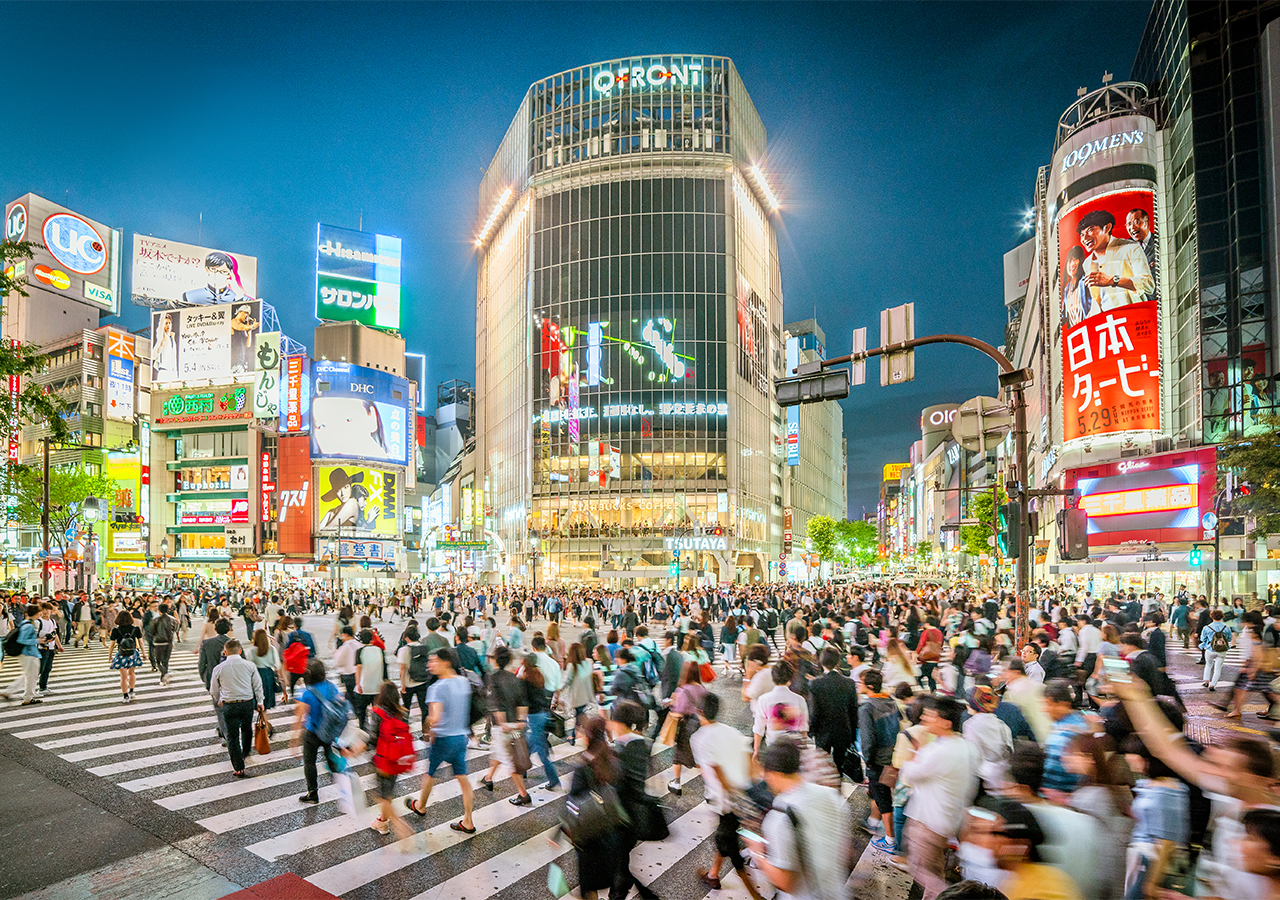
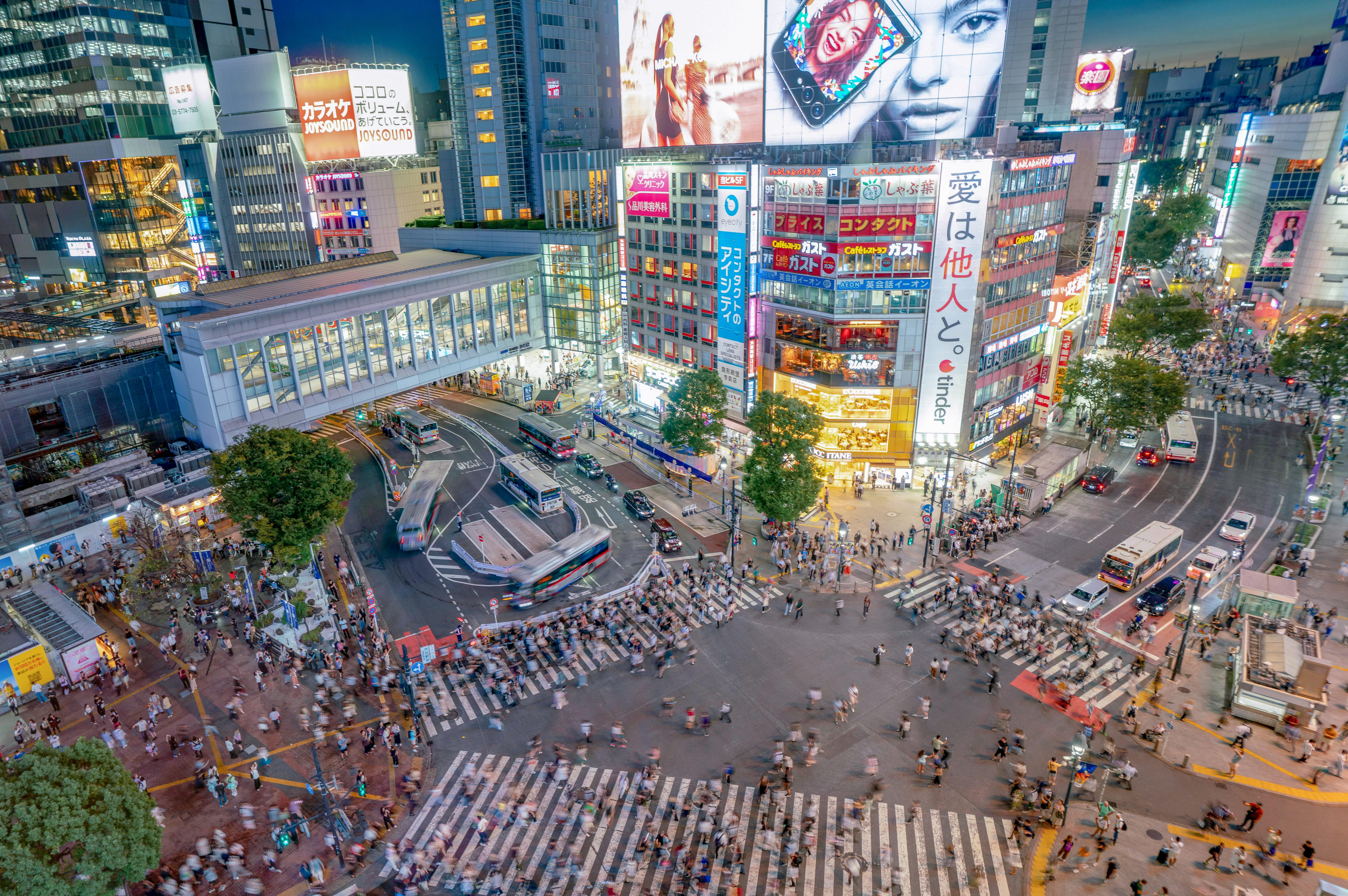
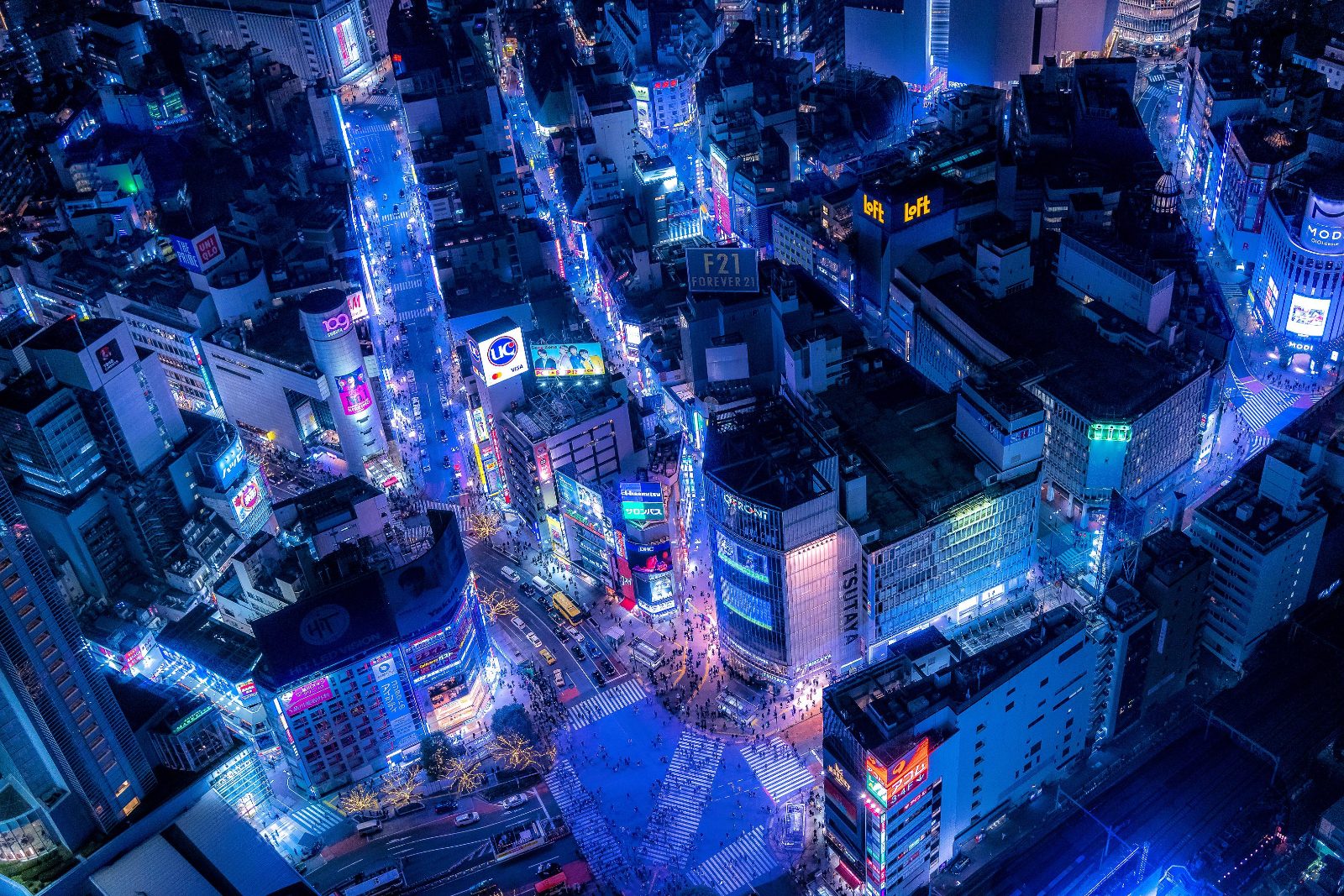
One of the world's busiest pedestrian crossings sits directly outside Shibuya Station, visible from Shibuya Sky's rooftop deck. Hundreds of pedestrians cross simultaneously during peak signal changes.
This bronze statue commemorates the loyal Akita dog Hachiko, who waited at the station for his deceased owner for nearly a decade. It remains one of Tokyo's most common meeting points.
A Shinto shrine dedicated to Emperor Meiji and Empress Shoken, set within a forested precinct near Harajuku. The approach passes beneath a large wooden torii gate.
One of Tokyo's largest city parks, known for wide lawns, cherry trees, and weekend street performers near the Harajuku entrance.
A pedestrian shopping street packed with fashion boutiques, arcades, and fast-food outlets just off the scramble crossing.
The immediate area around Shibuya Station and Shibuya Scramble Square concentrates dozens of hotels within a few minutes of the ticket entrance, from business hotels to upscale chains.
A high-rise hotel south of Shibuya Station offering city-view rooms, a spa, and multiple restaurants.
Located directly atop Shibuya Station's Mark City complex, giving quick covered access to the station and Shibuya Sky entrance.
A design-focused boutique hotel in the Jingumae area near Shibuya, popular for its lounge and social spaces.
Join thousands of happy travelers who have discovered this incredible experience
Book Your Experience Now