
Open today · 00:00 – 23:59

Shibuya Food Tours

Shibuya Food Tours — Guided Izakaya & Street-Stall Tastings

Follow the lanterns past the crossing, taste where the locals eat.

48K+ travelers chose this
Free Cancellation
Right now: Heavy — Friday evening peak Arrive by 18:00 for easier izakaya seating before dinner rush
3-4 hours recommended
1 Languages
Small groups, 6-10 guests
Free Cancellation
Free cancellation Instant confirmation Mobile voucher Verified partner Book now, pay later
Choose your ticket

Ticket options at a glance

Compare fares, pick the fit — all bookings are mobile-voucher and eligible for free cancellation where shown.

Shibuya Hidden Bar & Izakaya Night Tour 3 hr
Standard Entry

Shibuya Hidden Bar & Izakaya Night Tour

4.8 (450)
€28
  • Entry ticket
  • Mobile voucher
  • Valid same day
  • Free cancellation
Book this ticket
Shibuya Hidden Food Tour – Tokyo Local Eats 3 hr
Standard Entry

Shibuya Hidden Food Tour – Tokyo Local Eats

4.6 (122)
€142
  • Entry ticket
  • Mobile voucher
  • Valid same day
  • Free cancellation
Book this ticket

Is it worth it?

Worth it for first-timers, skippable for confident explorers

Shibuya food tours run separately from any operator, since the district itself charges no entry fee at all. What you actually pay for is a guide who reads menus, orders at counter-only izakayas, and walks you past the language barrier that shuts many tourists out of the tiny, six-seat spots tucked down back alleys. A good shibuya food tour buys insider access, small tasting portions across several venues rather than one full meal, and someone to explain what you are eating. That trade pays off for first-time visitors, solo travelers, and anyone nervous about ordering in Japanese. It pays off less if you already speak some Japanese, enjoy wandering the neon-lit Shibuya landmarks on your own, and would rather sit down for a proper dinner. Arrive around 18:00–20:00, when izakayas and food stalls hit their busiest, most atmospheric stride, and the guided premium starts to justify itself.

What makes it worth it

  • Guide clears the izakaya language barrier
  • Insider access to hidden alley spots
  • Several tasting portions across multiple venues
  • Great for solo and first-time visitors
  • Someone explains each unfamiliar dish

Keep in mind

  • Tasting portions rarely equal a full meal
  • Skip-the-line perk wasted if you speak Japanese
  • Booking a shibuya food tours tour costs extra
  • Fixed pace limits your own wandering

Bottom line: Book shibuya food tours tickets if the language barrier scares you off the good counters; otherwise pocket the guide fee and explore Shibuya solo.

Featured Experiences

Popular tours & activities

Hand-picked experiences loved by thousands of travelers

Recommended Experience

Powered by GetYourGuide

Another traveler favorite

Powered by GetYourGuide
Shinjuku After-Dark Food Tour: 13 Dishes Across 4 Local Eateries 3 hours Free Cancellation

Shinjuku After-Dark Food Tour: 13 Dishes Across 4 Local Eateries

Eat like a Tokyo local on a 3-hour small-group culinary crawl through Shinjuku's hidden dining scene.

4.9 (2952)
FromFrom €71.19
See details
Shinjuku Local Food Tour: 15 Dishes Across 4 Hidden Eateries 3 hours Free Cancellation

Shinjuku Local Food Tour: 15 Dishes Across 4 Hidden Eateries

Eat like a Tokyo local — 15 authentic dishes, 4 neighbourhood spots, zero tourist traps.

4.8 (373)
FromFrom €69.03
See details
Shibuya After Dark: Sky Views, Neon Streets & Local Nightlife 2 hours Free Cancellation

Shibuya After Dark: Sky Views, Neon Streets & Local Nightlife

A 2-hour guided plunge into Shibuya's electrifying night scene — skyline to street level.

4.7 (69)
FromFrom €97.35
See details
Your journey

Step-by-step — what your day looks like

1

Meet at Hachiko Statue

Group gathers near the Hachiko Statue outside Shibuya Station's Hachiko Exit before the walking portion begins.

2

Cross Shibuya Scramble Crossing

Guides lead guests across the famous scramble crossing, pointing out the giant video screens and pedestrian flow.

3

First izakaya stop in Dogenzaka

Guests sample small plates and a drink at a hidden local izakaya in the Dogenzaka backstreets.

4

Walk through Center Gai

The route passes through Shibuya Center Gai, the district's youth-culture retail and street-food hub.

5

Second stop near Nonbei Yokocho

A second tasting stop introduces yakitori or oden in the retro atmosphere of Nonbei Yokocho.

6

Final stop and wrap-up

The group finishes with a final dish or drink before returning to the original meeting point.

What you'll see

Highlights not to miss

Hachiko Statue

A bronze statue honoring Hachiko, an Akita dog who reportedly waited for his deceased owner at Shibuya Station for years, now serves as the standard meeting point for nearly every shibuya food tours itinerary. It has become one of Tokyo's most recognized meeting spots since long before mobile phones existed.

Shibuya Scramble Crossing

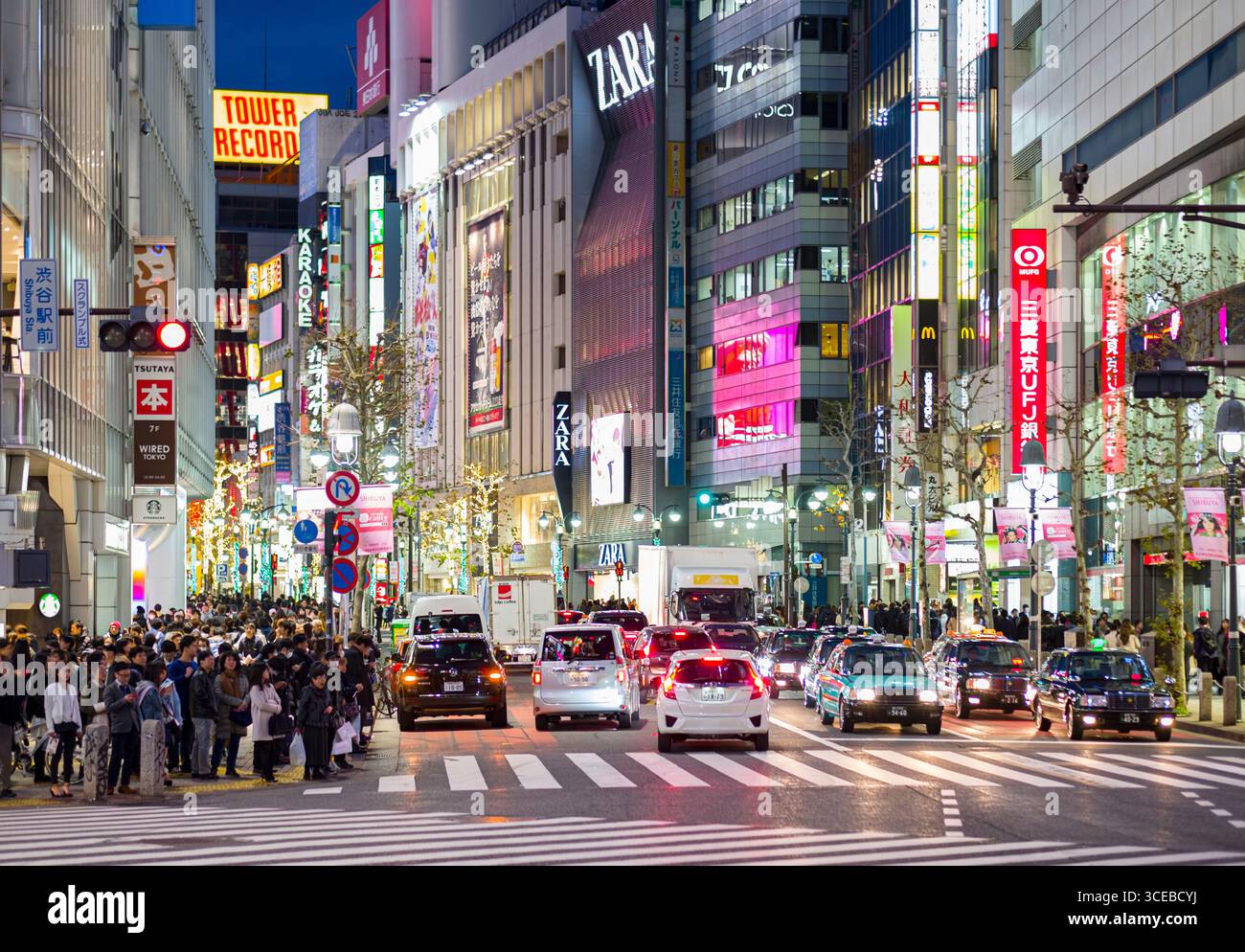
Reports describe as many as 1,000 to 2,500 pedestrians crossing at once during peak two-minute intervals, making it one of the world's busiest intersections. Food tour guides typically walk groups across it early in the route en route to Center Gai.

Shibuya Center Gai

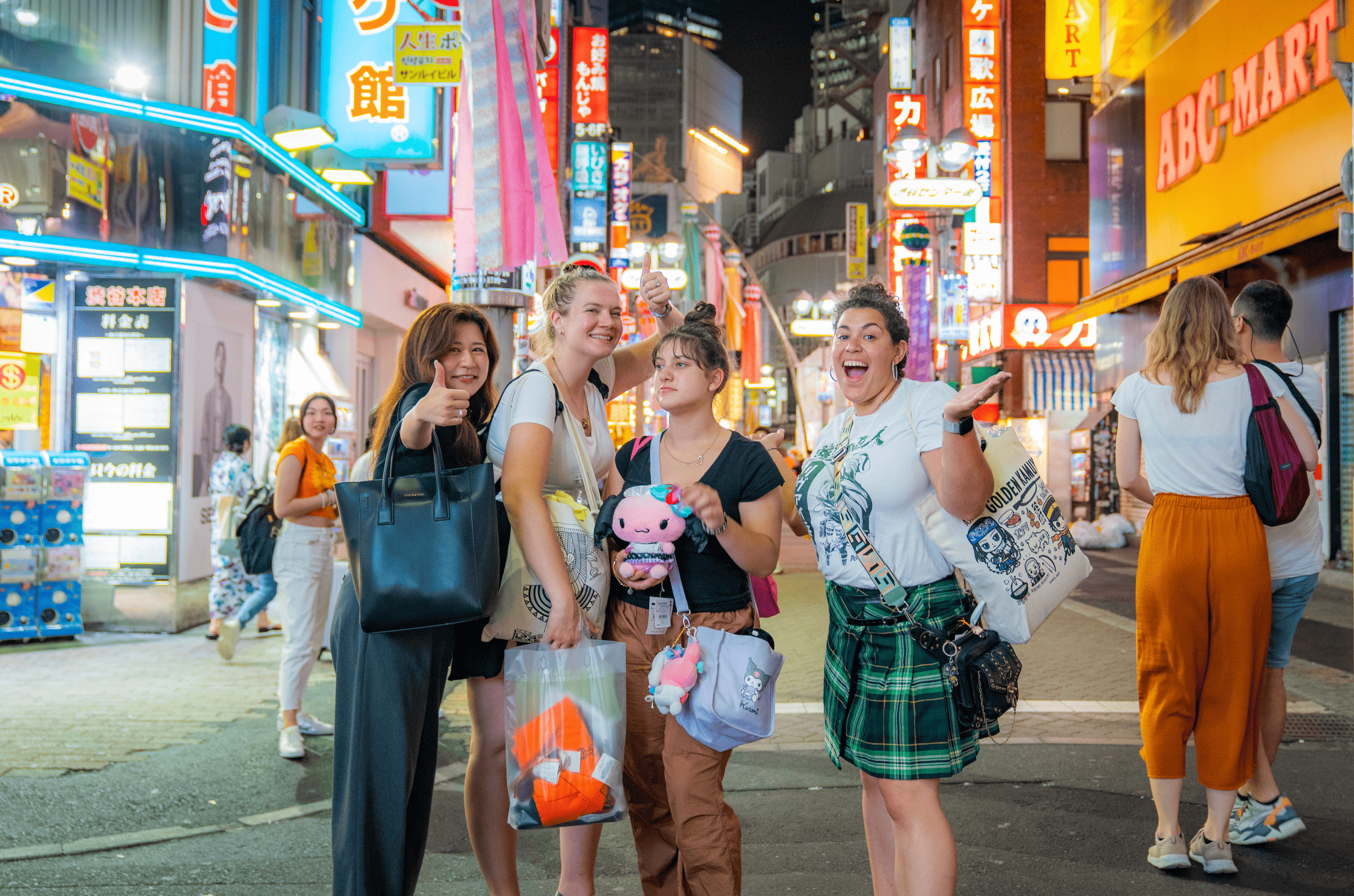
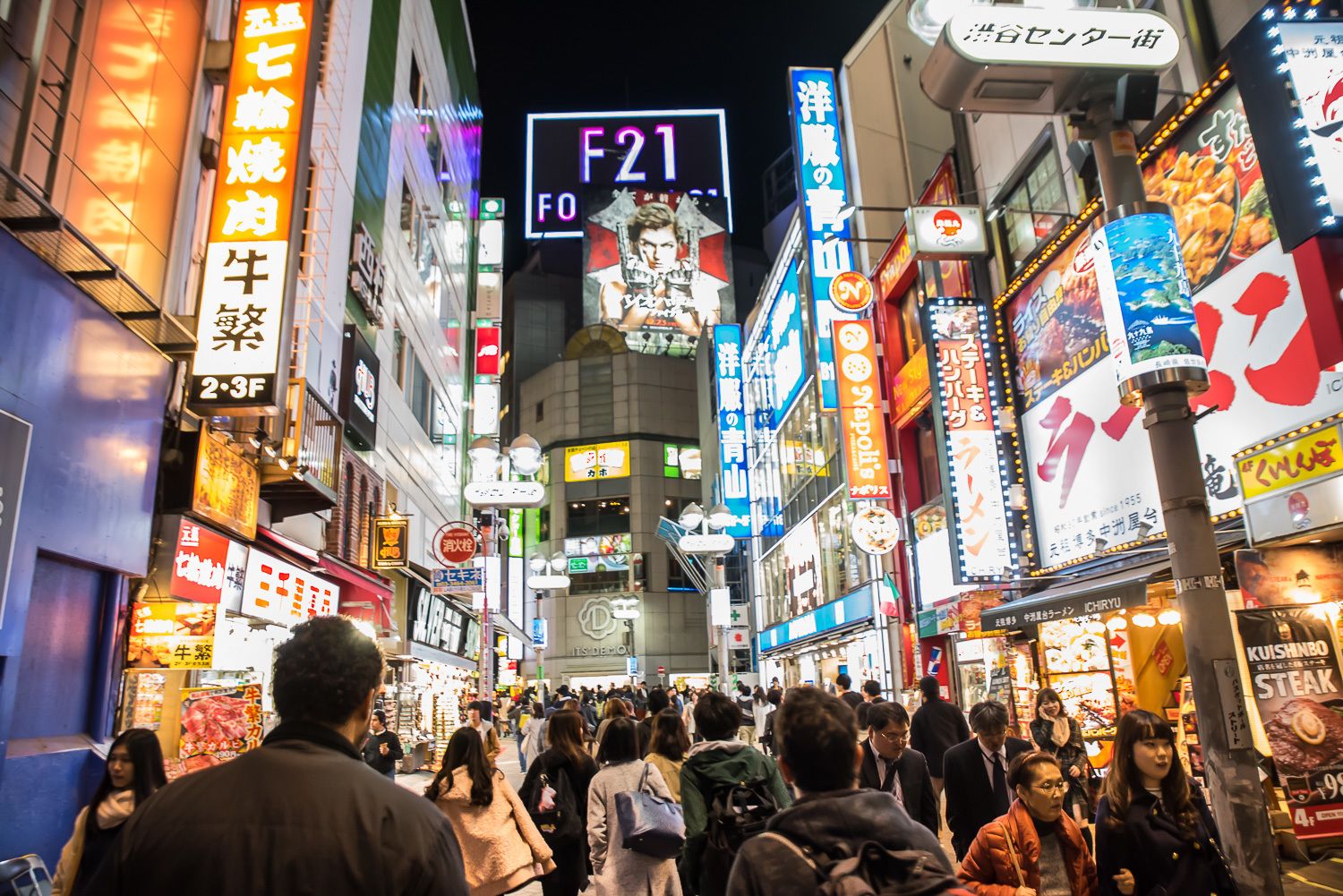
This pedestrian street is the commercial heart of Shibuya's youth culture, packed with casual eateries, arcades, and fashion shops that food tours weave through between tasting stops. It stays lively well into the night, with crowds building noticeably after 18:00.

Nonbei Yokocho

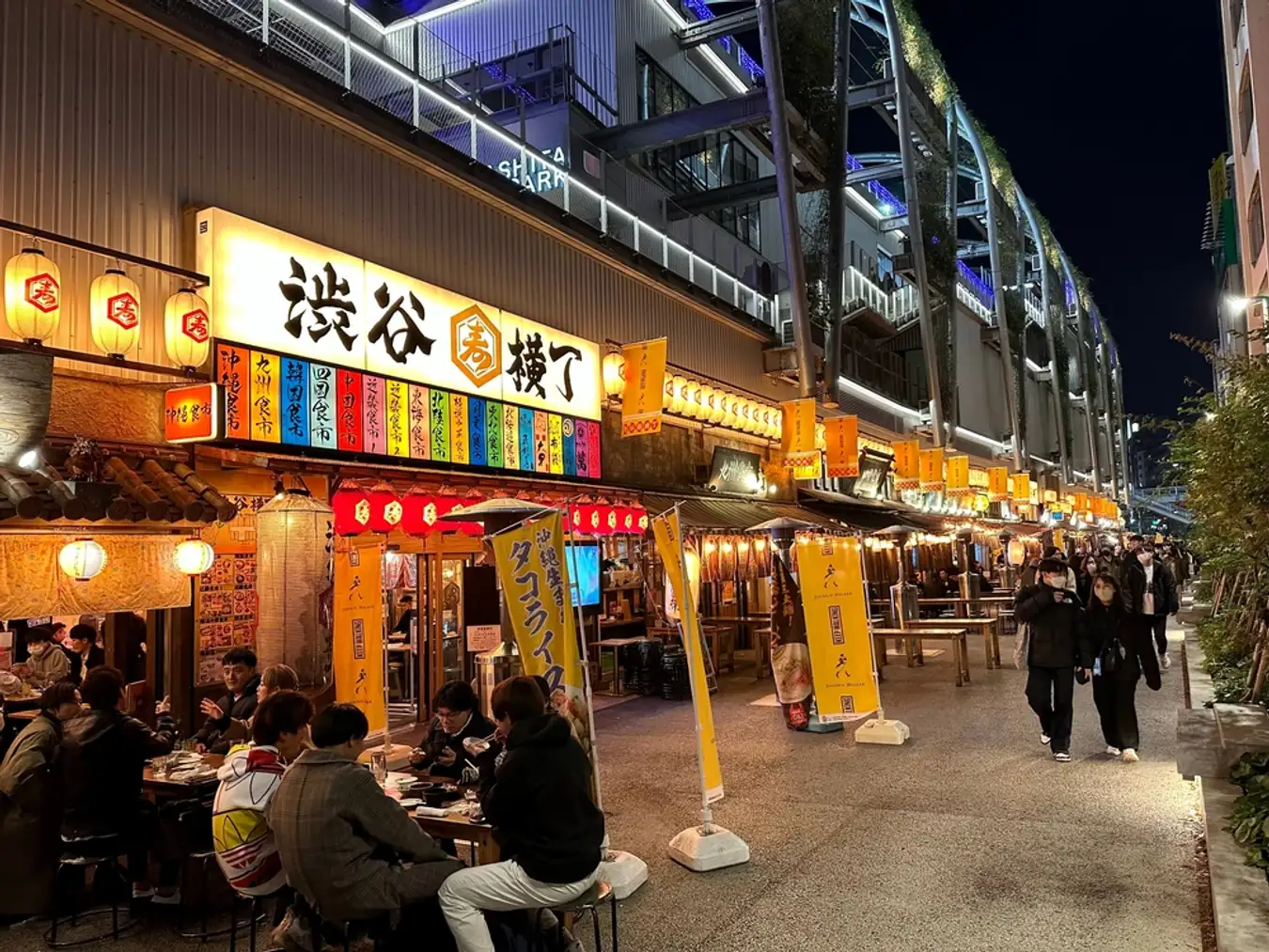
Known as Drunkard's Alley, this cluster of roughly 38 tiny counters across two low wooden buildings dates to the early 1950s and sits just north of the scramble crossing along the JR tracks. Many of its bars seat only four to eight people at a time, giving tour groups an intimate contrast to Shibuya's crowds.

Miyashita Park

A roughly 330-meter-long elevated park and retail complex built above street level, combining a rooftop lawn, skate area, and dining options a few minutes from the main crossing. Several food tours end their route near here after visiting the older yokocho alleys.

Dogenzaka izakaya backstreets

The sloped backstreets of Dogenzaka hide small, family-run izakayas serving yakitori, oden, and grilled dishes away from the main tourist flow. These narrow lanes are a frequent first or second stop on guided shibuya food tours.

The experience

What the visit is really like

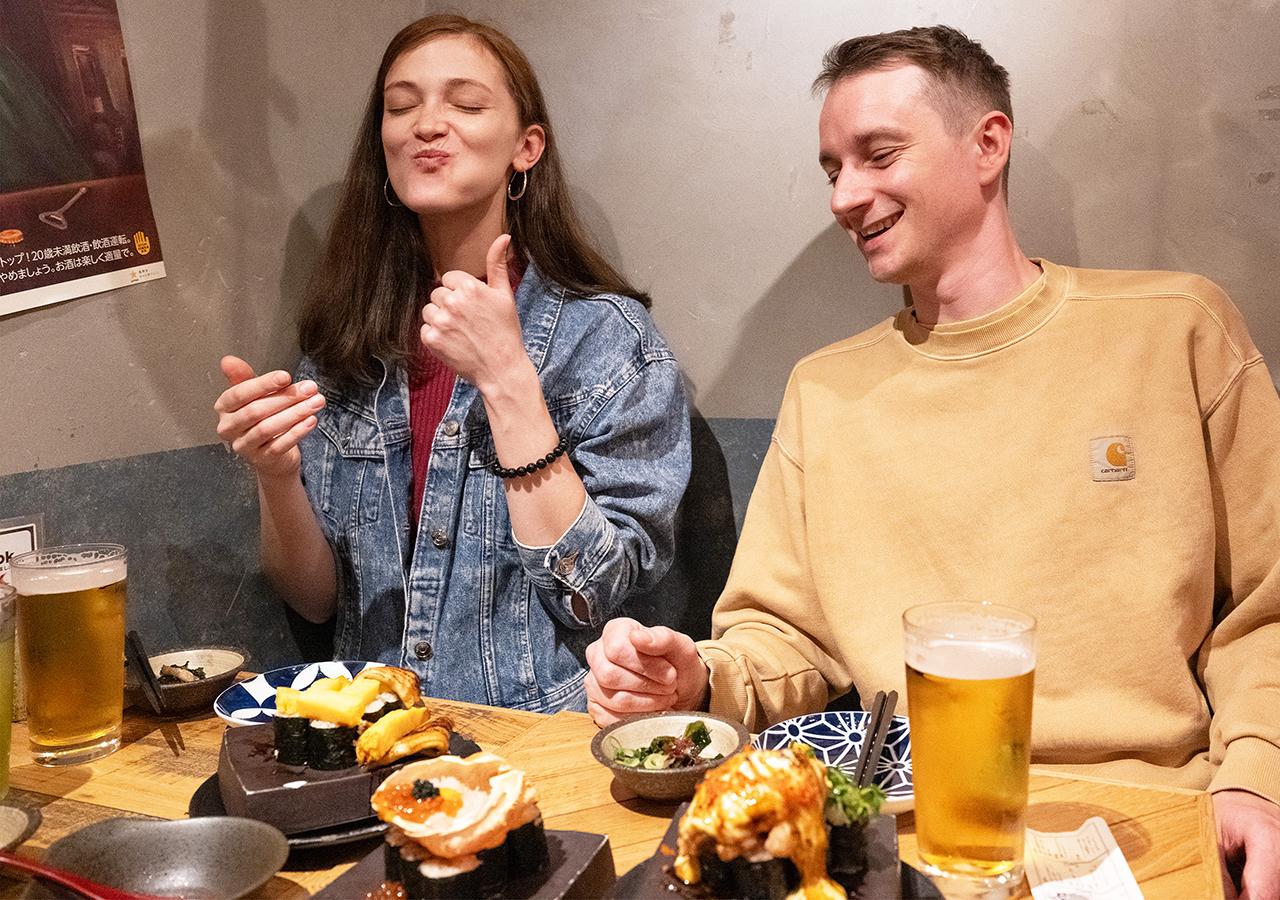
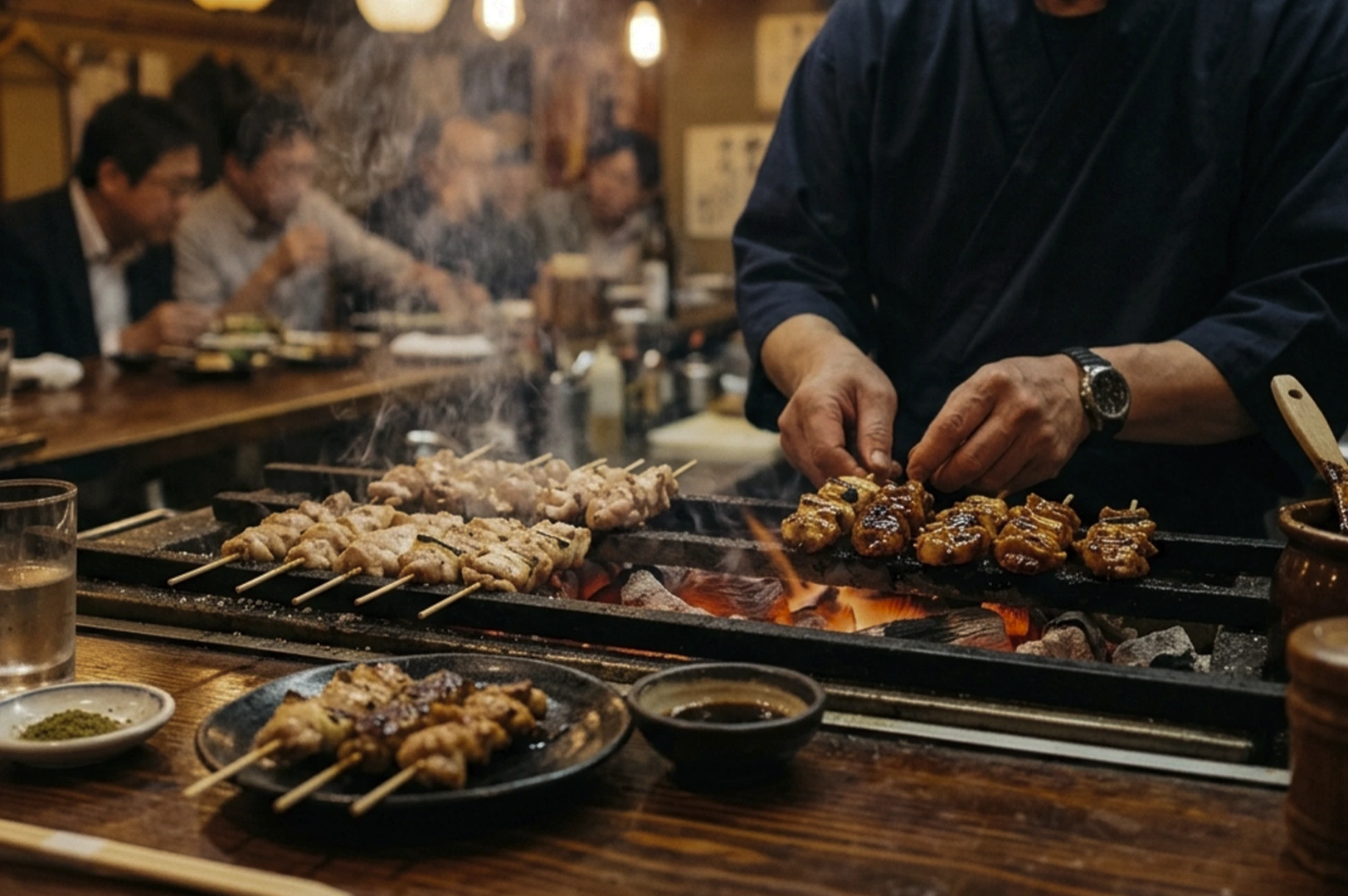
You meet your guide near the crossing between 18:00 and 20:00, when the izakayas and food stalls are busiest and the lanterns have just come on. You follow the group off the main artery and into a lane barely wide enough for two, where the first counter pours a small measure of sake before you have set down your bag. You stand, you toast, you taste. From there the walk becomes a rhythm of short stops. You duck under a curtain into a yakitori bar, where skewers turn over glowing charcoal and the smoke settles into your sleeves. You cross to a griddle table and watch okonomiyaki set at the edges before a spatula slides it toward you. You learn to order in the local shorthand, to share every plate, to pace the drinks against the food. Between venues you thread through Nonbei Yokocho, past six-seat bars stacked shoulder to shoulder, then out again into the arcade glare of Center Gai. A shibuya food tour times these transitions so nothing feels rushed and nothing drags. You finish two or three hours later with taiyaki warm in your hand, back near the crossing you started from, now reading its neon as a doorway rather than a crowd to be survived.

Everything You Need to Know

Your complete experience guide

All the details about your upcoming adventure in one place

Shibuya Food Tours: An Evening Guide

Shibuya food tours lead you through neon-lit backstreets and izakaya alleys with a local guide who orders in Japanese and explains each dish. Guided by walkable routes past Center Gai and Nonbei Yokocho, these tabearuki tastings suit first-time visitors curious about Tokyo street food culture. Booking shibuya food tours tickets in advance secures a spot in the intimate small-group format.

The Shibuya Scramble Crossing moves as many as 3,000 people in a single light cycle, and much of that crowd is heading somewhere to eat. Shibuya food tours begin in the shadow of that intersection, then peel away from it into the narrow lanes where the district keeps its older appetite. Shibuya grew from a rural post-town on the Tokyo road into one of the city's densest commercial wards, and its kitchens carry that layered history in every alley. The ward's dining culture is built vertically and horizontally at once. Above street level, glass towers stack ramen counters, sushi bars, and depachika food halls floor upon floor. Below and between them run the yokocho — the tight drinking alleys such as Nonbei Yokocho, a strip of postwar shanty bars near the tracks that has served since the late 1940s. This contrast is the heart of the district: chrome and neon overhead, charcoal smoke and wooden stools at ankle height. A guided tokyo food walking tour reads both registers, moving from a standing sake counter to a basement yakitori grill within a few paces. The food itself is a map of Japan's regions distilled into one ward. Okonomiyaki griddled at the table, monjayaki loosened into a savoury paste, gyoza pressed and pan-fried, taiyaki filled with red bean, and skewers of chicken thigh turned over binchotan charcoal all appear within a short radius. Izakaya menus lean on small, shared plates meant to accompany drinking rather than to fill a single diner, which is why walking between several venues suits the district better than settling into one. Seasonal ingredients shift the offering through the year; in the current summer weeks, chilled dishes and cold draft dominate the counters. Shibuya matters today because it compresses Tokyo's whole culinary spectrum into a walkable frame. A visitor can pass from a Michelin-listed room to a ¥300 skewer stall in the same block, and the district treats neither as more legitimate than the other. That democratic sprawl is difficult to navigate alone, since the best rooms hide behind unmarked doors, upstairs landings, and hand-written signage in Japanese only. Local knowledge turns a confusing grid of frontages into a legible sequence of tastes. The architecture underscores the point. Nonbei Yokocho's bars are often no wider than two arm-spans, seating six or eight, their walls papered with decades of memorabilia. Center Gai's arcade, by contrast, blares with signage and vending machines. The best shibuya food tours thread these textures together, so the crowd at the crossing becomes a doorway rather than a wall. Entry to the district costs nothing; the tastings are what carry a price, and they are the reason the lanes stay full after dark.

Chrome and neon overhead, charcoal smoke and wooden stools at ankle height — that contrast is the district's whole appetite.

Dress code

Casual, comfortable clothing works throughout Shibuya's izakaya alleys and Center Gai backstreets; no dress code is enforced at any stop. Wear shoes suited to uneven pavement in narrow lanes like Nonbei Yokocho and be ready to remove shoes if a stop has tatami-style low seating.

Bags & security

There is no bag screening or security checkpoint since shibuya food tours move through public streets and independently operated izakayas rather than a ticketed venue. Some tiny bars in Nonbei Yokocho seat only four to eight people, so oversized backpacks are awkward in the narrow aisles and best left at your hotel.

Photography

Photography of the streets, Hachiko Statue, and Shibuya Scramble Crossing is unrestricted, but individual izakaya owners may ask guests not to photograph other diners or staff inside small, close-seated rooms. Always check with your guide before photographing inside a specific eatery.

Families & strollers

Children are welcome on several daytime and early-evening food tour options, though most izakaya-focused evening tours skew toward adults given the alcohol-forward stops. Family-suitable timing sits earlier in the 18:00–20:00 window before the bar-hopping crowd thickens.

Accessibility

The Hachiko Square meeting point and main streets around Shibuya Station are step-free and wheelchair accessible, and several operators explicitly market their izakaya tour as wheelchair accessible. Some narrow yokocho alleys and older izakayas have steps or tight seating that limit wheelchair or stroller access, so ask the operator about the specific route in advance.

Food & drink

Food and drink are the point of the experience: most operators include multiple small dishes and one to two drinks per stop, with alcohol typically optional and additional orders paid on the spot. Bringing outside food or drink into a participating izakaya is not permitted, and some stops restrict entry to guests aged 20 and over per Japanese drinking-age law.

Not allowed

× Outside food and drink into paid venues × Large suitcases or rolling luggage × Weapons of any kind × Illegal substances × Drones × Glass containers brought from outside × Open flames or lighters near stalls × Excessively loud speakers × Pets inside dining venues × Skateboards or scooters × Professional tripods in narrow alleys

What to bring

✓ Comfortable walking shoes ✓ Cash (small bills and coins) ✓ IC transit card ✓ Light jacket for AC ✓ Phone with translation app ✓ Photo ID ✓ Reusable water bottle

Opening hours

Mon 00:00 – 23:59

Quiet start to week, fewer group tours

Tue 00:00 – 23:59
Wed 00:00 – 23:59
Thu 00:00 – 23:59

Busier ahead of weekend

Fri 00:00 – 23:59

Peak night, book ahead

Sat 00:00 – 23:59

Busiest evening slots

Sun 00:00 – 23:59

At a glance

Best experience window

18:00–20:00 for peak izakaya atmosphere;location

Getting there

Public transport · N/A · Standard train/subway fare, roughly 150–400 JPY depending on origin

Shibuya Station is served by JR Yamanote, JR Saikyo, Keio Inokashira, and Tokyu Toyoko lines, plus the Ginza, Hanzomon, and Fukutoshin subway lines; exit via the Hachiko Exit for the main meeting point.

Walk · 20–40 min total walking · Free

Most Shibuya food tour routes cover the area within about 10–15 minutes on foot between Hachiko Square, Center Gai, Dogenzaka, and Nonbei Yokocho.

Taxi · 10–20 min from central Tokyo · 1,000–2,500 JPY depending on origin

Taxis can drop off near the Hachiko Exit roundabout, though traffic around Shibuya Scramble Crossing during peak evening hours can slow arrival.

Cancellation policy

Most Shibuya food tours allow free cancellation up to 24 hours before the scheduled start for a full refund. Entrance to the Shibuya district itself remains free at 0 JPY, since only the guided tour and food/drink orders are paid components.

Plan your time

How long do you need?

Recommended time

3 hours

Most shibuya food tours run a fixed 3-hour format covering four to five stops, mixing izakaya seating, street-side bites, and a stroll through backstreets or a depachika food hall, so the clock is largely set by the operator rather than by how fast you eat. Early-evening departures, right at the start of the 18:00–20:00 window, move faster between stops since izakayas are still filling up, while later starts mean longer waits for seats as the neighborhood hits full swing. Add 20-30 minutes if your group lingers over drinks at the final stop or wants extra time at Shibuya Crossing beforehand; there's little to subtract, since guides keep a strict start time and stops are pre-booked with venues, so queue delays are rare once the shibuya food tour is underway.

Crowd levels through the day

Late morning Light
Early afternoon Moderate
Late afternoon Building
Early evening (18:00-19:00) Busy
Peak evening (19:00-20:00) Fullest
Late night (after 21:00) Easing
Plan ahead

When to go — year at a glance

Weather · crowds · average price — dots go green to amber to red as each metric rises.

Spring

March to May brings mild evenings around 15–20°C, comfortable for walking between izakayas, with cherry blossom season in late March adding extra foot traffic near Yoyogi Park.

Insider tips

Helpful tips for your visit

Book ahead for weekends

Friday and Saturday evening shibuya food tours fill quickly, especially small-group izakaya tours capped near 9 participants, so reserve several days ahead.

Carry small cash

Many tiny izakayas in Nonbei Yokocho are cash-only or prefer cash for quick rounds, so keep coins and small bills on hand.

Come hungry

Multi-stop tours often serve up to 13 dishes across four eateries, so skip a heavy meal beforehand.

Check the age policy

Some tours restrict entry to guests 20 and over due to alcohol service at izakaya stops, so confirm before booking for younger travelers.

Confirm your exact meeting spot

Operators use slightly different meeting points near Hachiko Exit, so double-check whether it's the statue itself, the mural, or the Tsutaya building.

Wear easy walking shoes

Routes cover several city blocks between Dogenzaka, Center Gai, and Nonbei Yokocho on uneven alley pavement.

Mind vegetarian limits

Vegetarian options are limited at many traditional izakayas, so flag dietary needs when booking.

Where to meet

Meeting points

Hachiko Statue

2 Chome-1 Dogenzaka, Shibuya, Tokyo 150-0043

Front of Shibuya Station's Hachiko Exit, the standard start for most izakaya-focused shibuya food tours

Get directions

Hachiko Exit Mural

Shibuya Station, Shibuya, Tokyo

Alternate meeting spot near the wall mural just outside the Hachiko Exit

Get directions
The story

The history behind the site

Shibuya's most storied drinking lane, Nonbei Yokocho, took shape in the years after 1945. When American occupation authorities cleared the black markets that clustered around Shibuya Station, displaced hawkers regrouped along a narrow strip beside the tracks. By around 1950, roughly forty tiny plots had been formalised into a licensed alley. Each stall held only a handful of seats. The name translates as "Drunkard's Alley," a plain description of its trade. The alley sat close to the railway infrastructure that made Shibuya a hub. Tokyu, the private railway that reshaped the district from the 1930s, anchored its operations nearby; the former Tokyu corporate footprint framed the eastern side of the station for decades. Redevelopment repeatedly threatened the yokocho. Plans tied to the 2012 opening of Hikarie and the wider station overhaul put the surviving wooden structures under pressure, yet the alley endured where larger blocks fell. As global visitors arrived, guides began translating this cramped world for outsiders who found the hand-written menus and regular-only counters impenetrable. Early shibuya food tours grew from that gap, pairing a bilingual host with two or three counters per night. Booking shibuya food tours tickets let a newcomer cross a threshold that once demanded an introduction. The format spread from Nonbei Yokocho to nearby lanes and standing bars. Today a typical Shibuya food tour walks a small group between izakaya counters, sake stands, and yakitori grills, reading the district as living history rather than museum. The best shibuya food tours tour keeps numbers low to fit the alley's scale. These evening shibuya food tours tours trace how postwar scarcity became a Shibuya landmark, and how a Tokyo izakaya crawl preserves the yokocho culture that redevelopment nearly erased. Entry to the alley itself remains free; the counters, the pours, and the introductions are what the guides unlock.

1930s

Tokyu railway expansion turned Shibuya into a private-rail hub around the station.

Post-1945

Occupation authorities cleared black markets clustered near Shibuya Station.

c.1950

Roughly forty stalls were formalised into the licensed Nonbei Yokocho alley.

2012

The Hikarie tower opened, intensifying redevelopment pressure on the wooden lanes.

2020s

Bilingual guided walks emerged to open the regular-only counters to visitors.

2026

Small-group evening tours still trace the yokocho's postwar origins today.

Photo spots

Best photo spots

Nonbei Yokocho lantern alley

Best light · After sunset, lanterns lit

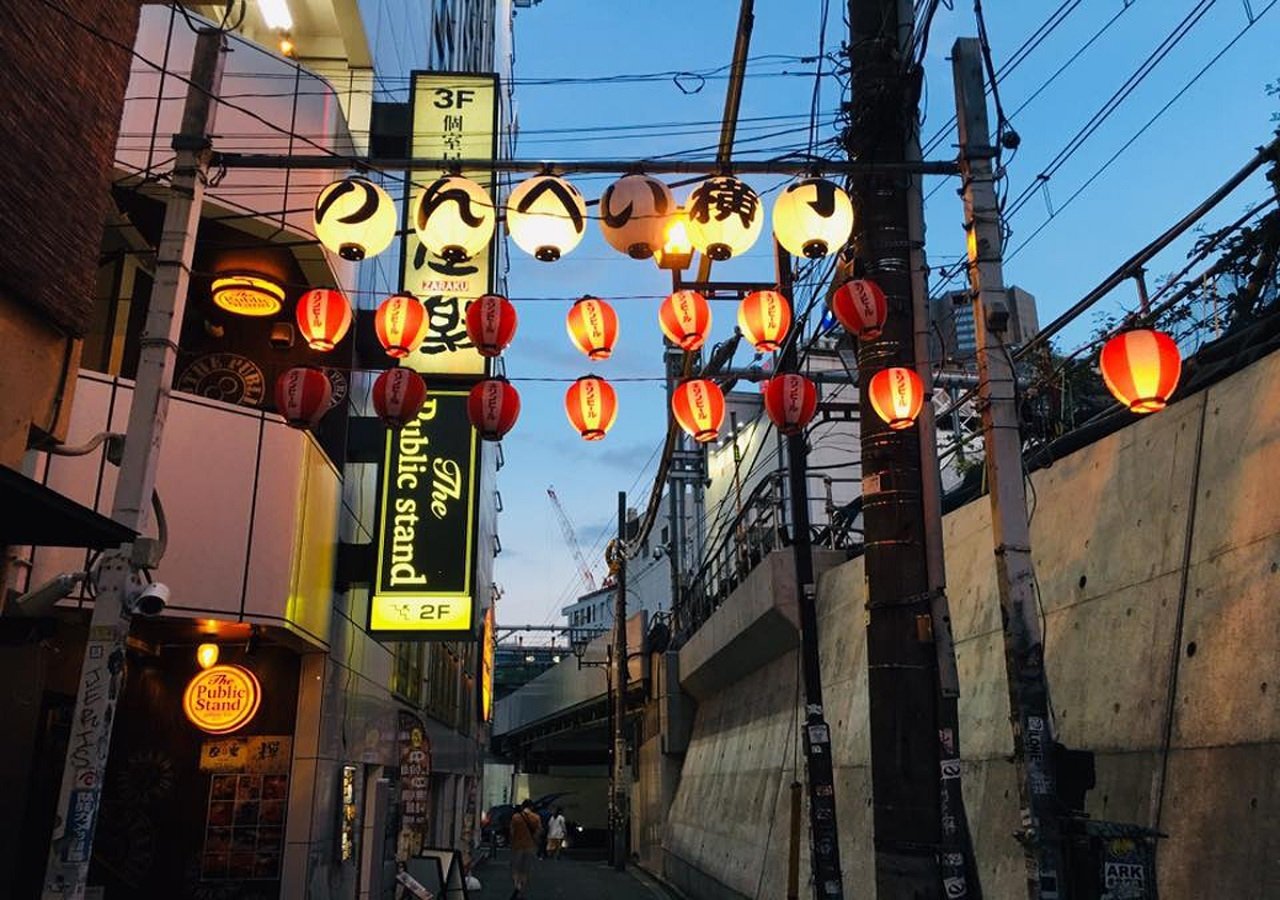
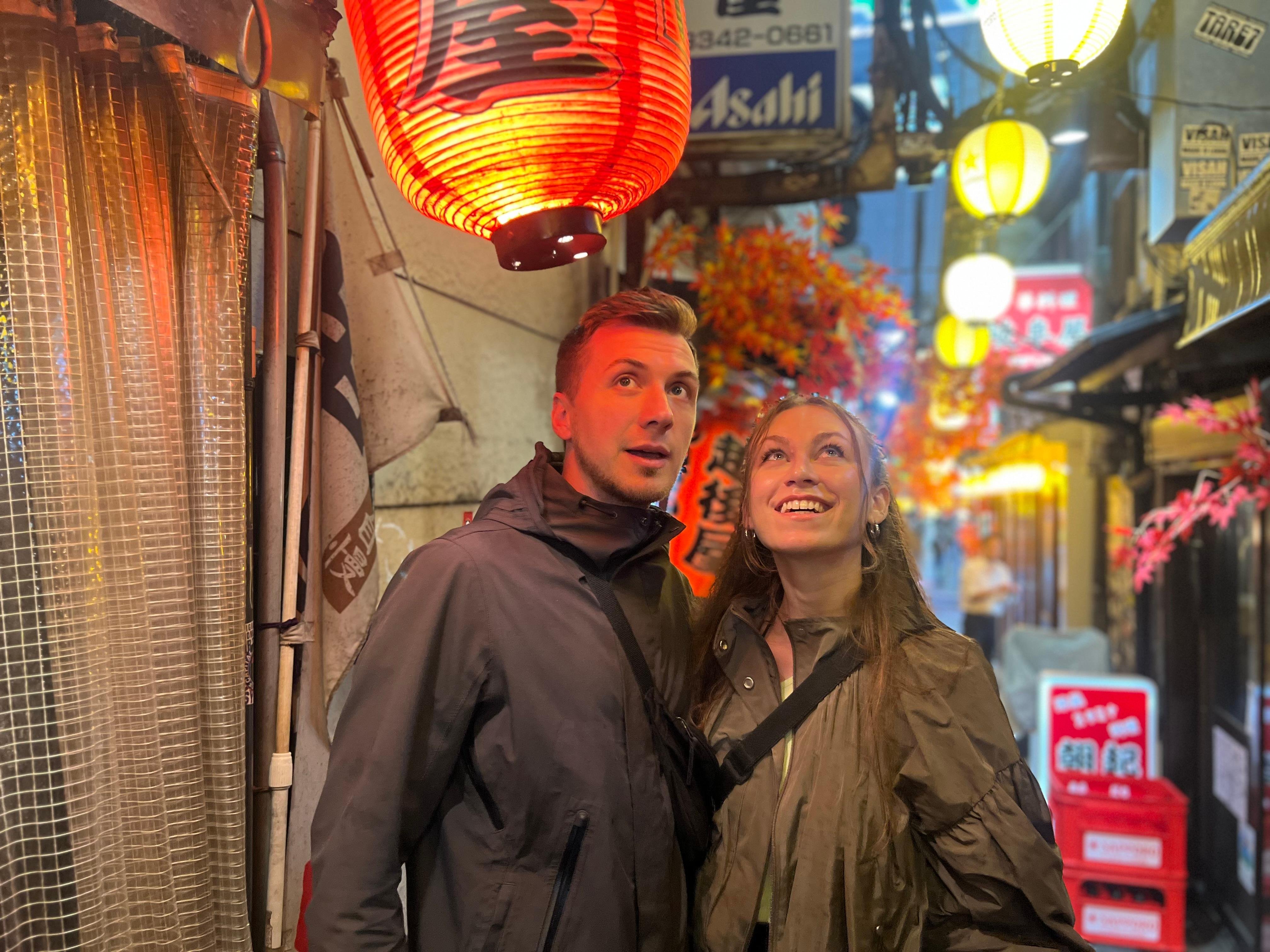
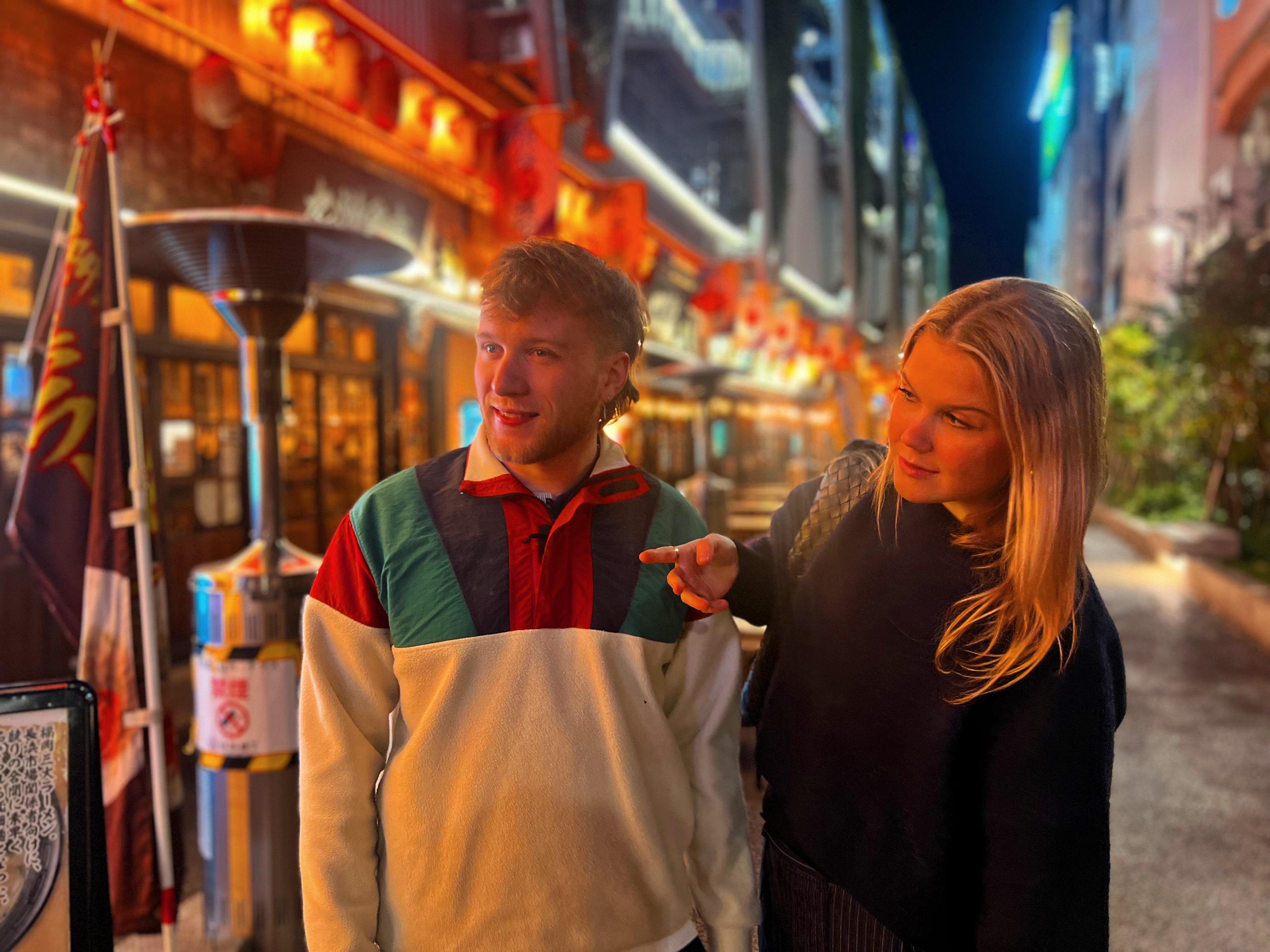
Stand at the narrow entrance beneath the railway tracks and shoot straight down the two-meter-wide passage, where red lanterns and neon izakaya signs crowd both walls into a single glowing corridor. Many visitors on shibuya food tours pause here first since the alley photographs best from its mouth rather than pushing deep inside.

Niku Yokocho Meat Alley entrance

Best light · Dusk, signs lit

Frame the illuminated signage stacked above the Chitose Kaikan building entrance on Center Gai, where dense meat-shop lettering and string lights create a layered backstreet glow. Shoot from across the narrow lane to catch the full vertical stack of signs.

Starbucks Tsutaya crossing window

Best light · Evening rush, crowded

From the second-floor curved window above the Tsutaya bookstore, angle down for a human-scale view of the scramble crossing tour groups pass daily, with pedestrian waves and taxi lights streaking below.

Mag's Park rooftop deck

Best light · Twilight, before full dark

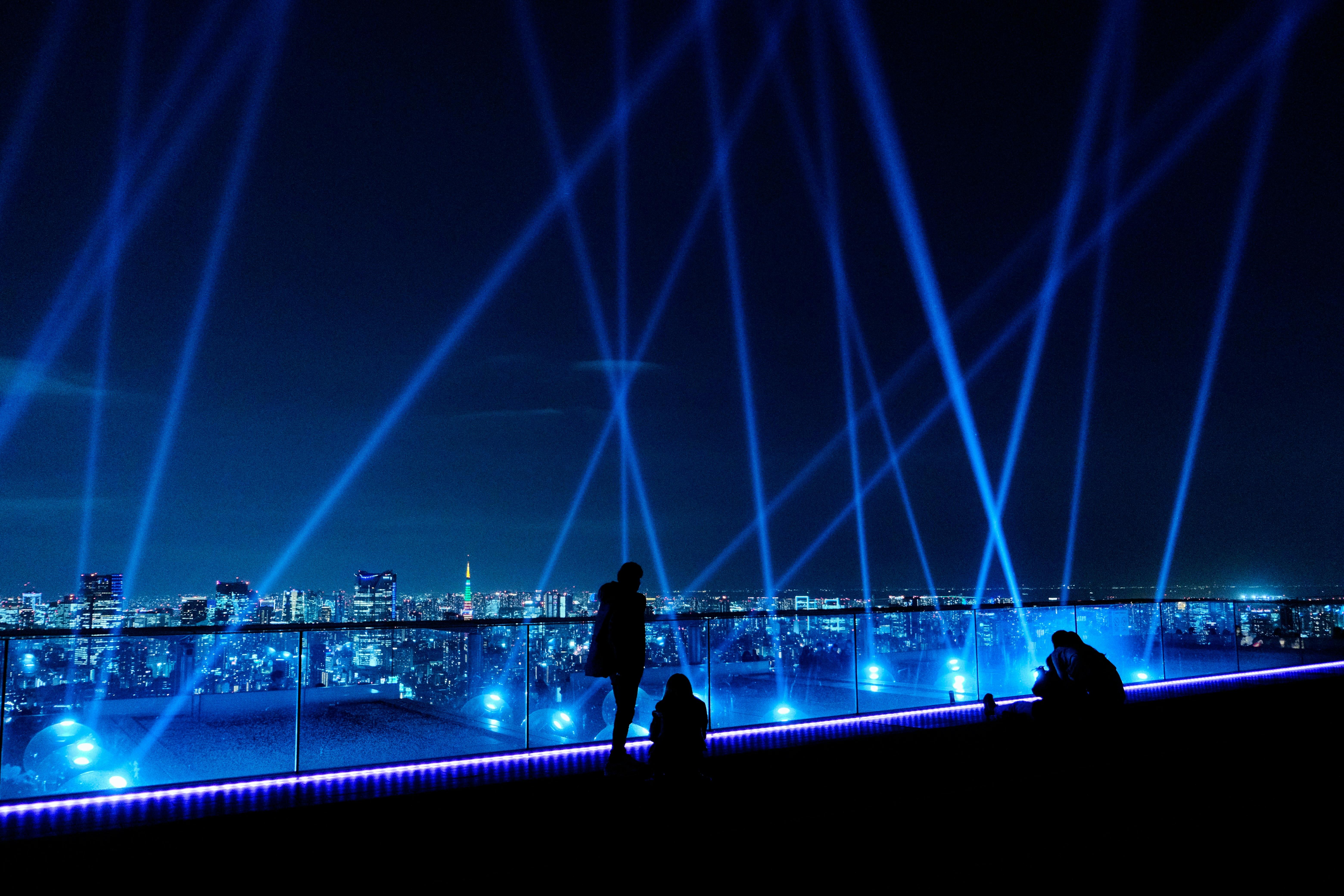
Shoot through the glass-panel railing atop MAGNET by Shibuya109 for the classic top-down swirl of the crossing, framed against the district's skyline. This vantage sits almost directly over the intersection tour groups gather at below.

Gallery

Moments from the experience

With kids

Visiting with kids

Families do join shibuya food tours, but the experience shifts a lot depending on the slot you pick: daytime departures around Hachiko Square feel manageable with kids, while late izakaya-hopping routes suit older children better.

Best time slot

Afternoon and early-evening tour starts are easier with young kids than the late-night izakaya crawls, which run closer to the 18:00-20:00 window when stalls get crowded and smoky. If your children are sensitive to noise or crowds, ask the operator for a daytime shibuya food tour departure instead.

Best ages

Guides report kids around 6 and up cope well with the walking and varied tastings, while toddlers tire quickly across multiple stops. Groups with three young children have completed the full route with regular breaks, so it is workable but needs pacing.

Pacing

A three-hour, multi-stop walking format is long for small legs, so ask upfront whether the guide can shorten or compress the schedule. Build in a seated rest between the third and fourth stop rather than pushing straight through.

Food with kids

Portions at tasting stops are small and shared-style, which suits picky eaters better than a full restaurant meal, but spice levels at some stalls run hotter than typical kids' menus. Flag allergies and spice tolerance before booking so the guide can swap stops.

Food & drink

Where to eat nearby

Shibuya rewards anyone planning shibuya food tours with three distinct styles of eating within a ten-minute radius of the station: retro drinking alleys, a meat-themed yokocho, and department-store food basements, so there is no need to bring your own food. Whether you book a guided shibuya food tours tour or wander solo, each stop is a short walk from the last.

Nonbei Yokocho

¥

Retro izakaya alley — 5 min walk

Roughly 40 tiny lantern-lit counters seating four to eight people each, serving yakitori, oden and sake behind the station's train tracks; busiest from early evening once the after-work crowd arrives, and better suited to lingering than a quick stop

Niku Yokocho (Sakuragaoka/Center Gai Meat Alley)

¥¥

Meat-themed food hall — 5-8 min walk

About 28 stalls across two floors dedicated to wagyu skewers, meat sushi and grilled cuts, with a festival-like buzz; Niku Rakuen's wagyu burgers and hamburger-steak counters are frequent orders, and weekend nights get loud and crowded

Tokyu Foodshow (Shibuya Scramble Square / Mark City)

¥-¥¥¥

Depachika basement food market — on-site

A multi-floor depachika spanning Scramble Square's B2 and Mark City's B1, selling bento, wagashi, baked goods and sake alongside stand-and-eat counters like Shibuya Stand; ideal for grazing between shopping stops rather than a sit-down meal

Shibuya Hikarie ShinQs Food (B2/B3)

¥-¥¥

Depachika basement food market — 3 min walk

An upscale basement food floor with sweets, bento and wine shops plus eat-in counters such as Switch Table; quieter on weekday afternoons, so it suits travelers wanting fast, portable food before continuing on.

Customer Reviews

What travelers say

Real experiences from real travelers

4.7
Based on undefined reviews
1 ★ 220
2 ★ 180
3 ★ 410
4 ★ 1450
5 ★ 8600
M
Marta R.
Spain · 2026-06-14

Best way into Shibuya

Booking one of the shibuya food tours was the smartest thing we did in Tokyo. Our guide took us down alleys off the Scramble that we never would have found, and the yakitori stall near Nonbei Yokocho was the highlight. We started at 5pm so we caught the neon coming on as we walked.

J
James T.
United States · 2026-05-30

Six stops, all great

The Shibuya street food tour packed in six tastings over three hours without ever feeling rushed. Standouts were the takoyaki and a tiny sake bar the guide clearly knew well. Wear comfortable shoes because it is a lot of walking through crowded lanes.

Y
Yuki N.
Japan · 2026-07-02

Fun even as a local

I joined to show a visiting friend around and still learned about a couple of izakaya I had walked past for years. The matcha dessert stop was smaller than I expected but the mochi was fresh. Evening humidity was heavy that night, so bring water.

L
Lena K.
Germany · 2026-04-18

Guide made it

What sets these Shibuya izakaya tours apart is the guide, who translated menus and ordered things we would never have picked ourselves. We ate standing at counters where no English was spoken, which felt authentic. Golden light through the alley smoke was lovely around 6pm.

B
Bruno C.
Brazil · 2026-03-09

Great intro to Japanese food

If you only do one food experience in Tokyo, make it this. The shibuya food tours group was capped at eight so it stayed personal, and the guide paced the sake tastings well. Rain started midway and we simply ducked under the covered lanes.

A
Aiko S.
Japan · 2025-12-11

Cozy winter evening

Did the tour in early December when the cold made the warm izakaya stops feel perfect. Steam off the oden pot and lantern light down the narrow street was the memory I kept. Skip-the-line seating at busy counters was a real perk in peak season.

O
Oliver H.
United Kingdom · 2025-11-22

Solid, slightly pricey

Enjoyed the Shibuya landmarks and back-alley eating, though I thought a couple of stops were brief. Our guide was genuinely knowledgeable about each dish and the neighbourhood. The Scramble at night after the tour ended was a good bonus.

C
Camille D.
France · 2026-02-27

Tokyo food tour done right

We compared a few options and these shibuya food tours had the best small-group feel. Loved learning why certain streets specialise in certain dishes as we walked. It was cold and drizzly but the covered yokocho kept us dry between tastings.

S
Sofia M.
Italy · 2026-06-28

Booked last minute

Grabbed shibuya food tours tickets the morning of and there was still space. The guide met us right by the Hachiko statue which made it easy to find. Warm summer night, lots of neon, and the fried chicken stop was better than any I have had.

D
David L.
Australia · 2025-09-15

Worth waking up for

Late-evening start meant we saw Shibuya fully lit, which was the atmosphere I wanted. The guide balanced eating with a few stories about the district's history without lecturing. Comfortable pace and genuinely tasty stops throughout.

FAQ

Frequently asked questions

Everything you need to know for your journey

Around the corner

Nearby landmarks worth a detour

Shibuya Scramble Crossing

2 min

landmark

One of the world's busiest pedestrian crossings, with reports of over 1,000 people crossing every two minutes at peak times. It sits directly outside the Hachiko Exit and anchors most Shibuya food tours route.

Shibuya Sky

5 min

viewpoint

An open-air rooftop observation deck roughly 229 meters above ground atop Shibuya Scramble Square, offering 360-degree views of the city.

Miyashita Park

3 min

park

A rooftop park and shopping complex stretching about 330 meters above street level, mixing greenery with retail and dining.

Meiji Shrine

20 min

landmark

A forested Shinto shrine dedicated to Emperor Meiji and Empress Shoken, offering a quiet contrast to Shibuya's crowds.

Yoyogi Park

15 min

park

One of Tokyo's largest city parks, popular for picnics, street performers, and open lawns near Harajuku.

Where to stay

Where to stay nearby

Shibuya district

0 min

district

Shibuya itself hosts dozens of hotel options within a few minutes of the Hachiko Exit, ranging from business hotels to upscale towers.

Shibuya Excel Hotel Tokyu

3 min

mid-range

A well-known hotel directly connected to Shibuya Station with views over the scramble crossing.

Trunk Hotel Shibuya

10 min

boutique

A design-forward boutique hotel near Shibuya's backstreets known for its social-impact branding.

Cerulean Tower Tokyu Hotel

10 min

luxury

A high-rise hotel offering skyline views over Shibuya and greater Tokyo.

Ready for Adventure?

Join thousands of happy travelers who have discovered this incredible experience

Book Your Experience Now